Top Brands for an Above Ground Pool with Deck in 2026
Expert deep-dive into the best above ground pool with deck brands, PVC vs composite materials, structural framing, and 2026 costs.
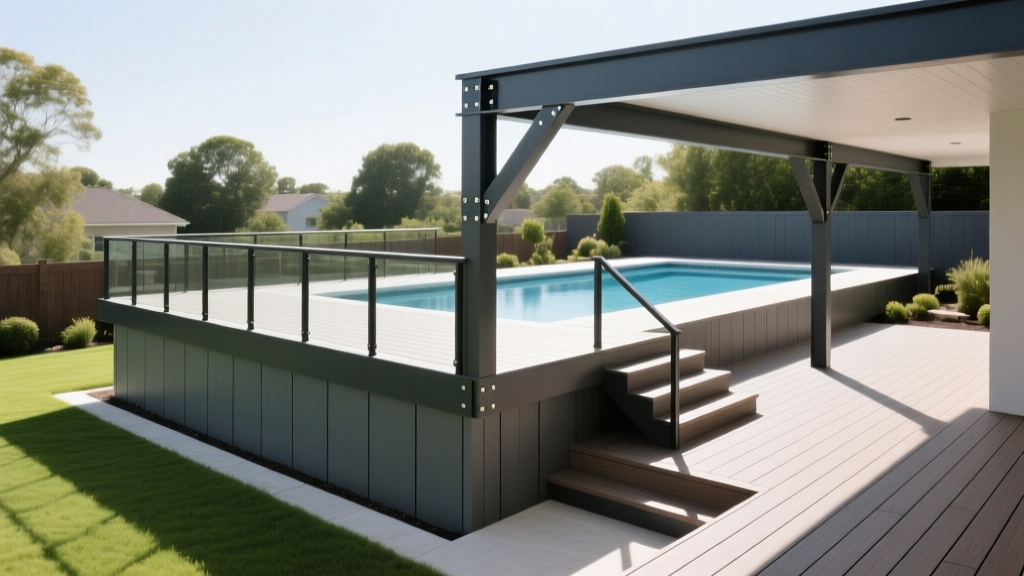
Structural Independence: The Golden Rule of Pool Decks
When designing an above ground pool with deck integration, the most critical engineering principle is structural independence. A common and catastrophic mistake made by novice builders is bolting the deck's ledger board or joists directly to the pool's top rail or vertical wall. Above ground pools are engineered to contain hydrostatic pressure and the dynamic load of thousands of gallons of water; they are not engineered to support the dead load of a deck, the live load of foot traffic, or the lateral shear forces of a crowded pool party.
The deck must be constructed on its own independent footing system, maintaining a 1-inch to 2-inch clearance gap from the pool wall. This gap accommodates frost heave, thermal expansion of the pool steel or aluminum, and prevents the transfer of deck vibrations to the pool liner, which can cause seam separation over time.
Premium Pool Lines Built for Deck Surrounds
While big-box store pools are adequate for temporary seasonal use, integrating a permanent, high-end deck requires a pool structure capable of withstanding the shaded, high-moisture microclimate created by a deck overhang. Here are the top-tier pool brands engineered for this exact application.
Doughboy Pools: Sequoya and Desert Spring Lines
Doughboy remains the industry benchmark for steel-walled above ground pools. The Sequoya line features a 14-gauge galvanized steel wall with a 7-inch extruded resin top rail. The resin top rail is critical for deck integration because it does not conduct heat like steel, and it will not rust when exposed to the constant splash-back and trapped humidity inherent to wraparound decks. The 14-gauge wall provides the rigidity needed to prevent bowing when backfilling the narrow gap between the pool wall and the deck framing.
Tahoe Pools: Premium Oval Series
For homeowners preferring aluminum, Tahoe's Premium Oval Series utilizes extruded aluminum walls that are entirely immune to traditional oxidation rust. However, aluminum requires specific isolation techniques when paired with pressure-treated wood framing, which we will cover in the failure modes section below.
Surface Materials: PVC vs. Capped Composite
The surface material of your above ground pool with deck must withstand constant chlorine or saltwater exposure, barefoot traffic, and standing water. Wood is an immediate failure risk due to splintering and rot. The market is dominated by two synthetic categories: Advanced PVC and Capped Composite.
| Feature | TimberTech Advanced PVC (Landmark) | Trex Transcend Lineage | MoistureShield Vision |
|---|---|---|---|
| Material Core | 100% Polymer (No wood flour) | Recycled wood/plastic composite | Recycled wood/plastic composite |
| Moisture Absorption | 0% (Impervious) | < 1% (Highly resistant) | 0.5% (Highly resistant) |
| Slip Resistance (ASTM D2394) | Excellent (Deep embossed grain) | Good (Smooth cap layer) | Excellent (Wire-brushed texture) |
| Heat Retention | Lowest (Reflects UV) | Moderate (Lighter colors mitigate) | Moderate |
| Max Joist Spacing (16' span) | 16 inches on-center | 16 inches on-center | 12 inches on-center (requires more framing) |
| 2026 Est. Cost per Sq. Ft. | $11.50 - $13.00 | $9.50 - $11.00 | $8.50 - $10.00 |
For an above ground pool with deck, TimberTech Advanced PVC is the superior choice. Because it contains zero organic wood flour, it cannot harbor mold or mildew in the damp, shaded areas beneath the deck overhang or near the pool skimmer returns. Trex Transcend is an excellent alternative if budget constraints require a capped composite, provided you select the lighter 'Biscayne' or 'Havana Gold' colorways to minimize barefoot heat burn during July and August.
Substructure & Footing Systems
Traditional concrete sonotube footings are highly susceptible to frost heave in northern climates, which can cause the deck to shift and press against the independent pool wall. For a permanent above ground pool deck, helical pile systems are the 2026 standard.
Joist Protection
Even if you use PVC decking, your pressure-treated joists will be exposed to chlorinated splash-back. You must apply a butyl-based flashing tape, such as Trex Protect, to the top edge of every joist and ledger board before laying the deck boards. This prevents water from pooling in the screw holes and rotting the substructure from the inside out.
Avoiding Catastrophic Failure Modes
Building an above ground pool with deck involves navigating specific chemical and structural hazards that do not exist in standard deck building.
The Galvanic Corrosion Trap
If you are installing a Tahoe aluminum pool and using standard ACQ (Alkaline Copper Quaternary) pressure-treated lumber for your deck framing, you are creating a galvanic cell. The high copper content in ACQ lumber, combined with the moisture from the pool environment, will rapidly corrode the aluminum pool wall where the wood touches it. Within three seasons, the pool wall can develop pinhole leaks or structural weakness. The Fix: You must isolate the framing from the pool wall using a 30-mil EPDM rubber membrane or a heavy-duty peel-and-stick bituminous flashing tape at any point where the deck framing comes within 2 inches of the aluminum wall.
Liner Blowouts from Trapped Moisture
Decks built with low clearance (less than 18 inches from the ground to the bottom of the joists) trap humidity and prevent UV light from reaching the soil. This causes groundwater to accumulate against the exterior of the pool wall, creating external hydrostatic pressure that can push the pool liner inward, causing 'liner blowouts' or wrinkles. Ensure your deck design incorporates at least 24 inches of clearance, or install a French drain system around the exterior perimeter of the pool wall before framing the deck.
Safety Codes and Barrier Requirements
An elevated deck around an above ground pool alters the safety dynamics of the structure. According to the U.S. Consumer Product Safety Commission (CPSC), the deck itself can serve as a barrier, but only if the deck surface is at least 48 inches above the adjacent ground level. If the deck is lower, or if there are steps leading up to the deck, you must install a secondary 48-inch barrier with self-closing, self-latching gates. Furthermore, the gaps between the deck boards and the vertical risers of the stairs must not allow the passage of a 4-inch sphere, preventing small children from slipping through the substructure.
2026 Pricing Matrix: 16x32 Oval Setup
The following cost breakdown reflects 2026 national averages for a premium 16x32 oval above ground pool with a 400-square-foot wraparound deck, including materials and professional labor. Site preparation and extensive excavation are excluded.
| Project Component | Material / Brand | Estimated Cost (USD) |
|---|---|---|
| Pool Structure & Liner | Doughboy Sequoya 16x32 (14-gauge steel, 30mil liner) | $6,800 - $8,200 |
| Water Filtration & Pump | Pentair Sand Filter & 1.5 HP Variable Speed Pump | $1,400 - $1,800 |
| Deck Footings | Techno Metal Post Helical Piles (12 posts installed) | $2,200 - $2,800 |
| Deck Framing & Substructure | Pressure-Treated Lumber + Butyl Flashing Tape | $2,500 - $3,100 |
| Deck Surface (400 sq ft) | TimberTech Advanced PVC (Landmark Collection) | $4,600 - $5,200 |
| Railing & Safety Gates | Aluminum Balusters with Self-Closing Hinges | $2,100 - $2,600 |
| Professional Labor (Assembly) | Certified Pool & Deck Contractor (14-21 days) | $8,500 - $12,000 |
| Total Project Estimate | $28,100 - $35,700 |
Investing in a structurally independent, PVC-surfaced deck system paired with a 14-gauge steel or extruded aluminum pool ensures a 20+ year lifespan, eliminating the recurring maintenance and safety hazards associated with budget-friendly, all-in-one resin kits.