Wire Deck Railing Systems: Top Brands & Costs 2026
Compare top wire deck railing brands for 2026. Deep dive into Feeney, RailFX, and Muzata, plus hardware costs, tension specs, and code compliance.
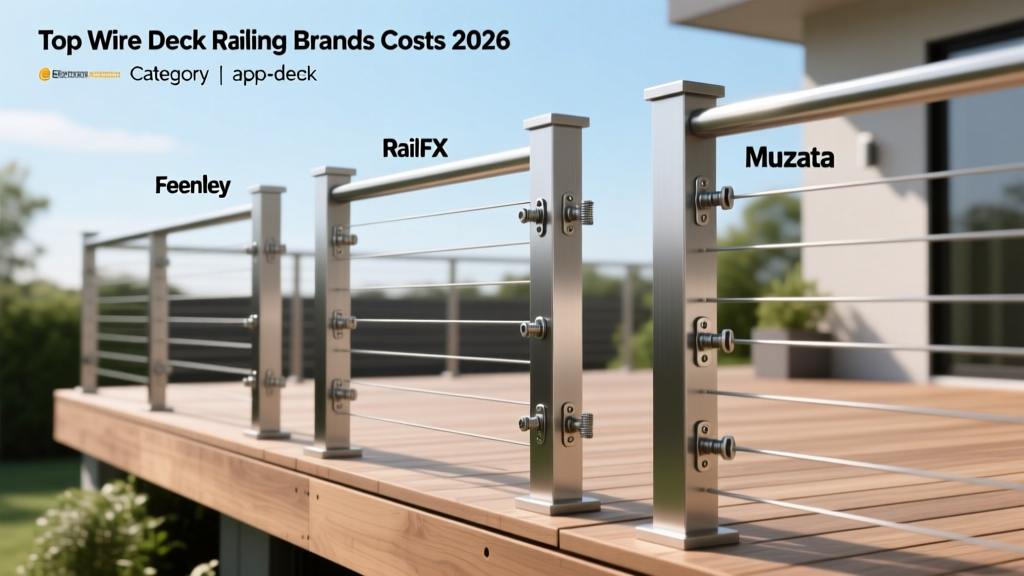
The Anatomy of Premium Wire Deck Railing Systems
Wire deck railing—often referred to interchangeably as cable railing—relies on horizontal stainless steel strands tensioned between structural posts to create a near-invisible safety barrier. Unlike traditional balusters, wire systems prioritize unobstructed sightlines while demanding rigorous engineering to meet building codes. In 2026, the market has bifurcated into premium architectural systems and budget direct-to-consumer kits, making brand selection critical for long-term structural integrity.
The industry standard for residential applications is 1/8-inch diameter, 1x19 strand Type 304 or 316 stainless steel wire. The 1x19 configuration (19 individual wires twisted into a single strand) provides the necessary rigidity to resist stretching and fraying under high tension, unlike the more flexible 7x7 or 7x19 configurations used in marine rigging.
Code Compliance: The 4-Inch Sphere Rule & Deflection
According to the International Residential Code (IRC) Section R312.1.2, guardrails must not have openings that allow passage of a 4-inch diameter sphere. Because wire deflects when pushed, the North American Deck and Railing Association (NADRC) advises spacing horizontal wires at 3 inches on-center (O.C.). This 1-inch buffer ensures that even under moderate lateral pressure, the gap between wires will not exceed the 4-inch legal limit. Spacing wires at 3.5 or 4 inches O.C. is a common contractor shortcut that routinely fails municipal inspections.
Brand Deep-Dive: Comparing the Big Three Manufacturers
Selecting a wire deck railing system requires evaluating the hardware ecosystem, not just the wire itself. The tensioning mechanisms (swage vs. swageless) and post compatibility dictate both the installation timeline and the 20-year lifespan of the deck.
Feeney CableRail (The Premium Benchmark)
Feeney remains the architectural standard for high-end residential and commercial projects. Their proprietary Quick-Connect swageless fittings allow for tool-free tensioning using a simple hex key, eliminating the need for expensive hydraulic crimping tools. Feeney mandates the use of their 316 marine-grade stainless steel wire, which resists pitting and crevice corrosion in coastal environments.
Cost: $45 to $65 per linear foot (hardware and wire only, excluding posts).
Best For: Coastal properties, high-budget custom builds, and contractors who value speed of installation over upfront material costs.
RailFX CableFX (The Contractor's Mid-Tier Choice)
RailFX bridges the gap between premium pricing and budget hardware. Their CableFX line offers both swage and swageless options, with a strong focus on post-to-post installations rather than continuous runs through intermediate posts. RailFX provides pre-drilled aluminum and steel post kits that perfectly align with their tensioners, reducing on-site measuring errors. They offer both 304 and 316 steel options, allowing inland builders to save money without sacrificing structural rigidity.
Cost: $30 to $45 per linear foot.
Best For: Production home builders, mid-tier residential decks, and inland applications where 304 stainless steel is sufficient.
Muzata (The Budget DIY Contender)
Sold primarily through direct-to-consumer online channels, Muzata has captured the DIY market with aggressive pricing. Their systems utilize universal swageless tensioners that fit a variety of post materials. However, the metallurgical quality of their fittings varies, and the tensioning threads are more prone to galling (cold welding of the threads) if not heavily lubricated during installation.
Cost: $15 to $25 per linear foot.
Best For: Budget-conscious DIYers, interior staircases, and dry, inland climates where corrosion risk is minimal.
Cost & Hardware Matrix: What You Actually Pay For
| Brand / Line | Fitting Type | Steel Grade | Est. Cost / LF | Warranty |
|---|---|---|---|---|
| Feeney CableRail | Swageless (Quick-Connect) | 316 Marine | $45 - $65 | Limited Lifetime |
| RailFX CableFX | Swage & Swageless | 304 / 316 | $30 - $45 | 25 Years |
| Muzata DIY Kits | Swageless (Threaded) | 304 / 316 | $15 - $25 | 1 to 5 Years |
Critical Installation Failure Modes (And How to Avoid Them)
Wire deck railing systems fail not because the wire snaps, but because the surrounding infrastructure cannot handle the physics of tensioned steel. Avoid these three catastrophic failure modes:
1. Galvanic Corrosion in Aluminum Posts
Stainless steel wire and aluminum posts create a galvanic cell when exposed to moisture, leading to rapid galvanic corrosion that eats away the aluminum post around the drill holes. The Fix: You must use nylon or Teflon isolation sleeves (grommets) wherever the wire passes through an aluminum or steel post. Never allow bare stainless wire to touch bare aluminum.
2. End-Post Deflection and Bowing
A standard wire deck railing run requires 10 to 12 horizontal wires. Each wire must be tensioned to roughly 200–300 pounds to remain taut and meet the 4-inch sphere code. On a 10-foot run, the end posts are subjected to 2,000 to 3,600 pounds of inward pulling force. A standard 4x4 pressure-treated wood post will visibly bow inward under this load. The Fix: End and corner posts must be reinforced. For wood posts, insert a steel tube core or use heavy-duty steel post anchors bolted directly to the deck joists with structural through-bolts, not just lag screws.
3. Swageless Fitting Creep
Cheaper swageless tensioners rely on simple threaded wedges that grip the wire. Over 3 to 5 years, thermal expansion and contraction can cause these fittings to 'creep' or slip, resulting in sagging wires. The Fix: If using swageless fittings, apply a marine-grade anti-seize lubricant to the threads during installation to achieve maximum torque without galling, and plan to re-tension the system every 24 months.
Material Selection: 304 vs. 316 Stainless Steel
The choice between 304 and 316 stainless steel dictates the lifespan of your railing. According to metallurgical data from the Nickel Institute, the addition of molybdenum in 316 stainless steel drastically increases its resistance to chlorides and industrial solvents.
- Type 304: Perfectly adequate for inland applications, mountain cabins, and urban environments. It will develop a superficial 'tea staining' (surface rust) over time but will not structurally degrade.
- Type 316: Mandatory for properties within 5 miles of a saltwater coastline, or in areas where heavy chloride-based de-icing salts are used on adjacent driveways during winter. The Feeney CableRail engineering team strictly mandates 316 for any project within the coastal splash zone to prevent pitting corrosion.
Sourcing & Lead Times in 2026
As of early 2026, global supply chain stabilization has normalized lead times for architectural railing components. Custom-cut wire runs and specialized post mounts from premium brands like Feeney and RailFX typically ship within 2 to 3 weeks. However, specific powder-coat finishes for aluminum posts (such as textured bronze or matte black) can add 3 to 4 weeks to the manufacturing queue. Builders should finalize railing takeoffs and submit purchase orders during the framing stage of the deck build, rather than waiting for the decking installation to be complete, to prevent project delays.