Carpet Cost Per Square Foot: 2026 Pricing & Material Guide
Break down the 2026 carpet cost per square foot by fiber type, pile density, and padding. Expert material taxonomy to budget your flooring project.
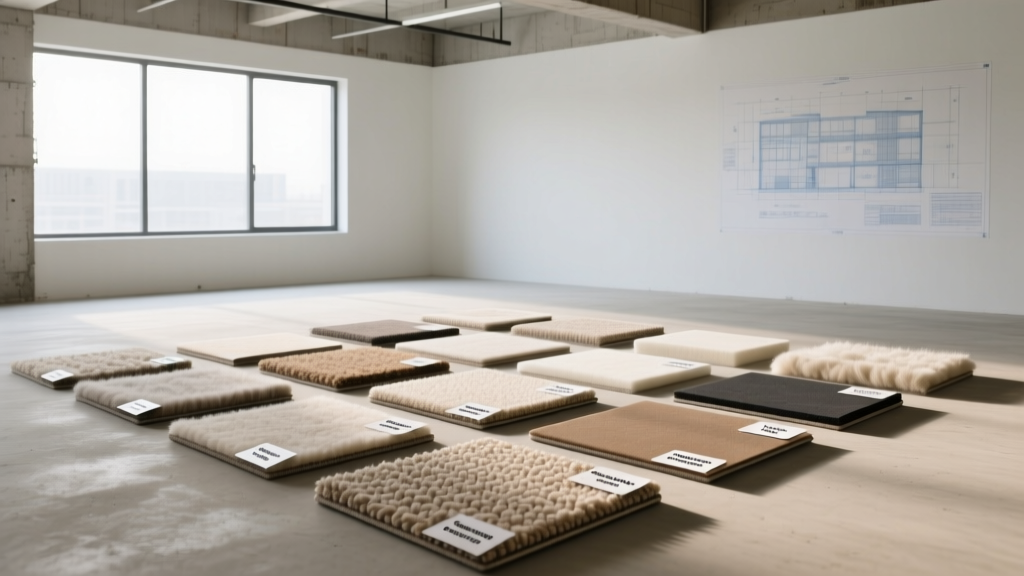
The True Anatomy of Carpet Pricing
When homeowners research the carpet cost per square foot, they frequently encounter a wide, confusing range of estimates. In 2026, the national average for fully installed carpet ranges from $3.50 to $11.00 per square foot, but this number is largely meaningless without dissecting the material taxonomy. The final price is a composite of four distinct variables: the face fiber chemistry, the face weight and density, the carpet pad (underlayment), and the localized labor rate. According to HomeGuide's 2026 carpet installation cost report, material costs account for roughly 60% of the total project, while padding, labor, and ancillary prep make up the remaining 40%. Understanding the exact specifications of each layer is the only way to accurately budget and avoid premature flooring failure.
Material Taxonomy: Fiber Types & 2026 Cost Matrix
The face fiber dictates the carpet's durability, stain resistance, and baseline price. The Carpet and Rug Institute (CRI) categorizes residential fibers into five primary chemical families. Below is the 2026 material-only cost matrix (excluding pad and labor).
| Fiber Type | Material Cost (per sq. ft.) | Durability & Resilience | Stain Resistance | Best Application |
|---|---|---|---|---|
| Nylon 6,6 | $4.50 - $8.50 | Excellent (High memory) | Excellent (with treatment) | High-traffic areas, stairs |
| Nylon 6 | $3.50 - $6.50 | Very Good | Very Good (with treatment) | Bedrooms, moderate traffic |
| Triexta (PTT) | $3.00 - $6.00 | Very Good | Exceptional (Inherent) | Homes with pets/children |
| Polyester (PET) | $1.50 - $4.00 | Fair (Crushes easily) | Good (Water-based only) | Low-traffic bedrooms |
| Wool | $9.00 - $22.00+ | Excellent (Natural soil hide) | Fair (Absorbs liquids) | Luxury formal areas |
| Olefin (Polypropylene) | $1.50 - $3.00 | Poor (Low melting point) | Excellent (Solution-dyed) | Basements, outdoors, loops |
Nylon (Type 6 vs. Type 6,6)
Nylon remains the gold standard for residential durability, but not all nylon is equal. Type 6,6 nylon (often branded as Antron or Stainmaster) features a tighter molecular structure than Type 6, making it significantly more resistant to abrasion and thermal degradation. If you are carpeting a high-traffic hallway or a staircase, specifying Type 6,6 is non-negotiable. Type 6 nylon is more easily recyclable and slightly cheaper, making it a viable choice for upper-level bedrooms.
Triexta (PTT) vs. Polyester (PET)
Consumers often confuse Triexta and Polyester because Triexta (Polytrimethylene terephthalate) is technically a subclass of polyester. However, their performance profiles are vastly different. PET polyester is hydrophobic (resists water-based stains like wine) but highly oleophilic (attracts body oils and pet sebum, leading to permanent gray traffic lanes). Triexta, popularized by Mohawk's SmartStrand, features inherent, permanent stain resistance built into the polymer chain, requiring no topical chemical treatments that wear off over time. For households with pets, Triexta offers the best balance of cost and performance.
Wool & Olefin (Polypropylene)
Wool is a premium, natural fiber that excels at hiding soil due to its complex light-scattering fiber structure, but it requires strict moisture control and specialized cleaning. Olefin is almost exclusively used in loop-pile (Berber) constructions and basements because it is solution-dyed (colorfast to bleach) and highly moisture-resistant, though it crushes rapidly under heavy furniture.
The Hidden Multipliers: Face Weight, Density, and Twist
Selecting the right fiber is only step one. The physical construction of the yarn dictates how long the carpet will survive before matting. Retailers often market "face weight" as the primary metric of quality, but this is a common trap.
Expert Framework: The Pile Density Formula
Face weight (measured in ounces per square yard) only tells you how much yarn is in the carpet, not how tightly it is packed. A 50 oz carpet with a 1-inch pile height will perform worse than a 40 oz carpet with a 0.4-inch pile height. To find the true durability metric, calculate the Pile Density:
Density = (Face Weight × 36) ÷ Pile Height (in inches)
- Under 2,000: Poor durability. Will mat within 2 years.
- 2,000 - 2,500: Acceptable for light residential (guest rooms).
- 2,500 - 3,500: Ideal for standard residential heavy traffic.
- Over 3,500: Commercial grade / ultra-premium residential.
Additionally, look for a twist level of 5 to 7 twists per inch (TPI). Higher twist levels (like frieze styles) lock the yarn fibers together, preventing the tips from blooming and fraying.
Carpet Pad Taxonomy: The Foundation You Cannot Ignore
The carpet pad absorbs the impact of foot traffic, protecting the primary backing of the carpet from fracturing. Skimping on the pad to save $0.50 per square foot will void your carpet's manufacturer warranty and halve its lifespan.
- Rebond Polyurethane (8 lb, 7/16"): The industry standard for residential use. The 8-pound density provides the exact firmness required by most nylon and triexta warranties. Warning: Never use 6-pound rebond. It is too soft and allows excessive flex, which delaminates the carpet backing.
- Memory Foam (Froth Polyurethane): Priced at $1.50 to $2.50 per square foot. It offers superior acoustic dampening and underfoot comfort but retains heat and can be too soft for some high-tension stretch-in installations.
- Rubber (Waffle or Slab): The premium choice ($2.00 - $3.50 per square foot). Highly resistant to moisture and heavy furniture indentation. Ideal for basements or homes with radiant floor heating systems, as it does not off-gas VOCs when heated.
2026 Installation & Ancillary Cost Breakdown
Beyond the material and pad, your final invoice will include several labor and prep line items. In 2026, expect the following ancillary costs:
- Base Labor (Stretch-in): $1.25 to $2.25 per square foot. This includes tack strip installation, pad laying, and power-stretching the carpet using a knee-kicker and power stretcher.
- Old Carpet Removal & Disposal: $0.50 to $1.00 per square foot. Landfill tipping fees have risen sharply in 2026, making tear-out a significant line item.
- Subfloor Preparation: $1.00 to $3.00 per square foot if your OSB or plywood subfloor requires sanding, patching, or leveling compound to prevent telegraphing bumps through the new carpet.
- Stair Installation: Stairs are priced per step, not per square foot. Expect $15 to $30 per step for labor, as wrapping the nose and securing the pad on a vertical riser is highly labor-intensive.
Room-by-Room Selection Framework
Applying the correct material taxonomy to specific micro-environments in your home ensures optimal return on investment.
Crucial Edge Case - Basements: Never install standard nylon or polyester carpet over a below-grade concrete slab, even with a moisture barrier. Concrete emits alkaline moisture vapor that degrades carpet adhesives and promotes mold in standard rebond pads. For basements, specify a solution-dyed Olefin loop-pile carpet paired with a closed-cell rubber pad, or opt for a synthetic backing system designed for direct glue-down applications.
High-Traffic Zones (Living Rooms, Hallways, Stairs): Specify Type 6,6 Nylon or high-density Triexta. Target a face weight of 45-55 oz with a pile height under 0.5 inches to achieve a density rating above 3,000. Use a firm 8 lb rebond pad.
Bedrooms: Comfort takes priority over extreme abrasion resistance. A plush PET polyester or a softer Nylon 6 with a 60 oz face weight and a 0.75-inch pile height is ideal. Pair with a premium memory foam pad for acoustic dampening and luxury underfoot feel.
Pet Zones: Avoid loop-pile (Berber) constructions entirely, as pet claws will snag and pull the continuous loops, unraveling the carpet. Stick to cut-pile Triexta, which resists both moisture accidents and claw snags, and ensure the pad includes a moisture barrier film to protect the subfloor from urine penetration.