Which Carpet Protector Fits Your Scenario? A Matching Guide
Match the right carpet protector to your scenario. Compare adhesive films, interlocking mats, and chemical shields for construction, moving, and daily use.
The Cost of Carpet Damage and the Case for Scenario Matching
Replacing damaged residential carpet costs between $4.00 and $12.00 per square foot installed, while commercial carpet tile replacement runs $3.50 to $8.00 per square foot. Despite these costs, contractors, movers, and homeowners frequently rely on mismatched or inadequate carpet protector solutions. A thin plastic drop cloth will tear under a furniture dolly, while leaving heavy-duty adhesive film on wool fibers for 60 days will permanently ruin the pile through adhesive transfer.
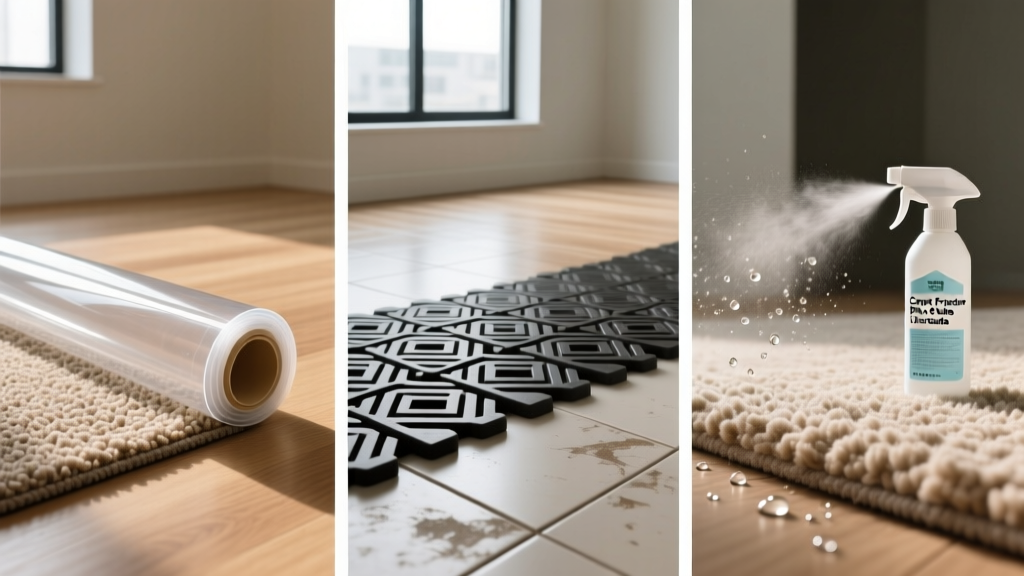
Selecting the correct carpet protector requires scenario matching. The physical forces, duration of exposure, and fiber type dictate whether you need a temporary polyethylene adhesive film, a rigid polypropylene interlocking mat, or a permanent fluorochemical liquid shield. This guide breaks down the exact specifications, failure modes, and application protocols for each category.
Carpet Protector Scenario Matching Matrix
Use this decision matrix to identify the primary protector category required for your specific application before reviewing the technical specifications below.
| Scenario | Primary Threat | Recommended Protector Type | Max Dwell Time |
|---|---|---|---|
| Interior Painting & Drywall | Dry particulate, paint splatter | Adhesive Polyethylene Film (2-3 mil) | 30-45 Days |
| Furniture Moving & Appliances | Point-load crushing, tearing | Corrugated Cardboard or Interlocking Mats | 1-7 Days |
| Open Houses & High Foot Traffic | Wet soil, mud, abrasion | Non-Adhesive Runners with Traction Backing | 1-14 Days |
| Daily Residential / Pets / Kids | Liquid spills, oil-based stains | Fluorochemical Liquid Shield (C6) | 12-24 Months |
Adhesive Polyethylene Films: Construction, Painting, and Moving
Adhesive carpet protector films are the industry standard for keeping drywall dust, joint compound, and paint splatters out of synthetic and wool carpet piles during renovations. These films are manufactured from low-density polyethylene (LDPE) and feature a pressure-sensitive acrylic adhesive on one side.
Technical Specifications and Selection
- Thickness: Always specify 2.5 mil to 3.0 mil thickness for foot traffic. 1.5 mil films will puncture under work boots or ladder legs.
- Winding: Demand reverse-wound rolls. Reverse-wound film places the adhesive side facing outward on the roll, allowing a single installer to unroll and press it down simultaneously without the film sticking to itself.
- Tack Level: Use low-tack adhesives for delicate wool or high-pile plush carpets to prevent fiber distortion upon removal. Use high-tack for low-pile commercial berbers.
Cost and Failure Modes
High-quality 3-mil adhesive film costs $0.08 to $0.14 per square foot. The most common failure mode is adhesive transfer. Acrylic adhesives degrade and bond permanently to carpet fibers when exposed to UV light through windows or when left in place beyond the manufacturer's rated dwell time (typically 30 to 45 days). If a renovation extends beyond 45 days, the film must be peeled and replaced, or the carpet will require aggressive solvent extraction to remove the cured glue.
Interlocking Polypropylene Mats: Heavy Equipment and Long-Term Coverage
When moving heavy appliances, piano casters, or pallet jacks across carpet, adhesive films offer zero structural protection against point-load crushing. For these scenarios, rigid or semi-rigid interlocking mats are mandatory.
Material Properties
Modern heavy-duty carpet protector mats are extruded from corrugated polypropylene or high-density polyethylene (HDPE). They typically measure 1/4-inch to 1/2-inch thick. Unlike solid plastic sheets, corrugated polypropylene distributes point loads across a wider surface area, preventing the carpet backing from stretching and the pile from being permanently crushed.
Application and Pricing
Interlocking mats cost between $1.50 and $3.50 per square foot. Because they are not adhesive, they must be secured at the seams using specialized 3-inch PVC seam tape to prevent tripping hazards and to stop dust from migrating underneath. For long-term protection in model homes or showrooms (3 to 6 months), interlocking mats are superior to adhesive films because they allow the carpet to breathe, preventing mold and mildew growth trapped beneath impermeable plastic.
Fluorochemical Liquid Shields: Daily Wear, Pets, and Spills
For post-construction daily use, physical barriers are impractical. Chemical carpet protectors alter the surface tension of the carpet fibers, causing liquids to bead up rather than absorb. However, the chemistry of these protectors has shifted dramatically due to environmental regulations.
The Shift from C8 to C6 Chemistry
Historically, carpet protectors relied on C8 (long-chain) fluoropolymers, which contained PFOA and PFOS. Due to the EPA guidelines on VOCs and persistent organic pollutants, the industry has transitioned to C6 (short-chain) fluorochemicals. While C6 formulations are environmentally safer and break down faster, they require more precise application to achieve the same stain resistance as legacy C8 products.
Application Constraints and Wool Compatibility
According to the IICRC S100 Standard for carpet cleaning and protection, chemical shields must be matched to the fiber type.
- Synthetic Fibers (Nylon, Polyester, Olefin): Standard water-based C6 fluorochemicals apply at a rate of 200 to 250 square feet per gallon. Cost averages $0.20 to $0.40 per square foot professionally applied.
- Wool Fibers: Wool is highly sensitive to alkalinity. Standard protectors often have a pH of 8.0 to 9.0, which will cause wool fibers to yellow and become brittle. You must specify a wool-safe, pH-neutral (6.5 to 7.5) fluoropolymer shield. Always test a 2x2 foot hidden area and use a pH pen before full application.
Warning: Silicone-Based Protectors and Rapid Re-Soiling
Never use silicone-based carpet protectors, often sold as cheap aftermarket alternatives. Silicone creates an initial water-repellent bead but acts as a magnet for oily soils and foot traffic dirt. Carpets treated with silicone will experience rapid re-soiling within 30 days and are notoriously difficult to strip, often requiring multiple hot-water extraction passes with specialized alkaline pre-sprays to correct the error.
Professional Application Protocol for Adhesive Films
Improper installation of adhesive film leads to edge peeling, trapped air bubbles, and seam separation. Follow this protocol for a secure, 45-day hold.
- Substrate Preparation: Vacuum the carpet thoroughly using a beater-bar vacuum. Any trapped grit or drywall dust will act as an abrasive under the film, grinding into the fibers when walked on.
- Perimeter Anchoring: Unroll the first 12 inches of the reverse-wound film. Press it firmly into the gap between the carpet and the baseboard using a flexible putty knife or a specialized stair tool. This creates a locked perimeter edge.
- The Kick-Off Method: As you unroll the film across the room, use a carpet kicker or a heavy carpet roller to press the adhesive into the pile. Do not rely on foot pressure alone; foot pressure only engages the top 10% of the adhesive surface area.
- Seam Overlapping: When laying adjacent rows, overlap the edges by exactly 1.5 inches. Do not butt the seams together, as temperature fluctuations will cause the polyethylene to contract and open gaps.
- Stair Applications: Never run film continuously down a flight of stairs. The tension will cause the film to pull away from the stair noses. Cut individual pieces for each tread, wrapping the film 1 inch over the nose and securing it into the cove with a stair tool.
Carpet Warranty and Maintenance Considerations
Before applying any chemical or physical carpet protector, consult the original manufacturer's warranty guidelines. The Carpet and Rug Institute (CRI) notes that using non-approved chemical treatments or leaving impermeable physical barriers on carpet for extended periods can void the manufacturer's stain and wear warranties. For physical films, always adhere strictly to the printed maximum dwell time on the product core. For chemical shields, retain the Safety Data Sheet (SDS) and the exact product lot number of the C6 fluorochemical used, as warranty claims for subsequent staining will require proof of compatible treatment.