Linoleum Flooring Rolls Clearance: Smart Buyer Guide
Discover how to navigate linoleum flooring rolls clearance deals. Learn to spot true linoleum, calculate roll yields, and inspect discounted stock.
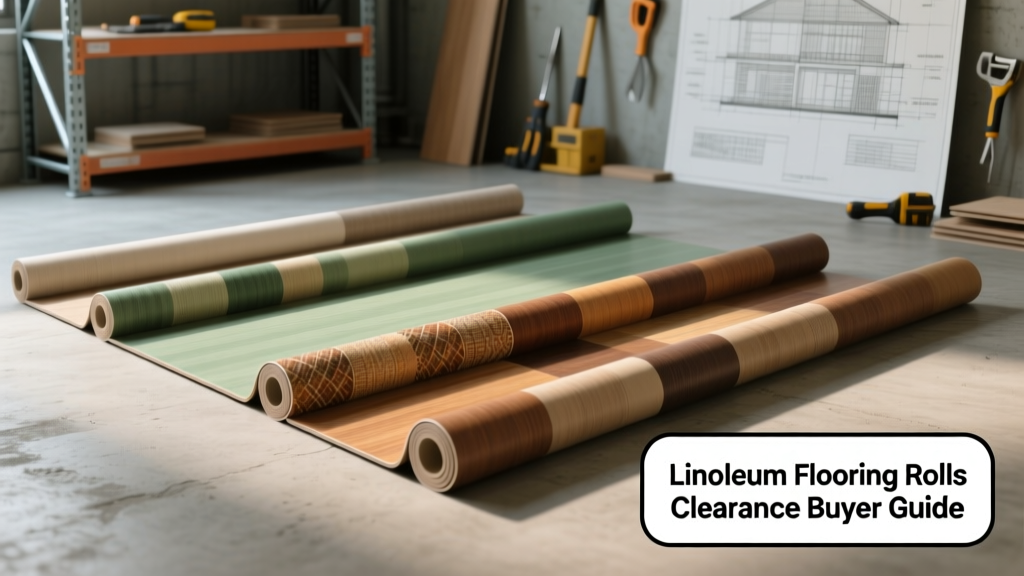
The Material Taxonomy: True Linoleum vs. Vinyl Imposters
The secondary market for natural floor coverings is fraught with mislabeling. When you encounter a linoleum flooring rolls clearance sale, the first critical step is verifying the material's chemical taxonomy. True linoleum is a bio-based composite invented in 1860, consisting of oxidized linseed oil, pine rosin, wood flour, cork dust, limestone pigments, and a jute backing. In contrast, what big-box stores often label as 'linoleum' is actually sheet vinyl (PVC), a synthetic petroleum product.
According to Architectural Digest, the distinction is vital for longevity and indoor air quality. True linoleum is naturally bacteriostatic and biodegradable, whereas PVC relies on plasticizers that can off-gas. In a clearance environment, distributors frequently liquidate discontinued vinyl sheet goods under the generic 'linoleum' search tag. Always inspect the backing: if it is a synthetic felt or fiberglass layer, it is vinyl. If it is a woven, burlap-like jute mesh, you are looking at genuine linoleum.
Why Genuine Linoleum Rolls Hit the Clearance Rack
Premium natural linoleum from manufacturers like Forbo (Marmoleum) or Tarkett (Lino) typically retails between $5.50 and $7.50 per square foot in 2026. Finding these materials on clearance for $1.50 to $2.50 per square foot usually stems from three specific supply-chain scenarios:
1. Discontinued Colorways and Pattern Retirements
Manufacturers refresh their architectural palettes every 3 to 5 years. When a specific hue—such as a niche marbled green or a solid ochre—is retired from the Marmoleum Real or Tarkett Lino Essenza lines, remaining warehouse stock is liquidated. These rolls are structurally flawless but will not be available for future repairs or expansions.
2. The 'Ambering' Effect (Drying Room Film)
This is the most common reason pristine linoleum is returned and subsequently sent to clearance. Linseed oil continues to oxidize after manufacturing. When stored in dark warehouses, the surface develops a temporary yellowish-brown tint known as 'ambering' or drying room film. Uneducated buyers often open a roll, assume the color is defective or faded, and return it. In reality, exposing the material to natural or artificial UV light for 24 to 48 hours reverses the ambering, revealing the true pigment. Savvy buyers can capitalize on this misunderstanding to acquire premium stock at a massive discount.
3. End-of-Run Remnants
Linoleum is manufactured in massive continuous calendering runs. The final 30 to 50 linear feet of a production run often feature slight thickness variances (within 0.1mm tolerance) or minor edge curling from the tension release at the end of the jute spool. These remnants are perfectly suitable for smaller rooms, kitchens, or commercial breakrooms.
Calculating Roll Dimensions and Usable Yield
Unlike vinyl, which is frequently produced in 6-foot and 12-foot widths, genuine architectural linoleum is almost exclusively manufactured in 2-meter (78.7-inch) widths. Understanding this fixed dimension is crucial when evaluating clearance roll yields, as you cannot simply buy 'a little extra' from a 12-foot rack.
| Roll Linear Length | Total Square Footage | Usable Yield (Assuming 10% Waste) | Best Application |
|---|---|---|---|
| 15 Linear Feet | 98.3 sq ft | 88.4 sq ft | Small kitchen, mudroom, or bathroom |
| 30 Linear Feet | 196.7 sq ft | 177.0 sq ft | Galley kitchen, sunroom, or studio |
| 60 Linear Feet | 393.5 sq ft | 354.1 sq ft | Open-plan living/dining, commercial office |
| 90 Linear Feet | 590.2 sq ft | 531.1 sq ft | Whole-home main floor, retail space |
Because the width is fixed at 78.7 inches, rooms wider than this dimension will require a seam. Seam welding in linoleum requires specialized heat-welding tools and color-matched welding rods, which adds to the installation cost. When buying clearance rolls, always ensure the single roll length exceeds your longest continuous room dimension to avoid unseemly cross-seams.
The Physical Inspection Checklist for Discounted Stock
Before purchasing any clearance roll, unspool at least the first 5 feet and conduct this specific physical inspection. The Green Building Advisor notes that natural materials are highly susceptible to environmental degradation if stored improperly in unclimate-controlled liquidation warehouses.
- Jute Backing Rot: Scratch the brown woven backing with your fingernail. It should feel dry, fibrous, and rigid. If it flakes, feels spongy, or smells musty, the roll has been exposed to high humidity, compromising the structural integrity of the backing.
- Edge Curl and Hygroscopic Expansion: Lay the first 3 feet flat on the floor. If the edges lift more than 1/8 inch off the subfloor, the roll has absorbed ambient moisture unevenly. While minor edge curl can be pressed out during installation, severe curling indicates deep moisture penetration that will cause adhesive failure later.
- Surface Chalking: Rub your hand across the wear layer. A slight powdery residue is normal for older stock and can be cleaned with a neutral pH stripper post-installation. However, if the surface feels brittle or shows micro-cracking (crazing) when bent slightly, the linseed oil has over-oxidized and the material has lost its flexibility.
Subfloor Preparation and Adhesive Specifics
Acquiring a cheap clearance roll is only half the battle; installing it correctly dictates its 30-year lifespan. Linoleum is highly alkaline-sensitive and moisture-intolerant. According to Forbo Flooring Systems, the industry leader in natural linoleum, the subfloor must meet strict criteria before the adhesive is even opened.
"Linoleum requires a highly alkaline-resistant adhesive. Standard vinyl composition tile (VCT) adhesives or multi-purpose acrylics will break down when exposed to the natural linseed oils and the high pH levels that can emit from concrete subfloors over time."
Mandatory Moisture and Alkalinity Testing
Do not skip testing, even if you are installing over a seemingly dry concrete slab. You must perform a quantitative Relative Humidity (RH) test using in-situ probes (ASTM F2170). The concrete must read below 85% RH. Additionally, perform a pH test using distilled water and pH paper; the surface alkalinity must be between 7.0 and 9.0. If the concrete reads above pH 9, you must apply a two-part epoxy moisture mitigation primer (such as Mapei Primer MF or Bostik GreenForce) before proceeding.
Selecting the Correct Adhesive
For full-spread installation of clearance sheet linoleum, you must use a linoleum-specific adhesive. Look for Forbo L910 or Tarkett M-700. These are solvent-free, acrylic-based adhesives specifically formulated to bond with jute backings without trapping the residual moisture that natural linoleum requires to remain flexible. Apply using a 1/16" x 1/16" x 1/16" square-notched trowel, and strictly observe the 'open time' (usually 30 to 60 minutes) before laying the material. Failing to let the adhesive flash off its water content will trap moisture against the jute, leading to adhesive degradation and floor bubbling within the first year.
Acclimation and Post-Installation Curing
Once you transport your clearance roll to the job site, it must acclimate in the installation environment for a minimum of 48 hours. The ambient room temperature must be maintained between 65°F and 85°F (18°C - 29°C), with a relative humidity between 35% and 65%. Keep the roll standing upright or laid completely flat; never store it on its side, as this will cause permanent creasing in the linseed oil matrix.
After installation, avoid heavy rolling loads or wet mopping for at least 5 to 7 days. The adhesive requires this time to fully cross-link and cure. If you purchased a roll suffering from the 'ambering' effect, leave the window blinds open during the day. The UV exposure will rapidly burn off the drying room film, revealing the vibrant, original architectural color you secured at a fraction of the retail cost.