Lime Wash Paint Taxonomy: Matching Types to Masonry Substrates
Discover the lime wash paint taxonomy. Compare hydraulic, non-hydraulic, and acrylic-modified types to select the perfect formulation for your masonry.
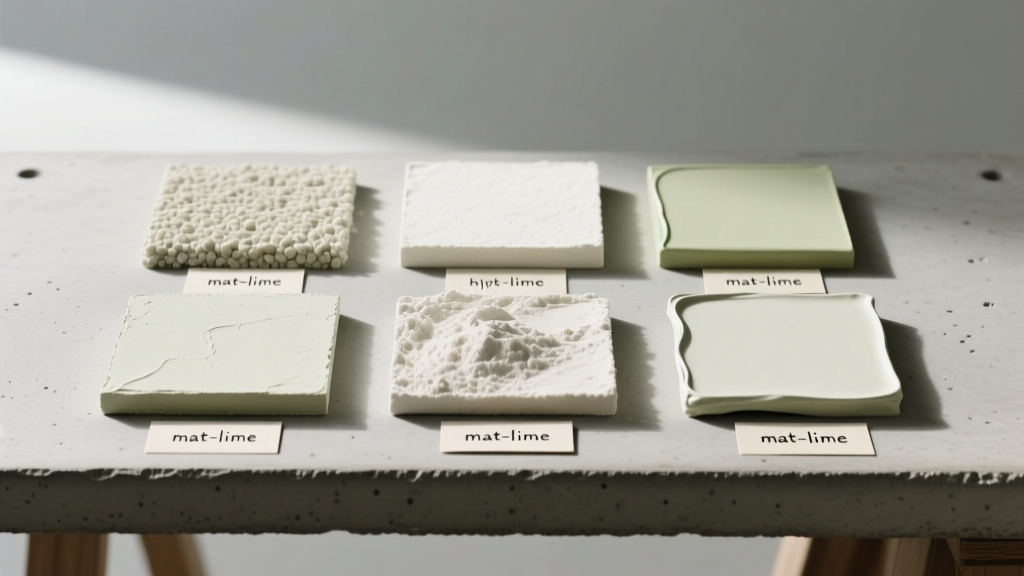
The Chemistry and Classification of Lime Wash Paint
Selecting the correct lime wash paint requires understanding its fundamental chemistry. Unlike modern acrylic or latex paints that form a plastic film on the surface, traditional lime wash is a sacrificial, breathable coating. It consists primarily of calcium hydroxide (slaked lime) suspended in water. When applied to a porous substrate, the water is absorbed, and the calcium hydroxide reacts with atmospheric carbon dioxide in a process called carbonation. This converts the coating back into calcium carbonate (limestone), chemically bonding it to the masonry.
According to the National Lime Association, the purity and crystalline structure of the lime dictate the wash's durability, vapor permeability, and curing time. However, not all lime washes are created equal. The modern market offers three distinct taxonomic categories, each engineered for specific environmental conditions and substrate profiles.
Taxonomy of Lime Wash Formulations
1. Non-Hydraulic (Fat Lime) Wash
Derived from high-calcium limestone (CL90 or Type S hydrated lime), non-hydraulic lime wash relies entirely on air carbonation. It remains highly workable and exceptionally white. Because it lacks hydraulic set properties, it is strictly an air-curing material. It is the gold standard for historic preservation on soft, pre-1900 masonry where maximum vapor permeability is non-negotiable. Historic England mandates non-hydraulic formulations for Grade I and II listed brickwork to prevent moisture entrapment.
2. Natural Hydraulic Lime (NHL) Wash
NHL washes incorporate limestones containing natural clay impurities (silicates and aluminates). When mixed with water, they undergo an initial hydraulic set before carbonation begins. Classified by compressive strength (NHL 2, NHL 3.5, NHL 5), these washes are ideal for damp environments, coastal regions, or substrates that experience frequent driving rain. An NHL 3.5 wash will set sufficiently within 24 hours to resist light wash-off, making it vastly superior to fat lime in unpredictable weather.
3. Acrylic-Modified (Modern Hybrid) Wash
Products like Romabio BioCalce Classico bridge the gap between traditional mineral aesthetics and modern durability. These formulations integrate a small percentage of acrylic resins or siloxanes into a high-pH lime base. The polymers do not form a continuous plastic film; instead, they modify the surface tension of the pores. This allows liquid water to bead and roll off while maintaining high water vapor transmission rates (WVTR). They are designed for modern, denser substrates like concrete masonry units (CMU) and cementitious stucco.
Substrate Compatibility & Selection Matrix
Applying the wrong taxonomy to a specific substrate is the leading cause of lime wash failure. Use the matrix below to align your formulation with the host material.
| Substrate Type | Porosity & Density | Recommended Lime Wash | Technical Rationale |
|---|---|---|---|
| Pre-1900 Soft Brick | High porosity, low compressive strength | Non-Hydraulic (CL90) | Maximizes breathability; prevents spalling from trapped freeze-thaw moisture. |
| Modern Extruded Brick | Medium porosity, high density | NHL 3.5 or Hybrid | Denser substrate requires stronger mechanical bind; hybrids prevent rapid efflorescence. |
| Cementitious Stucco | Low porosity, high alkalinity | Acrylic-Modified Hybrid | Traditional lime will not penetrate dense stucco; polymers ensure adhesion to smooth surfaces. |
| Interior Gypsum Plaster | High porosity, water-soluble | Casein-Bound Lime Wash | Gypsum degrades under high-pH lime; casein (milk protein) acts as a protective binder and buffer. |
Real-World Selection Scenarios & Product Recommendations
Scenario A: Historic Brick Restoration (Exterior)
Challenge: A 19th-century solid masonry wall with original lime mortar joints requires a coating that will not trap moisture or damage the soft brick faces.
Solution: Use a pure non-hydraulic lime putty wash, such as Lime Works International Ecologic Limewash or a site-mixed CL90 putty.
Protocol: Dilute the first coat at a 1:1 ratio (lime putty to water) to act as a primer, allowing deep capillary penetration. Apply the second coat at a 1:1.5 ratio. Mist the wall with water before application to prevent the dry brick from sucking moisture out of the wash too rapidly.
Scenario B: Modern CMU & Exterior Stucco (Commercial)
Challenge: A modern commercial building with dense concrete block and Portland cement stucco requires the matte, mottled aesthetic of lime without the high maintenance of traditional formulations.
Solution: Romabio BioCalce Classico (Acrylic-modified).
Protocol: Prime the dense substrate with a mineral silicate primer (e.g., Romabio MineralShield) to equalize suction. Apply the hybrid wash undiluted or with a maximum 10% water addition. The siloxane modification will provide a 5-to-7-year lifecycle before reapplication is needed, compared to 1-to-2 years for traditional fat lime on dense substrates.
Application Variables: Pigmentation and Curing
Coloring lime wash paint requires strict adherence to chemical limitations. Because the wet mixture is highly alkaline (pH 12-13), organic pigments will degrade and fade rapidly. Only inorganic, alkali-resistant earth oxides (iron oxides, umbers, siennas) and ultramarines should be used.
"The maximum pigment loading for any lime wash formulation should never exceed 10% to 15% by weight of the dry lime equivalent. Exceeding this threshold starves the lime of its binder, resulting in a friable coating that will chalk off onto clothing upon contact."
Curing Timelines: According to NPS Preservation Brief 22, adequate curing between coats is vital. Allow a minimum of 24 to 48 hours between coats for non-hydraulic washes. During hot, dry weather, the wall must be lightly misted with a garden sprayer 2-3 times a day for the first 72 hours to facilitate the carbonation reaction.
Cost Analysis and Coverage Rates
Budgeting for lime wash paint requires calculating both material costs and the labor-intensive application process. Traditional lime washes are materially inexpensive but require multiple thin coats and extensive surface preparation. Hybrids cost more upfront but reduce labor time.
| Formulation Type | Avg. Cost (5-Gal Pail) | Coverage (2 Coats) | Expected Lifecycle |
|---|---|---|---|
| Non-Hydraulic (Site-Mixed CL90) | $45 - $75 | 400 - 500 sq ft | 1 - 3 years (exterior) |
| Non-Hydraulic (Pre-Packaged) | $120 - $180 | 450 - 550 sq ft | 2 - 4 years (exterior) |
| NHL 3.5 Wash | $150 - $220 | 400 - 500 sq ft | 3 - 5 years (exterior) |
| Acrylic-Modified Hybrid | $280 - $350 | 350 - 450 sq ft | 5 - 8 years (exterior) |
Common Failure Modes and Troubleshooting
- Severe Chalking / Dusting: Cause: Applied in temperatures below 45°F (7°C) or rapid drying in direct sun without misting. Fix: Brush off loose material, apply a casein or silicate consolidator primer, and reapply in optimal conditions.
- Flaking and Peeling: Cause: Applied over a non-porous substrate (like painted brick or sealed concrete) or applied too thickly. Lime wash must penetrate the pore structure; if it sits on the surface, it will shrink and crack as water evaporates. Fix: Remove all failing material. If the substrate is sealed, switch to an acrylic-modified hybrid or mechanically abrade the surface to restore porosity.
- Uneven Color / Lap Marks: Cause: Inconsistent substrate suction or stopping mid-wall. Fix: Always pre-dampen the wall to unify suction rates. Maintain a wet edge and work in continuous vertical bands from top to bottom.
By correctly identifying the substrate's porosity and matching it to the appropriate lime wash taxonomy, you ensure a coating that not only delivers the desired aesthetic but actively protects the masonry through superior moisture management.