How Long Does Eco Friendly Paint Last? Durability Analysis
Discover how long eco friendly paint lasts. We analyze the durability, washability, and lifespan of zero-VOC, clay, and mineral silicate paints.
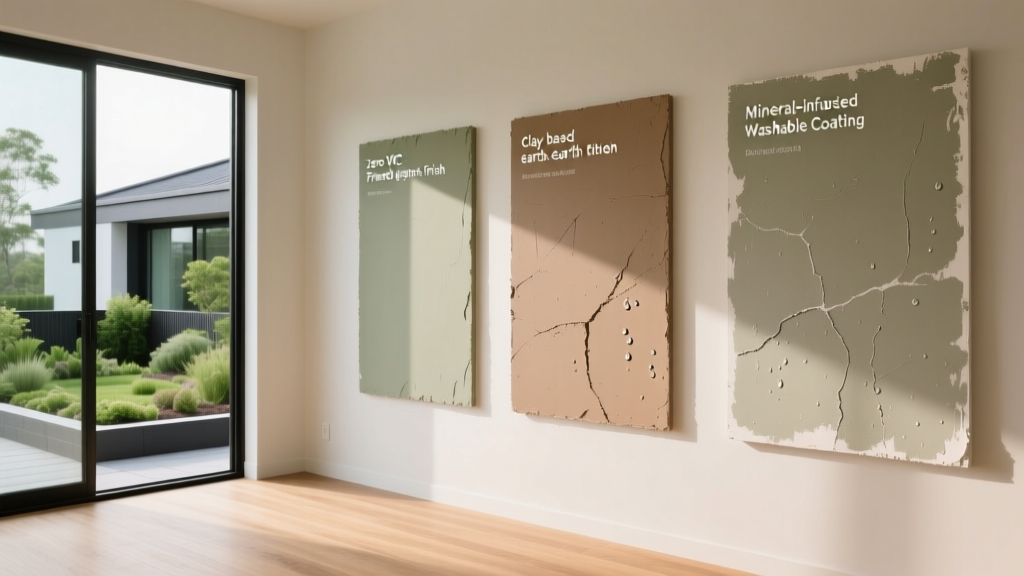
The Chemistry of Wear: Binders vs. Solvents
A persistent myth in the construction industry is that removing volatile organic compounds (VOCs) inherently compromises the structural integrity and lifespan of a coating. This misunderstanding stems from conflating solvents with binders. According to the U.S. Environmental Protection Agency, VOCs primarily act as carriers and solvents that evaporate during the curing process; they are not the primary structural matrix of the dried film.
The durability of any eco friendly paint depends entirely on its binder system. Modern zero-VOC waterborne acrylics utilize advanced polymer emulsions that cross-link upon water evaporation, achieving tensile strength and adhesion metrics identical to, or exceeding, traditional solvent-borne alkyds. Conversely, natural paints like clay or milk paints rely on physical adhesion and casein proteins, which dictate entirely different wear profiles and environmental tolerances.
Eco Friendly Paint Lifespan Matrix
The term 'eco friendly' encompasses a wide spectrum of chemistries. Below is a comparative analysis of the four primary sustainable coating categories, evaluating their expected service life under standard interior residential conditions (average humidity 40-50%, normal UV exposure, standard temperature fluctuations).
| Coating Type | Primary Binder | Expected Interior Lifespan | Washability Class | Moisture Tolerance |
|---|---|---|---|---|
| Premium Zero-VOC Acrylic | 100% Acrylic Polymer | 8 - 12 Years | Class 1 (Extreme) | Moderate (Blister risk) |
| Mineral Silicate | Potassium Silicate | 20 - 30+ Years | Class 2 (High) | Exceptional (Vapor permeable) |
| Natural Clay / Earth | Clay / Cellulose | 3 - 5 Years (High Traffic) 10+ Years (Low Traffic) |
Class 5 (None/Very Low) | Poor (Re-emulsifies) |
| Milk Paint (Casein) | Casein Protein / Lime | 5 - 7 Years | Class 3 (Moderate) | Poor (Requires topcoat) |
Real-World Failure Modes and Edge Cases
While sustainable coatings meet rigorous environmental standards set by organizations like Green Seal, their physical limitations must be respected. Specifying the wrong eco-paint for a specific micro-environment is the leading cause of premature failure.
1. Flash Rusting in Zero-VOC Acrylics
Traditional paints utilized VOC-heavy anti-corrosive additives to prevent fastener oxidation. In early generations of zero-VOC paints, the omission of these additives, combined with the high water content of the emulsion, caused unprimed drywall nails and screws to flash-rust, bleeding through the topcoat. Modern premium zero-VOC lines (such as Benjamin Moore's Eco Spec or Sherwin-Williams Emerald) have mitigated this through advanced rust-inhibitive acrylic polymers, but contractors must still apply a dedicated zero-VOC stain-blocking primer (e.g., Zinsser Bulls Eye 1-2-3 Water-Based) over all metal fasteners before topcoating.
2. Efflorescence Trapping and Masonry Blistering
Applying standard zero-VOC acrylics over exterior or interior masonry (stucco, CMU, brick) is a critical error. Acrylics form a non-permeable plastic film. When moisture migrates through the masonry, it becomes trapped, pushing soluble salts to the surface (efflorescence) and causing the acrylic film to blister and peel within 12 to 18 months. For masonry substrates, mineral silicate paints are mandatory. Silicates chemically petrify with the silica in the masonry (a process called silicification), creating a micro-crystalline structure that is entirely vapor-permeable while remaining completely UV-stable.
3. Clay Paint Re-emulsification in High Humidity
Natural clay paints, such as those from Earthborn or Farrow & Ball's specific mineral lines, offer unmatched aesthetic depth and zero off-gassing. However, their binder (often a cellulose or starch derivative) remains water-soluble after curing. In bathrooms or kitchens where steam condensation is frequent, clay paint will re-emulsify, streak, and degrade. These coatings are strictly limited to low-humidity, low-touch environments like bedroom ceilings or formal living areas.
Washability and ASTM D2486 Scrub Ratings
Durability is not just about adhesion; it is about surface abrasion resistance. The industry standard for measuring this is ASTM D2486, which evaluates the scrub resistance of interior architectural paints using a standardized bristle brush and abrasive medium.
- Class 1 (Premium Zero-VOC Acrylics): Withstands >1,000 scrub cycles without breaking through the film. Suitable for high-traffic commercial corridors, pediatric wards, and residential kitchens. Example: PPG Pure Performance Zero-VOC.
- Class 2 (Mineral Silicates & Mid-tier Zero-VOC): Withstands 200 to 1,000 cycles. Mineral silicates do not 'scrub off' because they are part of the wall, but aggressive scrubbing can alter their matte sheen and cause localized burnishing.
- Class 5 (Natural Clays & Milk Paints): Fails at <50 cycles. Attempting to scrub a stain off a natural clay wall will remove the pigment and binder entirely, requiring a localized patch and full-wall burnishing to hide the repair.
Lifecycle Cost vs. Upfront Price
Evaluating eco friendly paint requires shifting from upfront material cost to lifecycle cost. The labor to prep, prime, and paint a room often accounts for 80% of the total project cost; therefore, extending the repaint cycle by even three years yields massive financial dividends.
Cost Breakdown per 1,000 Sq. Ft. of Wall Space (2 Coats):
Standard High-VOC Acrylic: $350 material | 7-year lifespan | $50/year
Premium Zero-VOC Acrylic: $650 material | 10-year lifespan | $65/year
Mineral Silicate (over masonry): $950 material | 25-year lifespan | $38/year
While mineral silicate paints carry the highest upfront material cost—often exceeding $100 per gallon—their 25+ year lifespan on appropriate substrates makes them the most economically viable sustainable coating for commercial masonry exteriors and high-end residential plaster interiors over a 50-year building lifecycle.
Expert Application Protocol for Maximum Longevity
Natural and zero-VOC coatings are significantly less forgiving of poor surface preparation than their solvent-heavy predecessors. To achieve the maximum rated lifespan, contractors must adhere to the following substrate protocols:
- Moisture Testing: Use a pin-type moisture meter. Drywall must read below 12% moisture content. Plaster and masonry must read below 8%. Applying zero-VOC acrylics over damp drywall traps moisture, leading to microbial growth (mildew) behind the impermeable film.
- pH Verification for Silicates: Mineral silicate paints require an alkaline environment to trigger silicification. Test the substrate with pH strips. The surface pH must be between 11 and 13. If the masonry is old, carbonated, and neutral (pH 7), apply a potassium silicate primer to restore alkalinity before topcoating.
- Temperature and Humidity Windows: Zero-VOC waterborne paints rely on coalescing agents to fuse polymer particles. If the ambient temperature drops below 50°F (10°C) during application and the first 4 hours of curing, the particles will not coalesce properly, resulting in a chalky, brittle film that will fail within months. Maintain ambient temperatures above 55°F and relative humidity below 65% during application.
- Dry Film Thickness (DFT) Monitoring: Use a wet mil gauge during application. Applying eco-paints too thinly starves the binder, reducing scrub resistance. Applying them too thickly prevents the water from evaporating uniformly, causing mud-cracking. Target the manufacturer's exact wet mil specification (typically 3.5 to 4.5 wet mils for premium acrylics).
By matching the specific chemical properties of sustainable coatings to their ideal environmental and substrate conditions, architects and builders can specify eco friendly paint systems that outperform traditional toxic alternatives in both longevity and lifecycle value.