How to Finance the Cost to Build an Indoor Gun Range
Discover how to finance the cost to build an indoor gun range. Learn about SBA loans, firearms-friendly lenders, HVAC costs, and loan packaging.

The Capital Reality: Breakdown of Indoor Range Construction Costs
Securing capital for a commercial shooting facility requires a precise understanding of where the money goes. The total cost to build an indoor gun range typically falls between $1.5 million and $4 million for a standard 10-to-15-lane facility. Unlike standard retail build-outs, shooting ranges require heavy-duty environmental controls, ballistic engineering, and specialized acoustic treatments that drastically inflate the initial capital expenditure.
Lenders underwriting these projects will scrutinize your cost allocations. A common pitfall for first-time range owners is underestimating the mechanical and environmental engineering requirements. Below is a realistic cost allocation matrix for a 12-lane commercial facility in the current 2026 construction market.
| Construction Category | Estimated Cost Range | Percentage of Total Budget |
|---|---|---|
| Facility Shell & Core Build-out | $600,000 - $1,200,000 | 35% - 40% |
| HVAC & Lead Filtration (HEPA Systems) | $250,000 - $450,000 | 15% - 20% |
| Bullet Traps, Backstops & Lane Dividers | $200,000 - $350,000 | 12% - 15% |
| Acoustic Treatment & Soundproofing | $120,000 - $200,000 | 8% - 10% |
| Retail Showroom, Vault & POS Build-out | $150,000 - $250,000 | 10% - 12% |
| Permitting, Environmental & Soft Costs | $80,000 - $150,000 | 5% - 8% |
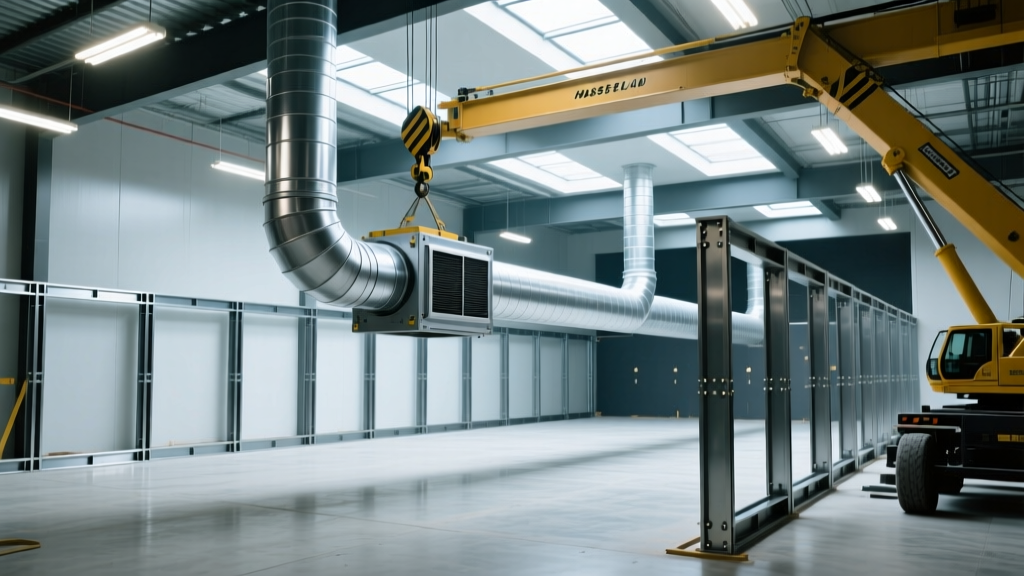
The HVAC line item frequently causes sticker shock. According to NIOSH guidelines for indoor gun ranges, facilities must maintain specialized negative-pressure ventilation systems with HEPA filtration to manage airborne lead styphnate and antimony from primer residue. Standard commercial rooftop units will not pass municipal health inspections or satisfy lender environmental risk requirements.
Navigating Firearms Industry Lending Restrictions
The most significant hurdle in financing an indoor gun range is not the business model itself, but the institutional policies of mainstream financial institutions. Many tier-one national banks classify firearms manufacturing and retail under restricted industry policies, often lumping them in with "sin stocks" or high-liability sectors.
To successfully finance the cost to build an indoor gun range, you must target firearms-friendly capital sources. These include regional community banks, local credit unions, specialized equipment financiers, and Certified Development Companies (CDCs) that process government-backed loans. Building a relationship with a regional lender who understands the local demand for shooting sports and hunting culture is often the fastest path to a term sheet.
Top Financing Vehicles for Range Construction
Once you have identified a receptive lending institution, you must select the right capital stack. Most range developments require a blend of real estate financing, equipment financing, and working capital.
SBA 7(a) and 504 Loan Programs
The SBA 7(a) Loan Program remains the most accessible vehicle for range developers who need to finance leasehold improvements, inventory, and working capital. Because the SBA guarantees a portion of the loan, regional banks are more willing to lend to restricted industries. For developers purchasing the land and constructing a ground-up facility, the SBA 504 program is superior, allowing for up to $5.5 million in financing with a mandatory 10% equity injection from the borrower.
Equipment Financing for Ballistics and HVAC
Bullet traps (such as granular rubber or steel deceleration chambers) and commercial HEPA ventilation systems hold their value and can be easily repossessed. This makes them ideal candidates for dedicated equipment financing. Equipment lenders will often finance 80% to 100% of the hard costs of the traps and HVAC units over 3-to-7-year terms, preserving your cash for retail inventory and marketing.
| Financing Type | Best Used For | Typical LTV / Advance Rate | Term Length |
|---|---|---|---|
| SBA 504 Loan | Ground-up real estate & heavy construction | 90% (10% down payment) | 20 - 25 Years |
| SBA 7(a) Loan | Leasehold improvements, inventory, working capital | Up to $5M total exposure | 10 - 25 Years |
| Equipment Financing | Bullet traps, HEPA HVAC, target retrieval systems | 80% - 100% of equipment cost | 3 - 7 Years |
| Commercial Real Estate (CRE) | Purchasing existing warehouse shells | 65% - 75% LTV | 5 - 15 Years (Amortized) |
Building a Bulletproof Loan Package
Underwriters evaluating a shooting range require more than a standard business plan. You must proactively address the unique environmental and regulatory risks associated with the business. Your loan package must include the following specialized documentation:
- Phase I Environmental Site Assessment (ESA): Lenders are terrified of CERCLA (Superfund) liability. If you are leasing or buying a property that previously housed a range, or if you are building a new one, a Phase I ESA proves there is no pre-existing lead contamination in the soil or groundwater.
- Lead Mitigation & Cleaning Protocol: Provide a detailed operational plan showing how lead dust will be managed. Include contracts or quotes from certified hazardous waste disposal companies for the regular removal of spent lead and HEPA filter media.
- Acoustic Engineering Report: Zoning boards and lenders will want proof that your soundproofing plan (typically involving staggered stud walls, mass-loaded vinyl, and acoustic baffles) will prevent noise ordinance violations that could shut down the business.
- NSSF Market Data Integration: Utilize demographic and participation data from the National Shooting Sports Foundation (NSSF) to prove local market demand. Show the underwriter the density of concealed carry permit holders and hunting license registrations in your specific county.
Projecting ROI and Cash Flow for Underwriters
To secure favorable interest rates, your pro forma must demonstrate diverse, high-margin revenue streams. Lane fees alone will not satisfy debt service coverage ratio (DSCR) requirements of 1.25x or higher. A financially resilient indoor range relies on a triad of revenue:
- Lane Rentals & Memberships: Standard walk-in rates range from $20 to $35 per hour. However, underwriters prefer to see a strong recurring revenue model. Annual memberships ($300-$600/year) provide the predictable cash flow needed to service long-term debt.
- Retail & Ammunition Sales: Ammunition carries lower margins (10%-20%) but drives high volume. Firearms and optics carry higher margins (25%-40%). Your retail build-out must prioritize high-traffic impulse purchases near the point-of-sale.
- Training & Certification Classes: This is the highest margin sector of the business. Concealed carry permit classes, NRA certification courses, and private tactical instruction yield profit margins exceeding 60%, as the primary cost is instructor labor and classroom space.
Frequently Asked Questions
Can I use an SBA loan to build an indoor gun range?
Yes. The SBA does not prohibit lending to firearms retailers or range operators, provided the business complies with all federal, state, and local laws (including holding a valid FFL if selling firearms). The restriction usually comes from the individual bank's internal policies, not the SBA itself. Finding an SBA-approved lender who is friendly to the firearms industry is the key.
How much does it cost to install HVAC for a 10-lane range?
Expect to pay between $150,000 and $250,000 for a code-compliant, negative-pressure HEPA ventilation system for a 10-lane facility. This includes the make-up air units, exhaust fans, ductwork, and filtration banks required to maintain the 75-feet-per-minute downrange air velocity mandated by health and safety standards.
What is the biggest hidden cost in range construction?
Electrical upgrades and three-phase power requirements. Bullet trap motors, heavy-duty HVAC compressors, and commercial lighting often require a massive upgrade to the facility's electrical service. Upgrading a standard commercial warehouse from 200-amp single-phase to 800-amp three-phase power can add $40,000 to $80,000 to your build-out costs, a line item frequently missed in preliminary estimates.
Written by
James ThorntonJames Thornton is a construction industry veteran with 25 years of hands-on experience in wood framing, lumber grading, and residential building codes. He started as a framing carpenter in rural Oregon, earned his ICC Residential Building Inspector certification, and eventually became a senior plan reviewer for the City of Portland Bureau of Development Services. James holds a B.S. in Wood Science & Technology from Oregon State University and is a certified lumber grader through the West Coast Lumber Inspection Bureau (WCLIB). He has inspected over 3,000 residential construction sites and authored the city's internal guide on advanced framing techniques (2x6 at 24" O.C.). James lives in Bend, OR, where he builds custom timber-frame cabins and competes in lumberjack sports.
More from James Thornton
View all
Insulation
Best Home Insulation Materials: Complete 2026 Guide
Compare top home insulation materials for 2026. Find R-values, installed costs per square foot, and best uses for fiberglass, spray foam, and mineral wool.
Aug 4, 2026

Sustainable Building
Certify Your Green Building Material for LEED and WELL
Step-by-step guide to certifying a green building material for LEED v5 and WELL v2. Master EPDs, HPDs, and VOC limits for 2026 project specifications.
Aug 4, 2026

Stone & Masonry
Veneer Stacked Stone Panels: Interior Design & Style Showcase
Discover how veneer stacked stone panels transform interiors. Explore modern design profiles, material pairings, and technical installation specs.
Aug 4, 2026