Smart Ways to Reduce the Cost to Build House in NC (2026)
Discover actionable strategies to reduce the cost to build house in NC. Learn regional material swaps, lot prep savings, and HVAC hacks for 2026.

The 2026 North Carolina Construction Baseline
Reducing the cost to build house in NC requires more than just negotiating with contractors; it demands a strategic approach to the state's unique geography, climate, and county-level building codes. In 2026, the national average for residential construction hovers around $165 per square foot, but North Carolina's diverse topography creates extreme regional variances. According to data tracked by the National Association of Home Builders, site preparation and material logistics can swing your budget by up to 25% depending on whether you are building in the Blue Ridge Mountains, the Piedmont, or the Coastal Plain.
| NC Region | Avg Cost per Sq Ft (2026) | Primary Cost Drivers |
|---|---|---|
| Mountains (Asheville, Boone) | $185 - $240 | Bedrock blasting, steep driveway engineering, retaining walls. |
| Piedmont (Charlotte, Raleigh) | $160 - $210 | Red clay soil mitigation, strict municipal impact fees, labor demand. |
| Coastal (Wilmington, OBX) | $175 - $230 | Wind mitigation, elevated pier foundations, corrosion-resistant fasteners. |
Site Selection & Lot Prep: Avoiding the Red Clay Trap
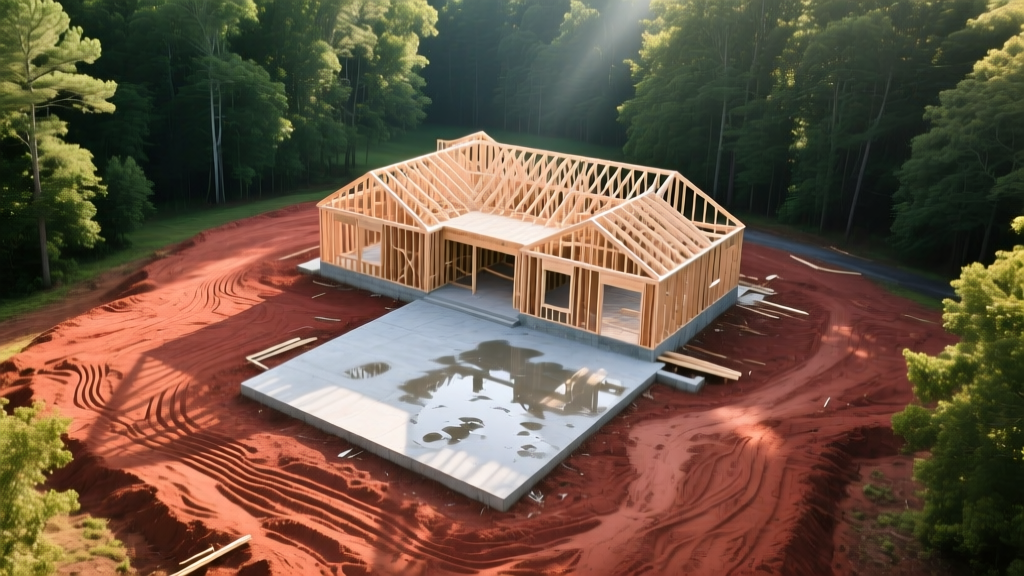
The Piedmont region is notorious for its expansive red clay soil, which swells when wet and shrinks when dry. Failing to address this during lot prep is a primary reason budgets balloon mid-build. Standard soil testing costs between $800 and $1,500, but it can save you tens of thousands in foundation repairs.
Cost-Saving Excavation Strategies
- Lime Stabilization over Over-Excavation: If your soil report shows high plasticity clay, contractors may recommend over-excavating 3 to 4 feet and backfilling with engineered gravel. This costs $12,000 to $18,000. A cheaper alternative is lime stabilization, where lime is tilled into the native soil to alter its chemical structure and reduce swelling. This typically costs $4,000 to $7,000 for a standard 2,500 sq ft footprint.
- Crawlspace vs. Slab: In the Piedmont, a monolithic slab-on-grade is the cheapest foundation ($6 to $8 per sq ft). However, if your lot has a slope greater than 5%, a stepped footing with a sealed crawlspace becomes necessary. Avoid full basements in NC unless you are in the mountains with solid bedrock; the water table and clay drainage in the Piedmont make basement waterproofing prohibitively expensive and prone to failure.
Climate-Smart Material Swaps That Slash Budgets
North Carolina's mixed-humid climate (Zone 3 in the south, Zone 4 in the north) dictates specific material requirements. You can significantly reduce the cost to build house in NC by swapping premium materials for high-performance alternatives that meet local codes without the premium markup.
| Component | Premium Standard | Budget-Smart NC Alternative | Estimated Savings |
|---|---|---|---|
| Exterior Siding | James Hardie Fiber Cement ($8-$12/sq ft) | LP SmartSide Engineered Wood ($5-$8/sq ft) | $4,500 - $7,000 |
| Roofing | Standing Seam Metal ($14-$18/sq ft) | Architectural Asphalt Shingles ($4-$6/sq ft) | $15,000 - $22,000 |
| Windows | Triple-Pane Fiberglass ($800+ per unit) | Double-Pane Low-E Vinyl ($350-$450 per unit) | $6,000 - $10,000 |
| Interior Trim | Solid Pine MDF ($3.50/linear ft) | PVC / Polystyrene Trim ($1.80/linear ft) | $1,500 - $2,500 |
LP SmartSide is particularly advantageous in NC. It resists the high humidity and termite pressure of the coastal and Piedmont regions better than raw wood, and it is lighter and faster to install than fiber cement, reducing labor hours. Ensure your contractor uses the LP SmartSide proprietary primer and paint system to maintain the 50-year warranty.
HVAC & Insulation: Beating the Piedmont Humidity for Less
Heating and cooling account for nearly half of a home's energy use in North Carolina. Oversizing your HVAC system is a common, expensive mistake. A properly sized system dehumidifies the air during NC's muggy summers; an oversized system cools the air too quickly, leaving the house feeling cold and clammy while driving up upfront equipment costs.
The Heat Pump Advantage
Because NC winters are relatively mild, natural gas furnaces are often unnecessary and require expensive gas line trenching. According to the EPA Energy Star program, modern air-source heat pumps are incredibly efficient in climates where winter temperatures rarely drop below 20°F.
- Target SEER2 Rating: NC code mandates a minimum 15 SEER2, but upgrading to a 16 or 18 SEER2 variable-speed heat pump costs about $1,200 to $2,000 more upfront. This upgrade qualifies for local utility rebates (such as those from Duke Energy) and federal tax credits under the Inflation Reduction Act, effectively neutralizing the upgrade cost while cutting monthly summer cooling bills by 20%.
- Ductwork Placement:Never run ductwork through an unconditioned attic in NC. Summer attic temperatures routinely exceed 130°F, causing massive thermal loss and condensation issues on the ducts. Run all ducts through sealed, conditioned crawlspaces or dropped soffits inside the building envelope.
Design & Layout Hacks for NC Builders
The physical shape of your house directly dictates labor and material waste. Implementing these design frameworks will keep your framing and plumbing budgets in check.
The 'Keep It Simple' Roof Matrix
Roof complexity is measured by the number of valleys, hips, and dormers. Every valley requires specialized flashing, ice and water shield (mandatory in NC mountain counties), and increases the risk of leaks.
- Optimal Pitch: Stick to a 4/12 to 6/12 roof pitch. This is steep enough to shed heavy NC thunderstorm rain and pine needles efficiently, but shallow enough that roofers do not require specialized safety harnesses and scaffolding, which adds 15% to labor costs.
- Gable over Hip: A simple front-to-back gable roof uses standard trusses that can be craned into place in a single day. Hip roofs require custom jack rafters and take 30% longer to frame and shingle.
Plumbing Stacking
Design your floor plan so that second-floor bathrooms sit directly above first-floor kitchens or laundry rooms. This 'plumbing stack' reduces the amount of PEX piping, copper drain lines, and vent stacks required. It also minimizes the number of times the plumber must core-drill through engineered floor joists, which preserves the structural integrity of the framing and speeds up the rough-in phase by 1 to 2 days.
Navigating NC County Permitting & Impact Fees
Impact fees and utility tap costs vary wildly across North Carolina's 100 counties, and they are non-negotiable expenses that must be factored into your initial budget.
- Wake County (Raleigh area): Known for high water and sewer capacity fees, which can range from $4,000 to $8,000 per lot depending on the municipality. However, school and road impact fees are often absorbed by county taxes rather than charged directly to the builder.
- Mecklenburg County (Charlotte area): Strict tree ordinance compliance can force you to pay 'tree replacement fees' if you clear too much of your lot. Budget $2,000 to $5,000 for an arborist consultation and mitigation plan to avoid municipal fines.
- Rural Counties (e.g., Chatham, Harnett): Lower impact fees, but you will likely need a well and septic system. A 4-bedroom conventional septic system costs $4,500 to $7,000, while an engineered aerobic system (required for poor-draining clay soils) can push that cost to $12,000 or more.
By aligning your design choices with North Carolina's specific environmental and regulatory landscape, you can systematically strip away unnecessary costs. Focus your budget on structural resilience and moisture management, and value-engineer the cosmetic finishes to keep your overall cost to build house in NC well within your financial targets.
Written by
Priya KapoorPriya Kapoor is a real estate market analyst and construction economics researcher with expertise in housing affordability, development feasibility, and infrastructure investment. She holds a Master of Regional Planning from Cornell University and previously worked as a senior analyst at CBRE's Investment Properties group, where she modeled returns for $4B in mixed-use development pipelines. Priya now runs an independent research practice advising developers, municipalities, and REITs on construction cost forecasting and market timing. She publishes the quarterly "BuildMat Market Pulse" report tracking material price indices across 12 commodity categories. Based in Austin, TX, Priya serves on the board of Habitat for Humanity Austin and is a marathon runner.
More from Priya Kapoor
View all
Construction Cost
Cost to Build a 1600 Sq Ft Home in 2026: Full Breakdown
Accurate 2026 cost to build a 1600 sq ft home—material, labor, and regional pricing breakdowns included. Plan your budget with real-time estimates.
Aug 11, 2026

Wood & Lumber
Name the Types of Wood for Pressure Treatment and Preservation
Learn how to name the types of wood best suited for pressure treatment. Compare species treatability, chemical retention levels, and 2026 preservation costs.
Aug 4, 2026

Stone & Masonry
Stone Veneer Suppliers Lindenhurst: 2026 Cost Analysis
Analyze 2026 stone veneer costs in Lindenhurst, NY. Compare local supplier pricing, delivery fees, and Suffolk County installation labor rates.
Aug 4, 2026