8 x 10 Wool Carpet Specs: Performance Ratings & Density Guide
Evaluate 8 x 10 wool carpet performance ratings. Compare face weight, density, twist levels, and fire ratings to ensure you buy durable, high-grade wool.
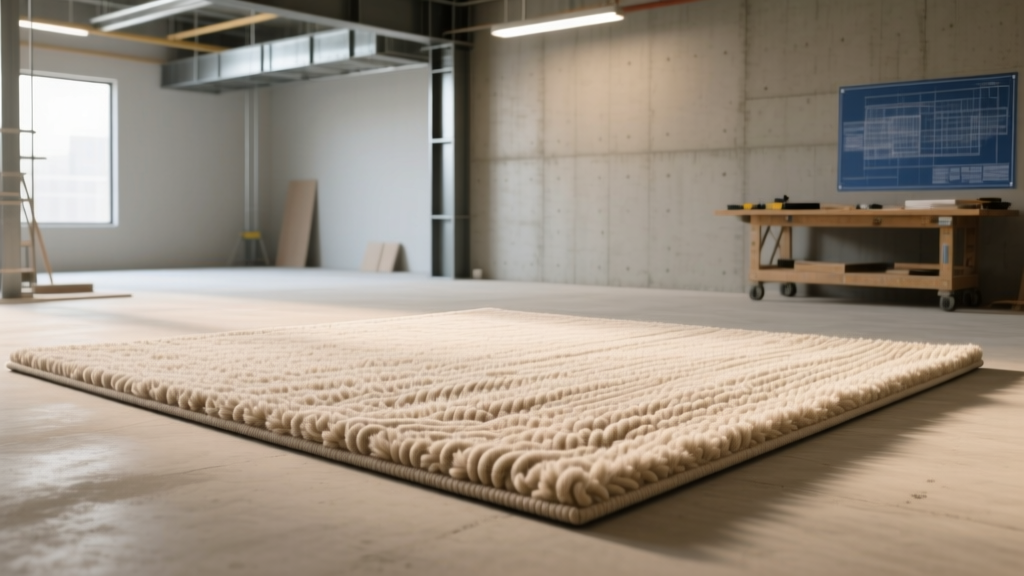
Decoding the Baseline: What Defines an 8 x 10 Wool Carpet?
When sourcing an 8 x 10 wool carpet, you are typically purchasing a custom-cut area rug derived from broadloom carpet rolls. Broadloom wool is manufactured in 12-foot or 15-foot widths. Cutting an 8 x 10 section (80 square feet) from a 12-foot roll requires precise yield calculations and edge-binding specifications to prevent structural degradation. Unlike pre-manufactured rugs, a cut-and-bound 8 x 10 wool carpet allows you to dictate the exact performance specifications, from pile height to backing material, tailoring the floor covering to specific acoustic, thermal, and traffic demands.
Quick Specs Snapshot: Premium 8 x 10 Wool
- Ideal Face Weight: 45 oz to 60 oz per square yard
- Minimum Density Rating: 5,000 (calculated)
- Staple Length: 4 to 6 inches (New Zealand wool)
- Twist Level: 5 to 6 Turns Per Inch (TPI)
- Fire Rating: Class 1 (ASTM E648) without chemical retardants
Critical Performance Metrics for Wool Pile
Evaluating the physical construction of wool carpeting requires moving beyond superficial aesthetics to analyze the structural geometry of the yarn. The longevity of an 8 x 10 wool rug in high-traffic zones is dictated by three interdependent variables: face weight, density, and twist.
Face Weight and Density Calculations
Face weight measures the ounces of fiber per square yard of carpet. While a 35 oz face weight is standard for residential polyester, premium wool carpets should range from 45 oz to 60 oz. However, face weight alone is a flawed metric if the pile height is excessively tall. A 60 oz carpet with a 1-inch pile will crush and mat faster than a 45 oz carpet with a 0.5-inch pile.
To find the true durability metric, you must calculate the Density Rating using the industry-standard formula:
Density = (Face Weight in oz/sq yd × 36) ÷ Pile Height in inches
For an 8 x 10 wool carpet intended for a living room with heavy foot traffic, target a density rating above 5,000. For commercial spaces or entryways, demand a density rating exceeding 7,000. According to testing standards published by the Carpet and Rug Institute (CRI), higher density directly correlates with reduced pile packing and extended lifecycle.
Twist Level and Staple Length
Wool fibers must be spun into yarn and twisted to maintain structural integrity. Look for a twist level of 5 to 6 Turns Per Inch (TPI). Furthermore, the staple length (the length of the individual raw wool fibers before spinning) dictates shedding behavior. Short-staple wool (under 3 inches) will shed continuously for months. Specify New Zealand wool with a 4 to 6-inch staple length to ensure the fibers lock securely into the spun yarn, virtually eliminating long-term shedding.
Specification Matrix: Good vs. Premium vs. Commercial
Use this matrix to evaluate the spec sheets provided by your mill or retailer when ordering your 8 x 10 cut.
| Specification | Good (Light Traffic) | Premium (Residential Heavy) | Commercial (Hospitality) |
|---|---|---|---|
| Face Weight | 35 - 40 oz | 45 - 55 oz | 55 - 70 oz |
| Pile Height | 0.625" (5/8") | 0.5" (1/2") | 0.25" - 0.375" |
| Calculated Density | 2,160 | 3,960 | 6,720+ |
| Twist (TPI) | 3.5 - 4.0 | 5.0 - 5.5 | 6.0+ |
| Primary Backing | Woven Polypropylene | Heavy Woven Jute/Poly | ActionBac / High-Density Poly |
Standardized Testing and Industry Ratings
Wool possesses inherent chemical and physical properties that allow it to achieve high performance ratings without the synthetic chemical treatments required by nylon or polyester.
Flammability and Fire Resistance (ASTM E648)
Wool is naturally flame-retardant due to its high nitrogen content (16%) and high moisture regain (up to 30% of its weight). When tested under ASTM E648 (Standard Test Method for Critical Radiant Flux of Floor-Covering Systems) and NFPA 253, untreated wool carpets routinely achieve a Class 1 fire rating. This means the carpet will self-extinguish and will not melt or drip like synthetic fibers, making an 8 x 10 wool rug highly desirable for rooms with wood-burning fireplaces or strict commercial fire codes.
Acoustic and Thermal Insulation
The crimped structure of wool fibers traps air, providing exceptional thermal and acoustic insulation. An 8 x 10 wool carpet paired with a 40 oz rebond or felt pad will yield an Impact Insulation Class (IIC) rating of 55 to 65, significantly reducing footfall noise transmission to floors below. Thermally, the combined R-value of a premium wool carpet and dense pad ranges from R-2.5 to R-4.0, contributing to measurable energy retention in ground-floor rooms.
Indoor Air Quality and VOCs
Wool is a natural protein fiber (keratin) and does not off-gas volatile organic compounds (VOCs). When specifying your 8 x 10 cut, ensure the adhesives used in the backing and the binding process are certified by the WoolSafe Organisation or carry the CRI Green Label Plus certification to guarantee zero off-gassing of formaldehyde or styrene.
Real-World Pricing and Yield for 8 x 10 Dimensions
Because an 8 x 10 carpet is 80 square feet (8.88 square yards), pricing must account for material, waste, and custom fabrication. Premium New Zealand wool broadloom ranges from $12 to $22 per square foot.
- Material Cost: $960 to $1,760 for 80 sq ft.
- Yield Waste: Cutting an 8x10 from a 12-foot roll leaves a 4-foot by 10-foot offcut. Some mills charge a 'cut fee' or require you to purchase the full 12x10 section (120 sq ft) to avoid remnant waste.
- Edge Binding (Serging): An 8x10 rug has 36 linear feet of perimeter. Professional 3-inch linen binding, double-stitched with UV-resistant nylon thread, costs $15 to $25 per linear foot, adding $540 to $900 to the final fabrication cost.
- Total Investment: Expect to pay between $1,800 and $3,200 for a fully bound, premium-spec 8 x 10 wool carpet.
Troubleshooting Common Specification Failures
Even high-grade wool can fail if the specifications are mismatched to the environment. Watch for these specific failure modes:
Failure Mode 1: Excessive Initial Shedding
Cause: The mill used short-staple British wool (under 3 inches) or recycled wool shoddy instead of long-staple New Zealand wool. The short fibers cannot be securely locked into the yarn twist.
Fix: Demand a spec sheet verifying 100% virgin, long-staple New Zealand wool. If already purchased, use a vacuum with a beater bar turned off (suction only) for the first 30 days to extract loose fibers without pulling anchored ones.
Failure Mode 2: Pile Matting and Crushing
Cause: The density rating is below 3,500, or the pile height exceeds 0.75 inches. The yarn lacks the structural support to rebound after compression from heavy furniture.
Fix: For future purchases, cap pile height at 0.5 inches and verify a density rating above 5,000. For existing rugs, steam cleaning and aggressive raking with a carpet rake can temporarily lift crushed fibers.
Failure Mode 3: Edge Fraying and Delamination
Cause: The perimeter binding was applied with single-stitch hot glue rather than double-stitched industrial sewing, or the primary backing lacked sufficient latex/adhesive coating.
Fix: Specify 3-inch cotton or linen binding, sewn with a double-lock stitch using size #69 bonded nylon thread. Never accept glued serging on an 8 x 10 wool rug, as the tension of moving a rug of this size will snap glued threads.
Sourcing and Verification Checklist
Before signing a purchase order for your 8 x 10 wool carpet, require the supplier to provide written confirmation of the following specifications:
- Fiber Origin: 100% Virgin New Zealand Wool (No blended synthetics or recycled shoddy).
- Face Weight & Pile Height: Documented to allow independent density calculation.
- Primary & Secondary Backing: Woven polypropylene or jute, laminated with low-VOC, non-solvent adhesives.
- Binding Method: Machine-sewn, double-lock stitch with UV-stable nylon thread.
- Certifications: CRI Green Label Plus for adhesives and backing; WoolSafe approved for any topical stain-resist treatments.
By strictly enforcing these performance ratings and physical specifications, you ensure your 8 x 10 wool carpet functions as a durable, acoustically superior, and structurally sound architectural element rather than a disposable floor covering.