Carpet Installation Cost by Material: 2026 Pricing Breakdown
Explore the 2026 carpet installation cost breakdown by fiber type. Compare nylon, wool, and triexta pricing, padding requirements, and labor.
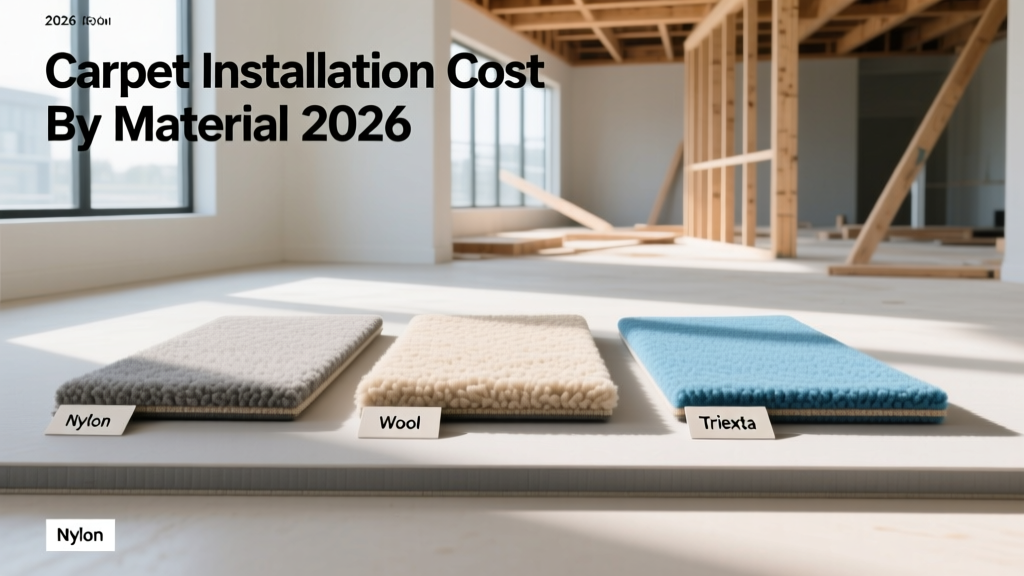
The Carpet Material Taxonomy: How Fiber Dictates Price
When calculating the total carpet installation cost for a residential or commercial project, treating 'carpet' as a single monolithic material is a critical error. Carpet is a complex taxonomy of synthetic and natural fibers, each with distinct manufacturing processes, durability profiles, and specific underlayment requirements. The fiber you select does not just change the material price per square foot; it fundamentally alters the padding requirements, labor complexity, and long-term maintenance costs.
As of 2026, supply chain stabilizations have normalized the pricing of petroleum-based synthetics like polyester and olefin, while natural fibers like wool continue to command premium surcharges due to global agricultural constraints. Understanding this material taxonomy is the only way to accurately forecast your project's financial footprint.
2026 National Average Quick Snapshot
Total Installed Cost Range: $3.50 to $15.00+ per square foot.
Most Common Choice (Nylon 6,6): $6.50 to $9.00 per square foot installed.
Labor & Padding Baseline: $1.50 to $2.50 per square foot (excluding subfloor prep).
2026 Carpet Installation Cost Matrix by Fiber Type
The following matrix breaks down the fully loaded installation costs based on the five primary carpet fibers available on the market. These figures include mid-grade material, standard padding, and professional labor for a standard rectangular room.
| Fiber Type | Material Cost (per sq.ft.) | Required Pad Type | Labor & Pad Cost | Total Installed Cost |
|---|---|---|---|---|
| Nylon (6 & 6,6) | $3.50 - $7.00 | 8lb Rebond Urethane | $1.75 - $2.25 | $5.25 - $9.25 |
| Polyester (PET) | $2.00 - $5.00 | 6lb - 8lb Rebond | $1.50 - $2.00 | $3.50 - $7.00 |
| Olefin (Polypropylene) | $1.50 - $3.50 | Synthetic Felt / Rubber | $1.50 - $2.00 | $3.00 - $5.50 |
| Triexta (PTT) | $4.00 - $8.00 | 8lb Rebond / Memory Foam | $1.75 - $2.50 | $5.75 - $10.50 |
| Wool (Natural) | $8.00 - $15.00+ | 40oz Woven Felt | $2.50 - $3.50 | $10.50 - $18.50+ |
Data synthesized from HomeGuide's carpet installation cost data and 2026 manufacturer MSRP averages.
Synthetic Fibers: Nylon, Polyester, and Olefin
Nylon remains the undisputed king of residential durability. Specifically, Nylon 6,6 (often branded under names like Stainmaster) features a tighter molecular structure than standard Nylon 6, offering superior resistance to crushing and matting in high-traffic zones. The installation cost for nylon is heavily influenced by its requirement for a high-density pad to maintain warranty compliance.
Polyester (PET) is manufactured from recycled plastics, making it an eco-friendly and budget-conscious option. While it offers exceptional inherent stain resistance (it is hydrophobic), it lacks the resilience of nylon. Polyester is prone to crushing under heavy furniture, meaning your carpet installation cost might be lower upfront, but the replacement lifecycle is typically 5 to 7 years shorter than nylon.
Olefin (Polypropylene) is almost exclusively used in loop-pile (Berber) constructions and outdoor or basement applications. It is highly resistant to moisture and fading but attracts oils, making it susceptible to soil accumulation. Installers often recommend a synthetic felt or rubber pad rather than standard urethane to prevent moisture trapping in below-grade installations.
Natural & Advanced Polymers: Wool and Triexta
Wool is the premium standard for natural flooring. It is naturally flame-retardant, hypoallergenic, and regulates humidity. However, wool demands a specialized installation approach. According to the Carpet and Rug Institute (CRI), wool must be installed over a dense, woven felt pad (typically 40oz) rather than standard rebond foam. Using the wrong pad will void the manufacturer's warranty and cause the natural fibers to degrade prematurely, significantly driving up the total carpet installation cost.
Triexta (PTT - polytrimethylene terephthalate) is a relatively advanced polymer, most notably branded as Mohawk's SmartStrand. It combines the durability of nylon with the permanent, built-in stain resistance of polyester (the stain protection is molecularly integrated, not applied as a topical coating). Installation costs mirror high-end nylon, but it requires careful attention to seam sealing, as PTT fibers can be more prone to fraying at the cut edges during installation.
The Hidden Cost Multipliers: Padding, Subfloor, and Layout
The base square-footage price rarely tells the whole financial story. Professional installers factor in several physical variables that can inflate your final invoice by 20% to 40%.
- Padding Upgrades: Standard 1/2-inch, 6-pound rebond foam is often included in baseline quotes. Upgrading to a 7/16-inch, 8-pound density pad (the industry gold standard for residential warranties) adds $0.50 to $0.85 per square foot. Memory foam or pet-urine barrier pads (like Shaw's TripleTouch) add $1.25 to $2.00 per square foot.
- Subfloor Remediation: Carpet hides many sins, but it does not fix structural flaws. If your OSB or plywood subfloor has deflection issues, water damage, or severe unevenness, installers will charge $1.50 to $3.00 per square foot to lay a new 1/4-inch lauan underlayment or apply self-leveling compounds.
- Seam Complexity: Standard rooms require minimal seaming. However, L-shaped hallways, large open-concept living areas, or rooms wider than 12 feet (the standard carpet roll width) require complex power-stretching and heat-tape seaming, adding $2.00 to $4.00 per linear foot of seam.
Expert Warning: Never downgrade your carpet padding to save money on the initial carpet installation cost. A premium Nylon 6,6 carpet installed over a cheap, low-density 4-pound foam pad will crush and mat within 18 months, entirely negating the investment in the high-end fiber. The pad is the shock absorber; the carpet is just the tread.
Room-by-Room Selection Framework
Use this decision matrix to align your material selection with the functional demands of specific rooms, optimizing both performance and budget.
High-Traffic Zones
Rooms: Stairs, Hallways, Living Rooms.
Material: Nylon 6,6 or Triexta.
Pile Style: Cut pile, twist, or frieze.
Why: Maximum resilience against foot traffic compression and abrasive soil.
Moisture-Prone Areas
Rooms: Basements, Sunrooms.
Material: Olefin (Polypropylene).
Pile Style: Loop pile (Berber).
Why: Olefin is inherently hydrophobic and resists mold/mildew growth in damp environments.
Low-Traffic / Luxury
Rooms: Master Bedrooms, Formal Dining.
Material: Wool or High-End Polyester.
Pile Style: Plush or Saxony.
Why: Prioritizes underfoot comfort, acoustic dampening, and visual luxury over heavy-duty abrasion resistance.
Pet & Kid Heavy
Rooms: Playrooms, Family Rooms.
Material: Solution-Dyed Nylon or Triexta.
Pile Style: Tight twist or low-profile loop.
Why: Solution-dyed fibers resist harsh chemical cleaners (like bleach solutions) needed for biological stains.
Labor Variables: What Installers Actually Charge For
Labor is rarely a flat fee. When soliciting bids, ensure the contractor's quote explicitly addresses the following line items to avoid day-of-installation surprise charges:
- Old Carpet Tear-Out & Haul Away: Expect to pay $0.50 to $1.25 per square foot for removal and legal disposal. If the existing pad is glued down or if asbestos-backed flooring is suspected (in pre-1980 homes), abatement and scraping fees will apply.
- Stair Surcharge: Stairs are highly labor-intensive, requiring precise cutting, nose-wrapping, and hand-stretching. Installers charge per step, typically ranging from $12.00 to $22.00 per tread, plus the cost of stair rods or tackless strips.
- Furniture Moving: While some companies include basic furniture moving, large items (pianos, pool tables, heavy modular sectionals) or full-room clearing usually incur a flat fee of $75 to $150 per room.
- Door Trimming: Thicker carpets and premium pads reduce floor-to-door clearance. Installers charge $15 to $30 per interior door to remove, plane the bottom edge, and rehang the door.
Frequently Asked Questions
Does the carpet installation cost include transitions and moldings?
Rarely. Transition strips (like Z-bars, Schluter profiles, or T-moldings where carpet meets hardwood or tile) are usually billed as an extra material and labor line item. Expect to pay $5.00 to $12.00 per linear foot for premium metal or wood transition moldings, installed.
Is it cheaper to install carpet myself to save on labor?
DIY installation saves the $1.50 to $2.50 per square foot labor fee, but it requires renting a power stretcher and knee kicker ($50 to $80 per day). Improper stretching is the leading cause of premature carpet wrinkling and buckling. Furthermore, almost all major manufacturers (Shaw, Mohawk, Phenix) will instantly void the product warranty if the carpet is not installed by a certified professional using specific CRI-approved methods.
How does the pile direction affect the final installation price?
Pile direction itself does not change the labor rate, but it dictates material waste. Patterned carpets or carpets with a distinct directional nap require the installer to align the pattern across seams and ensure the nap sweeps in the same direction throughout the house. This alignment process increases the material waste factor from the standard 10% up to 15% or 20%, directly increasing your total material cost.