Is a Coffee Table in Marble Durable? Lifespan and Wear Analysis
Discover the true durability and lifespan of a coffee table in marble. Learn about etching, sealing, finish types, and long-term maintenance costs.
The Paradox of Marble: Structural Strength vs. Chemical Vulnerability
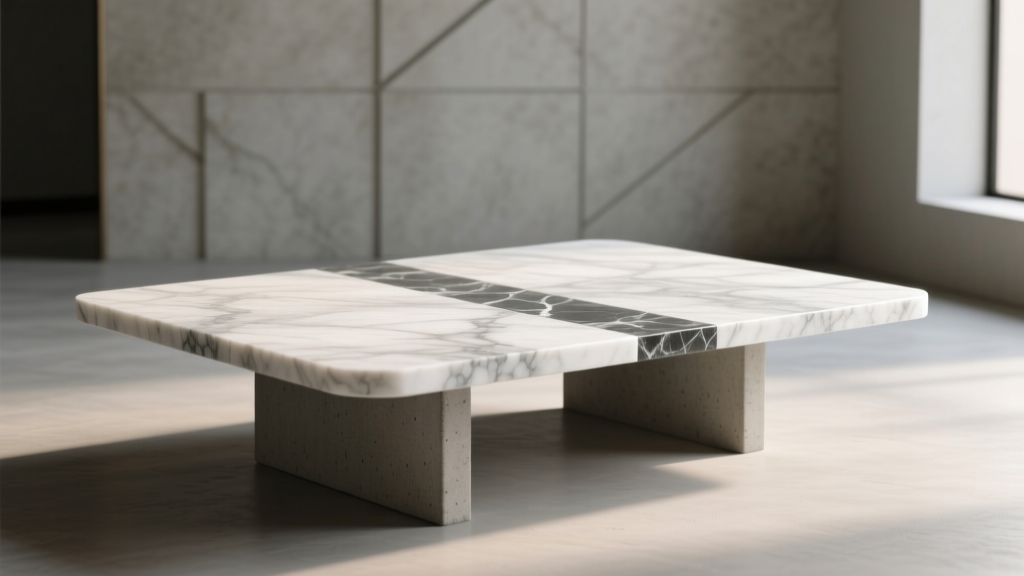
When evaluating a coffee table in marble for your living space, you are investing in a material that possesses a fascinating geological paradox. Structurally, marble is incredibly dense and capable of bearing immense compressive loads, which is why it has been used for centuries in monumental architecture. According to the National Park Service Preservation Brief 42, properly maintained marble surfaces in historic estates have survived for centuries without structural degradation. From a pure lifespan perspective, the stone itself will easily outlive the furniture's wooden or metal base, offering a functional lifespan of 50 to 100+ years.
However, durability is not just about structural integrity; it is about surface preservation. Marble is a metamorphic rock composed primarily of calcite (calcium carbonate). On the Mohs Hardness Scale, calcite registers at a 3, making it significantly softer than everyday objects like steel keys (5.5), ceramic mugs (6-7), or even dust containing quartz particles (7). This means that while your marble coffee table will never collapse under the weight of your books and decor, its surface is highly susceptible to mechanical scratching and chemical dissolution.
Etching vs. Staining: Understanding Surface Failure Modes
The most common misconception among furniture buyers is confusing a stain with an etch. Understanding the difference is critical to managing the lifespan of your marble table.
The Chemistry of Etching
Etching is a chemical burn, not a stain. Because marble is alkaline (calcium carbonate), it reacts violently with acidic substances. When wine, citrus juice, or coffee sits on the surface, the acid literally dissolves the microscopic top layer of the stone, leaving a dull, matte spot that cannot be wiped away. Etching alters the physical topography of the stone.
The Mechanics of Staining
Staining occurs when a pigmented liquid (like oil, berry juice, or dark wood stain) penetrates the microscopic pores of the stone. Unlike etching, staining does not destroy the stone's surface; it merely discolors it. Stains can almost always be drawn out using a poultice, whereas etches require physical abrasion to repair.
How Finish Selection Dictates Long-Term Wear
The factory finish applied to your marble coffee table will dictate how it ages and how much maintenance it requires over its lifespan. The Natural Stone Institute emphasizes that finish selection should align with the expected traffic and use-case of the stone.
| Finish Type | Visual Profile | Durability & Wear Masking | Maintenance Requirement |
|---|---|---|---|
| Polished | High-gloss, reflective, deepens color and vein contrast. | Low. Scratches and etches are highly visible because they disrupt light reflection. | High. Requires immediate spill cleanup and professional re-polishing to fix damage. |
| Honed | Matte, satin-like, softer color contrast. | High. Etching blends into the existing matte texture; minor scratches are hidden. | Low. Ideal for high-use coffee tables where glasses and plates are frequently set down. |
| Leathered | Textured, dimpled, retains color depth without gloss. | Very High. The uneven topography naturally hides mechanical and chemical wear. | Moderate. The texture can trap dust and crumbs, requiring a soft brush for cleaning. |
The Spill Chemistry Matrix: Time-to-Damage
To understand the real-world durability of a marble coffee table, we must look at the pH levels of common living room spills. The lower the pH, the faster the calcium carbonate matrix breaks down.
| Common Spill | Approximate pH | Time to Visible Etch (Polished) | Risk Level |
|---|---|---|---|
| Black Coffee | 5.0 | 15 - 30 minutes | Moderate |
| White Wine | 3.5 - 4.0 | 5 - 10 minutes | High |
| Cola / Soda | 2.5 - 3.0 | 1 - 3 minutes | Severe |
| Lemon Juice | 2.0 | Under 1 minute | Severe |
The Sealer Reality Check: What Impregnators Actually Do
If you purchase a high-end marble coffee table, it will likely arrive pre-sealed. However, the type of sealer used dictates its protective capabilities. Modern penetrating sealers (typically siloxane or fluoropolymer-based) work by lowering the surface tension inside the stone's pores. This creates a hydrophobic barrier that causes liquids to bead up on the surface.
The Critical Limitation: Penetrating sealers do not leave a topical film on the surface. Therefore, while they buy you a 15-to-30-minute window to wipe up an oil spill before it stains, they offer zero protection against acidic etching. The acid will still react with the exposed calcium carbonate on the very surface of the stone. To achieve true etch-proof durability, the stone must be treated with a topical polyurethane or acrylic coating, which fundamentally alters the tactile feel and visual depth of the marble, giving it a slightly artificial, plastic-like sheen. For this reason, most designers and stone fabricators recommend honed marble with a penetrating sealer, accepting that the stone will develop a natural patina over time.
Lifecycle Cost Analysis: Maintenance and Refinishing
Budgeting for a marble coffee table requires looking beyond the initial purchase price. Over a 20-year lifespan, maintenance costs will accumulate based on your household's usage patterns.
- Daily Maintenance: pH-neutral stone cleaners (e.g., StoneTech DailyKlean). Cost: ~$12 per bottle, lasting 6 months. Annual cost: $24.
- Annual Sealing: Reapplication of a high-quality fluoropolymer impregnator (e.g., Tenax Aqualux or Miracle Sealants 511). Cost: ~$35 per application. Annual cost: $35.
- DIY Etch Repair: For polished marble, tin-oxide or cerium-oxide polishing powders can buff out light etches. Cost: ~$25 per kit (lasts years).
- Professional Refinishing: If the table becomes heavily scratched or deeply etched, a stone restoration professional will use diamond abrasives to hone and re-polish the surface. Current rates average $5.00 to $8.00 per square foot. A standard 48x24 inch table (8 sq ft) will cost between $40 and $64 per restoration. Assuming this is needed once every 7-10 years, the decadal cost is roughly $60.
Decision Framework: Is a Marble Coffee Table Right for You?
Use this practical framework to determine if the durability profile of marble aligns with your lifestyle.
Choose Marble If:
- You appreciate the concept of a 'living finish' and do not mind a subtle patina or minor etching that tells the story of the furniture's use.
- You are willing to commit to a honed or leathered finish, which drastically reduces the visual impact of daily wear.
- You are diligent about using coasters for all acidic beverages and wiping up spills immediately.
- The table is primarily for aesthetic display in a formal living room rather than heavy daily use by young children.
Avoid Marble (Opt for Quartzite or Sintered Stone) If:
- You demand a perpetually flawless, high-gloss surface with zero maintenance.
- The table will serve as a primary dining or homework surface where markers, acidic foods, and heavy objects are frequently dropped.
- You are unwilling to perform annual sealing or spend $50+ every decade on professional diamond-honing.
Ultimately, a coffee table in marble is an investment in natural art rather than indestructible utility. By understanding its geological limitations, selecting the appropriate factory finish, and committing to a realistic maintenance schedule, you can ensure the stone remains a stunning focal point in your home for generations.