Veneer Fireplace Stone Care: Cleaning and Sealing Tips
Expert maintenance for veneer fireplace stone. Discover soot removal techniques, pH-safe cleaners, and sealing protocols for manufactured and natural stone.

Material Composition and Vulnerabilities
Proper maintenance of your veneer fireplace stone begins with understanding its geological or manufactured substrate. Unlike solid masonry, veneer relies on a scratch coat and mortar bed, making the joints just as critical as the stone faces. Manufactured Stone Veneer (MSV) is composed of Portland cement, lightweight aggregates like pumice, and iron oxide pigments. Because it is essentially colored concrete, MSV is highly alkaline and extremely vulnerable to acidic cleaners, which will etch the cement matrix and permanently strip the surface pigmentation.
Natural stone veneers present a different set of challenges. Calcareous stones like limestone, travertine, and marble contain calcium carbonate, which reacts violently with acids. Siliceous stones like slate, quartzite, and granite are acid-resistant but feature natural clefts and fissures that trap soot and creosote. According to the Natural Stone Institute, using the wrong pH cleaner on natural stone can cause irreversible pitting and surface dulling within minutes.
Routine Dusting and Debris Removal
For weekly or bi-weekly maintenance, the goal is to remove loose dust and ash before it becomes embedded in the stone's pores or mortar joints. Use a soft-bristled nylon brush or a microfiber duster. Avoid feather dusters, which can snag on rough-hewn fieldstone or stacked ledger panels. For interior gas fireplaces where soot is minimal, a vacuum with a soft brush attachment set to low suction is highly effective for pulling dust out of deep mortar crevices without scratching the veneer face.
- No Wire Brushes: Steel bristles will leave behind microscopic iron particles that rust when exposed to ambient humidity, creating permanent orange stains on both MSV and natural stone.
- No Acidic Cleaners: Avoid vinegar, lemon-based degreasers, and muriatic acid. These will dissolve mortar joints and etch stone faces.
- No Steam Cleaners: High-pressure steam can force moisture behind the veneer, compromising the weather-resistant barrier and causing the scratch coat to delaminate from the substrate.
Deep Cleaning Protocols for Soot and Smoke Stains
Wood-burning fireplaces generate creosote and fine carbon soot that aggressively penetrates the porous surface of veneer fireplace stone. The Chimney Safety Institute of America (CSIA) notes that creosote buildup is not just a maintenance issue, but a severe fire hazard. When cleaning the interior firebox surround, follow this exact three-step protocol to lift stains without damaging the substrate:
- Dry Chemical Sponge Extraction: Before introducing any liquid, wipe the sooty areas with a vulcanized rubber dry soot sponge. The porous rubber acts like an eraser, lifting carbon particles out of the stone's micro-fissures without grinding them deeper into the pores.
- Alkaline Degreaser Application: Mix a heavy-duty, pH-neutral or slightly alkaline stone degreaser (such as StoneTech Professional KlenzAll) with warm water. Apply using a low-pressure pump sprayer to avoid oversaturating the mortar joints.
- Agitation and Extraction: Agitate the surface with a stiff nylon grout brush. Immediately extract the dirty water using a wet/dry vac. Leaving soot-laden water to air-dry on the stone will result in a secondary, darker stain as the water evaporates and leaves the carbon behind.
Cleaning Agents Matrix by Stone Type
Selecting the correct chemical profile is non-negotiable. Use the matrix below to match your cleaning agent to your specific veneer material.
| Veneer Type | Primary Vulnerability | Recommended Cleaner Profile | Target pH |
|---|---|---|---|
| Manufactured (MSV) | Pigment stripping, cement etching | pH-Neutral Stone Soap | 7.0 |
| Limestone / Travertine | Calcium dissolution, pitting | Alkaline Organic Cleaner | 8.0 - 9.0 |
| Slate / Quartzite | Flaking, grout haze trapping | Mild Acidic Phosphoric (for grout haze only) | 4.0 - 5.0 |
| Fieldstone / River Rock | Deep crevice soot trapping | Enzymatic Soot Degreaser | 7.5 - 8.5 |
Sealing Veneer Fireplace Stone: Thermal and Chemical Considerations
Sealing is the most critical preventative maintenance step for veneer fireplace stone. However, the extreme thermal cycling of a fireplace environment eliminates many standard masonry sealers. Acrylic and polyurethane film-forming sealers will yellow, blister, and emit toxic volatile organic compounds (VOCs) when exposed to the radiant heat of a firebox. You must exclusively use penetrating siloxane or silane-based impregnators.
The National Concrete Masonry Association (NCMA) emphasizes that manufactured veneer systems require breathability. Penetrating sealers line the microscopic pores of the stone and mortar, repelling liquid water and soot while allowing water vapor to escape. This prevents spalling (the flaking of the stone face) caused by trapped moisture expanding during thermal shifts.
Recommended Penetrating Sealers and Application Rates
- Miracle Sealants 511 Impregnator: A solvent-based siloxane sealer ideal for dense natural stones like slate and quartzite. Expect a coverage rate of 300-400 square feet per gallon on smooth stone, but only 150-200 square feet per gallon on heavily textured stacked veneer.
- Aqua Mix Sealer's Choice Gold: A water-based penetrating sealer that is safer for interior use due to low odor and zero flammability during application. Best for highly porous MSV and limestone.
- Application Protocol: Apply two thin coats using a low-pressure pump sprayer, back-rolling with a foam brush to push the sealer into deep mortar joints. Allow 24 hours of curing time before lighting the first fire to ensure complete off-gassing.
Troubleshooting Common Veneer Failures
Efflorescence (White Powdery Deposits)
Efflorescence occurs when water-soluble salts from the Portland cement scratch coat migrate to the surface of the veneer fireplace stone and crystallize upon evaporation. Do not wash efflorescence with water. Water will simply dissolve the salts and push them back into the substrate, guaranteeing a recurrence. Instead, allow the deposits to dry completely, then remove them using a stiff, dry nylon brush. For stubborn deposits on natural siliceous stone, a specialized efflorescence remover containing phosphoric acid can be used, but never apply acid-based removers to MSV or limestone.
Thermal Mortar Cracking
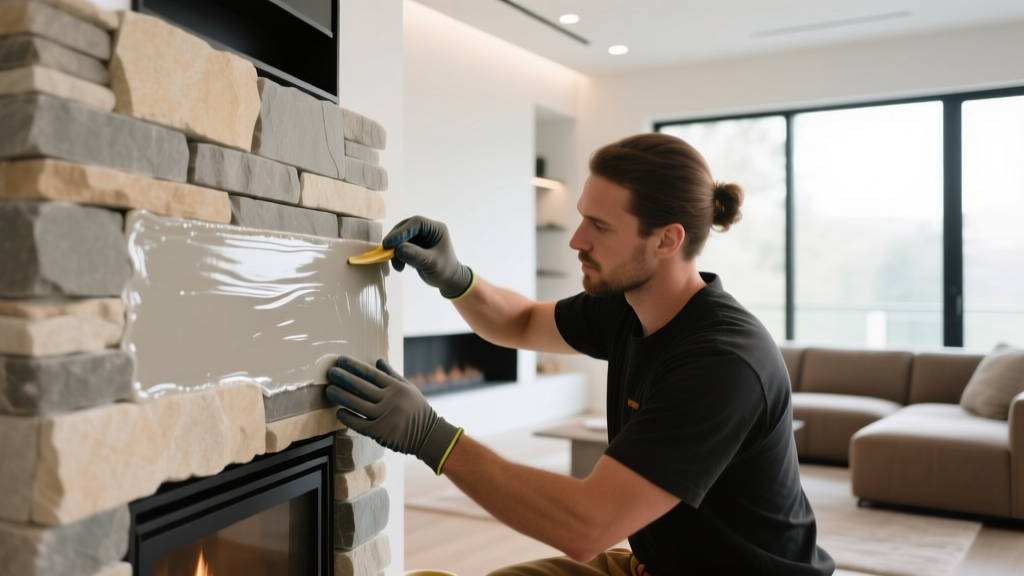
Hairline cracking in the mortar joints immediately surrounding the firebox opening is a common failure mode caused by the differential expansion rates between the steel firebox insert and the masonry veneer. Standard Type N mortar is too rigid to absorb this movement. To repair these thermal joints, rake out the cracked mortar to a depth of 1/2 inch and fill the joint with a high-temperature, sanded silicone caulk that matches your mortar color. This creates a flexible seal that accommodates thermal expansion without fracturing.
Frequently Asked Questions
Can I use a melamine foam sponge (Magic Eraser) on soot stains?
No. Melamine foam acts as micro-sandpaper. While it will remove soot, it will simultaneously sand away the top layer of the stone's finish, leaving a permanent dull spot on natural stone and stripping the colored aggregate layer right off manufactured stone veneer.
How often does interior veneer fireplace stone need to be resealed?
Interior veneer typically requires resealing every 3 to 5 years, depending on usage. To test your sealer's efficacy, splash a few drops of water on the stone and mortar joints. If the water beads up, the sealer is intact. If the water darkens the stone and absorbs within three minutes, it is time to apply a fresh coat of penetrating impregnator.
Is it safe to use a standard glass cleaner on the firebox glass if it drips onto the stone?
Ammonia-based glass cleaners are highly alkaline and can cause localized discoloration on MSV if left to dry on the surface. Always mask off the bottom row of veneer fireplace stone with painter's tape and a drop cloth before cleaning the firebox glass to prevent chemical runoff.
Written by
David NakamuraDavid Nakamura is a licensed architect (AIA) and construction technology writer focused on sustainable building methods, mass timber engineering, and high-performance building envelopes. He holds a Master of Architecture from the University of Washington and is a certified Passive House Consultant (CPHC). David spent eight years at the Seattle firm Mithun, where he led the design of three LEED Platinum projects, before founding his own practice specializing in net-zero residential design. He serves on the editorial advisory board of GreenBuilder Magazine and has authored peer-reviewed papers on cross-laminated timber (CLT) connections for the Journal of Structural Engineering. In his spare time, David teaches woodworking at Pratt Fine Arts Center and kayaks the Puget Sound.
More from David Nakamura
View all
Construction Cost
Labor Cost to Build a Deck Per Sq Ft: 2026 Installation Guide
Discover the exact labor cost to build a deck per sq ft in 2026. This installation guide breaks down contractor rates, complexity factors, and hidden fees.
Aug 4, 2026

Construction Cost
How Much Does It Cost to Build a 3 Bedroom House? Financing Guide
Learn exactly how much it costs to build a 3 bedroom house and explore 2026 financing options, construction loan types, and budget frameworks for your build.
Aug 4, 2026

Construction Cost
Cost to Build a Tennis Court: 2026 Guide
How much does it cost to build a tennis court in 2026? Breakdowns for asphalt, concrete, and synthetic surfaces plus fencing and lighting.
Jul 30, 2026