Matching Stone Wall Panels to Your Project: A Scenario Guide
Discover which stone wall panels fit your specific project. Compare interior, exterior, wet, and high-heat scenarios for optimal material selection.
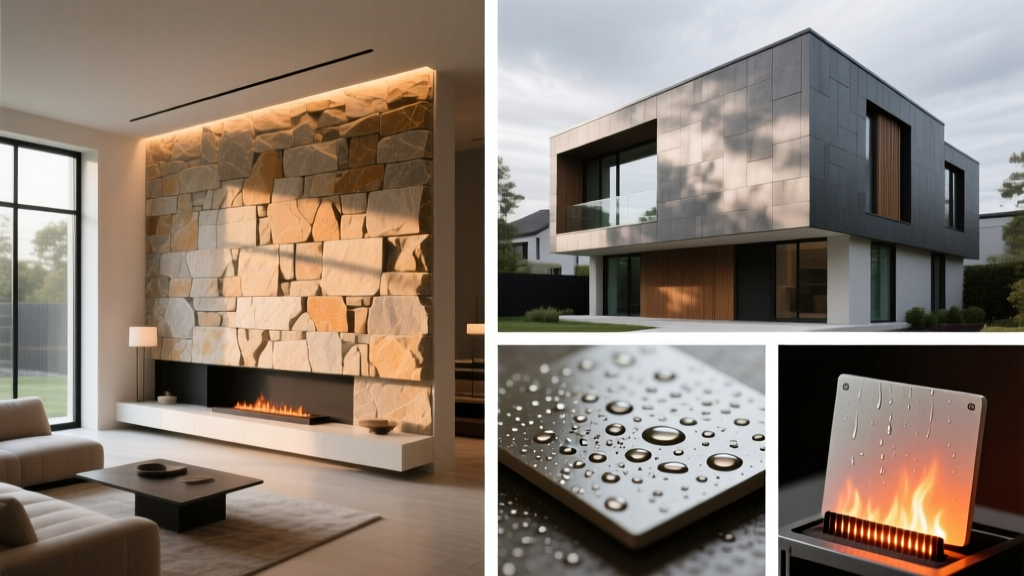
The Material Taxonomy: What You Are Actually Buying
The term "stone wall panels" is frequently used as a catch-all in the building materials industry, but it encompasses three fundamentally different material chemistries. Misidentifying these materials is the leading cause of premature failure, delamination, and moisture damage in both residential and commercial builds. Before matching a panel to a scenario, you must understand the core composition.
- High-Density Polyurethane (HDPU): Synthetic panels molded from real stone textures. Weighs 1 to 2 lbs per square foot. Highly water-resistant but vulnerable to high heat and prolonged UV degradation if not coated.
- Glass-Fiber Reinforced Concrete (GFRC): Thin, lightweight concrete panels reinforced with alkali-resistant glass fibers. Weighs 8 to 12 lbs per square foot. Excellent fire and weather resistance, but requires structural substrate verification.
- Cementitious Manufactured Stone Veneer (MSV): Traditional cultured stone cast in molds from natural stone. Weighs 10 to 15 lbs per square foot. Porous by nature, requiring sealing in wet environments and a drainage plane in exterior applications.
Core Material Comparison Matrix
| Material Type | Weight (psf) | Moisture Tolerance | Max Heat Tolerance | Primary Fastening Method |
|---|---|---|---|---|
| HDPU Synthetic | 1.0 - 2.0 lbs | High (Impervious) | 350°F - 400°F | Polyurethane Construction Adhesive |
| GFRC Panels | 8.0 - 12.0 lbs | Moderate (Needs Sealer) | 1,200°F+ | Mechanical Anchors / Thinset |
| MSV (Cementitious) | 10.0 - 15.0 lbs | Low (Highly Porous) | 1,500°F+ | Type S Mortar / Scratch Coat |
Scenario 1: High-Heat and Combustion Zones
When installing stone wall panels around wood-burning fireplaces, gas inserts, or outdoor pizza ovens, thermal expansion and combustibility are the primary constraints. The NFPA 211 Standard for Chimneys and Fireplaces dictates strict clearance requirements for combustible materials.
Application Rules for Heat Zones
- Direct Firebox Surrounds: Never use HDPU panels within 18 inches of an open flame or direct heat source. The polyurethane will warp, off-gas, and potentially melt. Use GFRC or traditional MSV panels adhered with a high-heat modified thinset or calcium aluminate cement.
- Mantel and Hearth Transitions: HDPU panels are acceptable for the upper chimney breast and mantel surrounds, provided the manufacturer's specified clearance (usually 12 to 18 inches from the top of the firebox opening) is strictly maintained.
- Thermal Expansion Gaps: Cementitious panels will expand when subjected to repeated heating and cooling cycles. Always leave a 1/8-inch expansion gap between MSV panels and rigid metal fireplace surrounds, filling the joint with a high-temperature silicone sealant rather than rigid grout.
Scenario 2: Exterior Envelopes and Moisture Management
Exterior applications subject stone wall panels to wind-driven rain, freeze-thaw cycles, and hydrostatic pressure. According to ASTM C1670 (Standard Specification for Precast Stone Veneer), exterior MSV and GFRC installations must incorporate a continuous weather-resistive barrier (WRB) and a corrosion-resistant lath.
The Drainage Plane Imperative
The most common catastrophic failure in exterior stone panel installation is trapping moisture against the sheathing. When using porous MSV panels on exterior walls, you must install a weep screed at the base of the wall and a drainage mat (such as a dimpled polymeric mesh) over the WRB. This creates a 1/4-inch air gap that allows incidental moisture to drain downward and exit through the weep screed.
Expert Warning: Never install cementitious stone wall panels directly over rigid foam insulation without a mechanical fastening schedule verified by a structural engineer. The shear weight of MSV (up to 15 lbs/sq ft) will exceed the pull-through strength of standard fasteners in foam, leading to panel detachment.
Scenario 3: Interior Feature Walls (Dry & Commercial)
For interior accent walls, elevator lobbies, and commercial retail spaces, weight loading and installation speed are the dominant factors. Standard 1/2-inch drywall is rated to hold approximately 1.5 to 2 lbs per square foot of shear weight without additional reinforcement.
Substrate Matching for Interiors
- Over Standard Drywall: HDPU synthetic panels are the only viable option for direct-to-drywall installation. At 1.5 lbs per square foot, they can be adhered using a premium polyurethane construction adhesive (such as Loctite PL Premium 3x) in a serpentine bead pattern. No mechanical fasteners are required.
- Over Cement Board or Plywood: If the design calls for the authentic texture and weight of MSV or GFRC panels, the existing drywall must be stripped to the studs. Install 1/2-inch cement backer board or 5/8-inch structural plywood, then apply a metal lath and scratch coat before mortaring the panels.
Scenario 4: Wet Areas and High-Humidity Zones
Steam showers, wet rooms, and kitchen backsplashes present a unique challenge. The constant presence of water and high ambient humidity can degrade both the adhesive bond and the panel material itself if not properly specified.
Waterproofing and Sealing Protocols
Standard MSV panels are highly porous. If installed in a shower environment without a penetrating silane/siloxane sealer, the panels will absorb water, leading to mold growth behind the stone and eventual spalling (flaking) of the stone face due to mineral expansion. For wet areas, specify GFRC panels that have been factory-sealed, or use high-density porcelain stone-look panels. If natural thin stone veneer panels are used, they must be sealed with a breathable, impregnating sealer that does not trap moisture vapor inside the stone matrix.
Critical Failure Modes and Edge Cases
Understanding how stone wall panels fail in the field allows you to preemptively design around these edge cases.
Interior Efflorescence
Efflorescence (the white, powdery salt deposit) is typically associated with exterior masonry. However, it frequently occurs on interior MSV feature walls. This happens when interior humidity is high, and the cementitious panels draw moisture from the air. The moisture dissolves soluble salts within the Portland cement binder and deposits them on the surface as it evaporates. The Fix: Always apply a breathable, water-based masonry sealer to interior MSV panels immediately after installation and grouting to lock out ambient humidity.
UV Degradation of Synthetic Panels
HDPU panels used in sunrooms or exterior applications without UV inhibitors will chalk, fade, and become brittle within 3 to 5 years. When specifying synthetic stone wall panels for areas with direct sunlight, verify that the manufacturer utilizes a closed-cell polyurethane core with an integrated UV-resistant acrylic or polyurethane topcoat. Refer to the Cultured Stone Installation Guidelines and similar manufacturer technical sheets for specific UV warranty limitations.
Substrate Preparation and Adhesive Selection
The longevity of any stone wall panel installation is dictated by the substrate preparation and the chemical compatibility of the adhesive.
| Substrate | Required Preparation | Compatible Panel Types | Recommended Adhesive / Mortar |
|---|---|---|---|
| Painted Drywall | Scuff sand paint, wipe with TSP | HDPU Only | Polyurethane Construction Adhesive |
| OSB / Plywood | Apply WRB, then metal lath | MSV, GFRC | Type S Mortar over scratch coat |
| Concrete / CMU | Acid etch or mechanical scarify | MSV, GFRC, HDPU | Modified Thinset or Type N Mortar |
| Cement Backer Board | Wipe down to remove dust | MSV, GFRC, HDPU | Polymer-Modified Thinset Mortar |
By rigorously matching the specific chemistry and weight of your stone wall panels to the environmental and structural realities of your scenario, you eliminate the most common installation failures and ensure a durable, high-performance finish.