How Much Would It Cost to Build a Small Cabin? Finance Guide
Discover how much it costs to build a small cabin. Explore construction loan options, hidden site costs, and financing frameworks for rural builds.
The True Cost Breakdown: Where Your Cabin Budget Goes
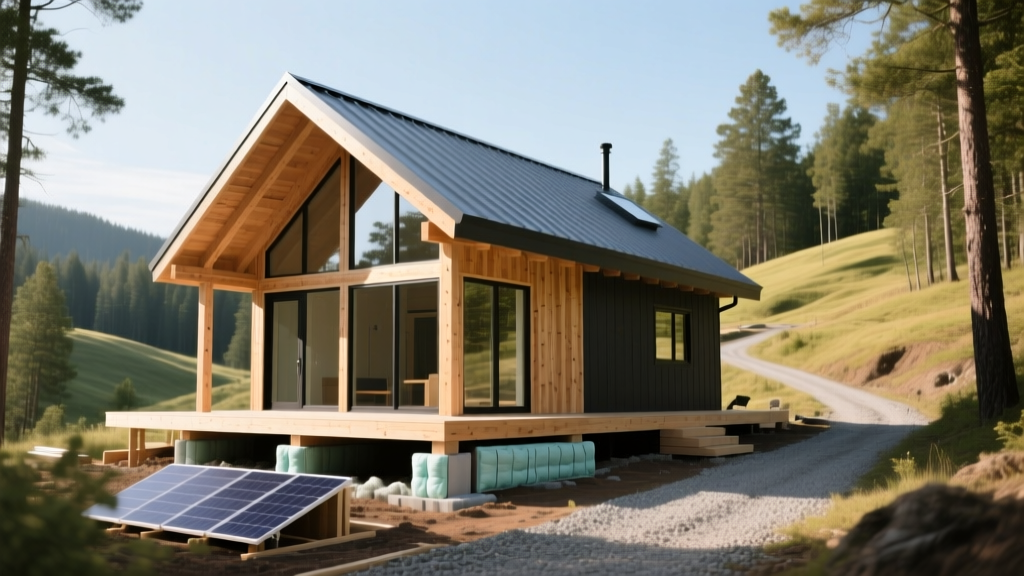
Determining exactly how much would it cost to build a small cabin requires moving beyond generic square-foot averages. For a modern, turnkey small cabin (defined here as 400 to 800 square feet), the total project cost typically ranges from $125,000 to $280,000. This wide variance is driven by site conditions, material choices, and utility access. Unlike suburban tract housing, rural cabin construction involves heavy infrastructure costs that lenders scrutinize heavily during the appraisal process.
Before approaching a lender, you must categorize your build type. The structural method you choose dictates both your upfront material costs and your long-term energy efficiency—a metric that increasingly influences green construction loan rates.
| Build Method | Avg. Cost per Sq. Ft. | Best For | Financing Appraisal Impact |
|---|---|---|---|
| Post & Beam Kit | $150 - $225 | DIY-heavy owners, open floor plans | Lower initial appraisal; requires strict builder verification |
| Traditional Stick-Built | $200 - $280 | Custom layouts, complex rooflines | Standard comps; easiest for conventional construction loans |
| SIPs (Structural Insulated Panels) | $225 - $320 | Off-grid, extreme climates, fast enclosure | Higher appraisal value due to superior HERS energy scores |
| Milled Log Cabin | $250 - $375 | Aesthetic purists, legacy vacation homes | Niche market; requires specialized rural appraisers |
Financing Options for Rural Cabin Construction
Securing capital for a small cabin is fundamentally different from buying an existing home. Lenders view raw land and new construction as higher-risk assets. According to the Consumer Financial Protection Bureau, construction loans typically feature variable rates during the build phase before converting to a fixed-rate mortgage, requiring meticulous cash-flow planning.
1. Construction-to-Permanent (Single-Close) Loans
This is the gold standard for cabin financing. A single-close loan covers the purchase of the land, the construction costs, and the permanent mortgage in one set of closing costs.
- FHA One-Time Close (OTC): Requires as little as 3.5% down, but mandates the use of a licensed general contractor (no owner-builders allowed) and strict maximum loan limits based on your county.
- Conventional Single-Close: Typically requires 20% to 30% down. The lender disburses funds in 'draws' tied to specific milestones (e.g., foundation poured, dry-in, final inspection).
2. Raw Land Loans + Cash Construction
If you plan to act as an owner-builder to save on general contractor fees (typically 15-20% of the build cost), traditional construction loans will likely deny your application. Instead, buyers often secure a raw land loan (requiring 30-50% down) and use cash reserves, HELOCs from their primary residence, or personal loans to fund the vertical construction in phases.
Most construction lenders will not fund a build on 'raw' land. The parcel must be considered 'improved'—meaning it has legal deeded access, surveyed boundaries, and available utility hookups at the lot line. If your land lacks these, you must finance the improvements out-of-pocket before the construction loan will close.
Hidden Infrastructure Costs That Derail Cabin Budgets
When calculating how much would it cost to build a small cabin, amateur estimators frequently budget only for the vertical structure. Rural site development can consume 25% to 40% of your total budget. Lenders require detailed site plans to ensure the loan amount covers these non-negotiable expenses.
- Perc Test & Soil Engineering ($400 - $1,200): Required to determine if the soil can support a septic system. If the soil fails a standard perc test, you will need an engineered alternative.
- Well Drilling ($6,000 - $25,000): Costs average $30 to $65 per foot. A 200-foot well with casing, pump, and pressure tank will cost roughly $10,000, but rocky terrain or deep water tables can push this past $20,000.
- Septic Systems ($8,000 - $25,000): A conventional gravity-fed trench system costs around $8,000. However, if your site requires an Aerobic Treatment Unit (ATU) or a mound system due to high water tables or poor soil, expect to pay $18,000 or more. The Environmental Protection Agency (EPA) provides extensive guidelines on alternative septic designs for challenging rural sites.
- Driveway & Grading ($5,000 - $18,000): Cutting a 200-foot driveway through wooded terrain, installing culverts for drainage, and laying a crushed stone base is a heavy equipment expense that must be completed before the foundation crew arrives.
Step-by-Step Financial Planning Framework
To prevent budget overruns and loan defaults, follow this sequence before signing a land purchase agreement:
- Feasibility Contingency (Days 1-30): Make any land offer contingent on a successful perc test, well water availability, and a verified survey. Pay for these tests ($1,500 out of pocket) during the due diligence period.
- Contractor Bidding & Appraisal (Days 30-60): Obtain fixed-price bids from at least three licensed contractors. Submit these plans to a construction lender for a 'subject-to-completion' appraisal. The lender will tell you the maximum they will lend based on the future value of the cabin.
- Contingency Reserves (Day 60): Lenders typically require a 10% contingency reserve held in escrow for construction overruns. If your build budget is $150,000, you must have $15,000 in liquid reserves or built into the loan amount.
- Draw Schedule Alignment (Pre-Close): Review the lender's draw schedule. Ensure the contractor's payment milestones align with the lender's inspection releases to avoid cash-flow gaps where you must pay the crew out-of-pocket while waiting for a bank inspector.
Real-World Financing Scenario: The 600 Sq Ft SIPs Cabin
Consider a practical scenario: A buyer wants to build a 600-square-foot, 2-bedroom cabin using Structural Insulated Panels (SIPs) on a 5-acre wooded lot in the Appalachian region. SIPs are chosen for their R-40 wall efficiency, which minimizes the required solar array size for off-grid capability.
| Expense Category | Estimated Cost | Financing Source |
|---|---|---|
| Land Acquisition (5 Acres) | $45,000 | Construction-to-Perm Loan |
| Site Prep, Driveway & Clearing | $14,000 | Construction-to-Perm Loan |
| Well & Engineered Septic | $22,500 | Construction-to-Perm Loan |
| SIPs Shell & Foundation | $85,000 | Construction-to-Perm Loan |
| Interior Finish & MEPs | $70,000 | Construction-to-Perm Loan |
| Off-Grid Solar (8kW + Battery) | $32,000 | Cash / Solar Specific Loan |
| Total Project Cost | $268,500 | Blended Financing |
In this scenario, the buyer utilizes a Conventional Single-Close loan for the $236,500 real-property portion (requiring a 20% down payment of $47,300). The $32,000 solar array is financed separately through a specialized green energy lender, as many traditional construction appraisers do not give full dollar-for-dollar value to off-grid solar systems, which could create an appraisal gap.
Frequently Asked Questions
Can I use a USDA Rural Development Loan to build a cabin?
Yes, but with strict limitations. The USDA Single Family Housing Program offers zero-down construction loans, but they are restricted to low-to-moderate income applicants. Furthermore, the home must be considered 'modest' in size and design; luxury features like vaulted timber ceilings or high-end milled log finishes may disqualify the appraisal.
Do banks finance 'tiny homes' on wheels?
Traditional mortgage lenders and construction loan programs do not finance Tiny Homes on Wheels (THOWs) because they are classified as Recreational Vehicles (RVs) under ANSI A119.5 standards, not permanent real estate. To secure traditional real estate financing, the cabin must be built on a permanent, frost-line-compliant foundation and permanently affixed to land you own.
How does being an 'owner-builder' affect my loan options?
Acting as your own general contractor eliminates the 15-20% GC fee, saving tens of thousands of dollars. However, 90% of institutional construction lenders will deny owner-builder applications due to the high risk of project abandonment. Owner-builders typically must rely on cash-out refinances from their primary residence, unsecured personal loans, or specialized credit unions that offer owner-builder construction loans (which usually require 30% down and rigorous construction experience verification).
Written by
James ThorntonJames Thornton is a construction industry veteran with 25 years of hands-on experience in wood framing, lumber grading, and residential building codes. He started as a framing carpenter in rural Oregon, earned his ICC Residential Building Inspector certification, and eventually became a senior plan reviewer for the City of Portland Bureau of Development Services. James holds a B.S. in Wood Science & Technology from Oregon State University and is a certified lumber grader through the West Coast Lumber Inspection Bureau (WCLIB). He has inspected over 3,000 residential construction sites and authored the city's internal guide on advanced framing techniques (2x6 at 24" O.C.). James lives in Bend, OR, where he builds custom timber-frame cabins and competes in lumberjack sports.
More from James Thornton
View all
Insulation
Best Home Insulation Materials: Complete 2026 Guide
Compare top home insulation materials for 2026. Find R-values, installed costs per square foot, and best uses for fiberglass, spray foam, and mineral wool.
Aug 4, 2026

Sustainable Building
Certify Your Green Building Material for LEED and WELL
Step-by-step guide to certifying a green building material for LEED v5 and WELL v2. Master EPDs, HPDs, and VOC limits for 2026 project specifications.
Aug 4, 2026

Stone & Masonry
Veneer Stacked Stone Panels: Interior Design & Style Showcase
Discover how veneer stacked stone panels transform interiors. Explore modern design profiles, material pairings, and technical installation specs.
Aug 4, 2026