How Much Would a Log Cabin Cost to Build? Financing & Cost Guide
Discover exactly how much a log cabin costs to build, from milled vs. handcrafted logs to specialized construction loans and appraisal hurdles.
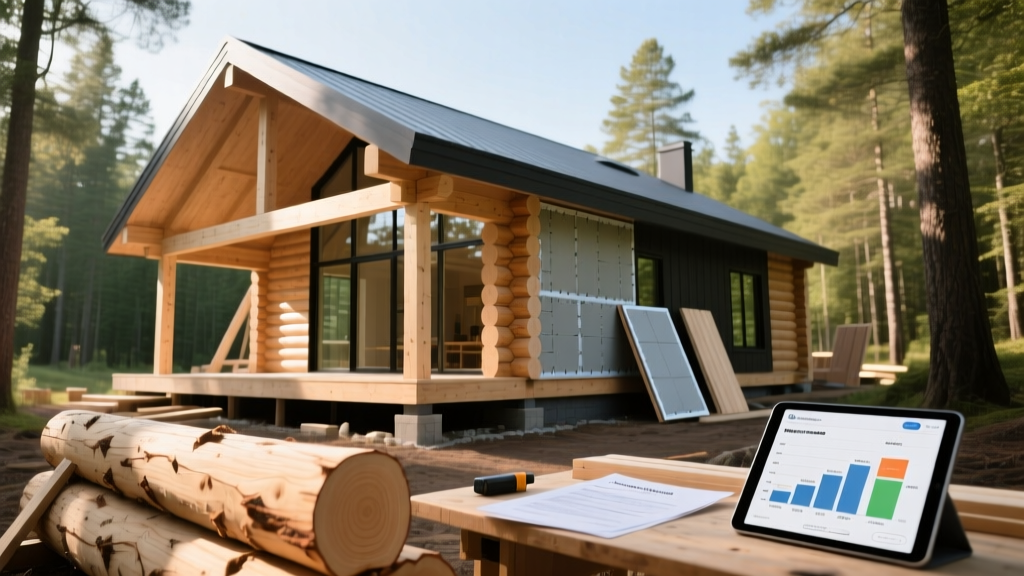
The True Cost Breakdown: How Much Would a Log Cabin Cost to Build?
When buyers ask, 'how much would a log cabin cost to build,' the answer requires moving beyond generic square-foot averages. Unlike standard stick-frame construction, log home pricing is heavily dictated by the manufacturing method of the timber, the species of wood, and the extreme infrastructure costs of remote sites. As of current market conditions, a turnkey milled log cabin costs between $175 and $275 per square foot. Handcrafted log homes, which feature full-length, un-milled logs, push that range to $300 to $450+ per square foot.
For a standard 1,500-square-foot cabin, you are looking at a baseline budget of $262,500 for a milled kit, scaling up to $675,000 for a premium handcrafted build. However, these figures only cover the structure. Financing a log cabin requires navigating specialized construction loans, draw schedules, and unique appraisal hurdles that conventional mortgage lenders often misunderstand.
Quick Cost Snapshot (1,500 Sq. Ft. Cabin)
- Milled Log Kit (Shell Only): $75,000 - $120,000
- Site Prep & Utilities: $25,000 - $60,000
- Foundation (Walkout Basement): $35,000 - $55,000
- Interior Finishing & HVAC: $110,000 - $160,000
- Total Turnkey Range: $245,000 - $395,000+
The Material Variable: Log Profiles and Wood Species
The single largest cost driver in your budget is the log profile. According to the U.S. Department of Energy, the thermal mass and settling characteristics of logs vary wildly by species and milling technique, which directly impacts both your material costs and long-term energy efficiency.
| Log System Type | Cost Per Sq. Ft. (Shell) | Wood Species Commonly Used | Settling & Chinking Requirements |
|---|---|---|---|
| D-Shaped Milled | $50 - $85 | Eastern White Pine, Douglas Fir | Minimal settling (1-2 inches). Requires synthetic chinking or foam gaskets. |
| Swedish Cope Milled | $65 - $100 | Engelmann Spruce, Lodgepole Pine | Moderate settling. Requires a bottom groove and top crown for tight stacking. |
| Handcrafted Full Scribe | $120 - $200+ | Western Red Cedar, Douglas Fir | Significant settling (up to 6-8 inches). Requires slip joints, adjustable jacks, and wide chinking. |
| Hybrid (Post & Beam with SIPs) | $90 - $140 | Timber frame accents, Structural Insulated Panels | No log settling. Highest energy efficiency (R-24+ walls). |
Western Red Cedar commands a 20% to 30% premium over Eastern White Pine due to its natural resistance to rot and insects, but it is softer and more prone to denting. Engelmann Spruce offers excellent structural strength and a uniform blonde color but requires rigorous chemical treatment if exposed to high moisture environments.
Hidden Infrastructure Costs of Remote Cabin Sites
Log cabins are rarely built in suburban subdivisions. They are typically sited on rural, wooded, or mountainous terrain. This geographic reality introduces severe infrastructure costs that standard construction estimators frequently omit.
- Land Clearing and Grading: Removing mature timber and blasting bedrock for a foundation pad costs between $3,500 and $8,500 per acre. If your driveway exceeds 500 feet with a steep grade, expect to add $15,000+ for gravel base and culvert installation.
- Well Drilling: Mountainous terrain often requires drilling through solid granite. While a standard well costs $5,000 to $8,000, deep rock wells (300+ feet) with low-yield fractures can easily exceed $20,000, plus the cost of a constant-pressure pump system.
- Septic Engineering: Failing a standard perc test means installing an engineered mound or aerobic treatment unit (ATU). These advanced systems cost between $18,000 and $35,000, compared to $8,000 for a conventional gravity-fed trench system.
- Power Drops: Utility companies typically charge $15 to $30 per linear foot to run power from the main road to your meter. A cabin set back 1,000 feet from the road will incur a $15,000 to $30,000 utility connection fee.
Financing the Build: Navigating Construction Loans
Because you cannot buy a completed log cabin off the shelf, you must finance the construction phase. The Consumer Financial Protection Bureau (CFPB) outlines that construction loans function differently than traditional mortgages, acting as short-term credit lines that convert to permanent financing.
Construction-to-Permanent (C2P) Loans
The C2P loan is the industry standard for custom log homes. It covers the land purchase (if not already owned), site prep, and construction. During the 9-to-12-month build phase, you only pay interest on the funds drawn. Once the certificate of occupancy is issued, the loan automatically converts to a standard 15- or 30-year mortgage. The catch: Lenders typically require a 20% to 25% down payment and a debt-to-income (DTI) ratio below 43%.
FHA One-Time Close Construction Loans
For buyers with lower cash reserves, the FHA One-Time Close allows for a 3.5% down payment. However, this route is highly restrictive for log cabins. The FHA requires the builder to be on an approved roster, and the maximum loan limits (often capped around $498,257 in most rural counties for 2026) rarely cover the cost of a custom handcrafted log home plus land and utilities.
Land Equity and HELOCs
If you already own your acreage outright, you can leverage the land's appraised value as your down payment. Many regional banks and credit unions will allow you to use 100% of your land equity to satisfy the 20% down payment requirement for a C2P loan, drastically reducing your out-of-pocket cash burden.
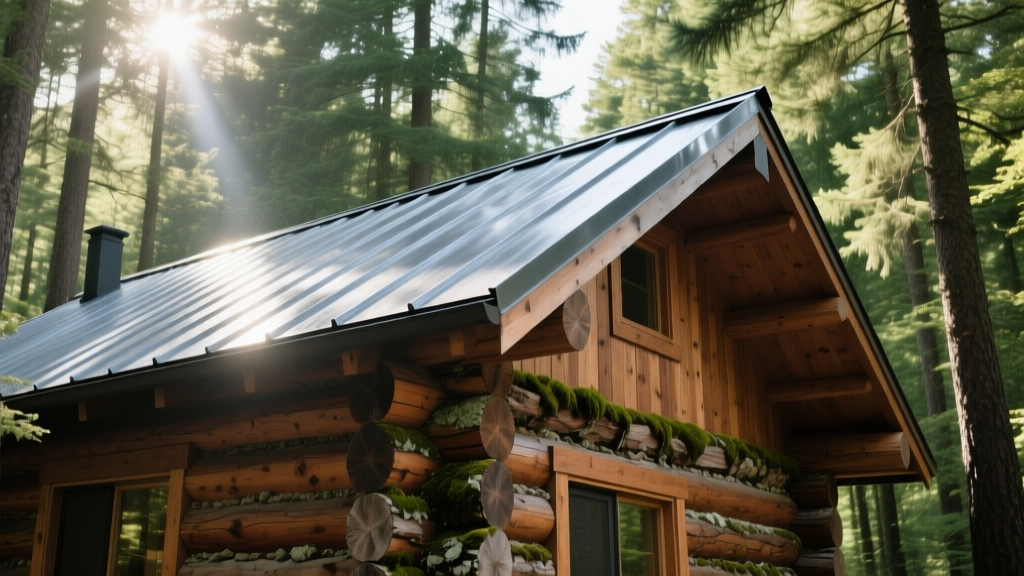
The Appraisal Hurdle: Why Log Homes Are Hard to Finance
The most frequent point of failure in log cabin financing occurs at the appraisal stage. Conventional appraisers rely on the 'comparable sales' (comps) approach to determine property value. In rural areas, finding three recent sales of similar log homes within a 10-mile radius is often impossible.
Expert Warning: If an appraiser uses stick-frame vinyl-sided homes as comps for your custom Western Red Cedar log cabin, your appraisal will come in significantly below the construction cost. This creates a 'loan-to-value' gap, forcing you to bring tens of thousands of dollars in cash to closing to cover the difference.
To prevent this, your lender must hire an appraiser with specific designations, such as the SRA (Senior Residential Appraiser) from the Appraisal Institute, who understands how to adjust for non-standard construction, thermal mass, and timber value. Additionally, you must provide the appraiser with the 'cost approach' documentation, including the exact invoice from the log manufacturer and the builder's line-item bid.
Insurance Considerations
Securing homeowners insurance for a log cabin under construction requires a specialized 'Builder's Risk' policy. Once completed, standard carriers may classify the home as 'non-standard' due to perceived fire risks, despite the fact that massive 10-inch logs are actually more fire-resistant than 2x4 stud walls (which burn quickly once the drywall is breached). Expect to pay a 10% to 15% premium on your annual property insurance, and ensure your carrier covers 'settling damage' and 'chinking failure' in the policy exclusions.
Your 5-Step Financing and Execution Plan
- Secure Land and Conduct Feasibility Tests: Before applying for a loan, spend $2,000 on a soil engineer to run a perc test for the septic system and a hydrologist to estimate well depth. Lenders will not approve a construction loan on unbuildable land.
- Select a Log Provider and Builder: Choose a manufacturer that provides engineered, stamped architectural plans. Lenders require these stamped plans to approve the initial draw schedule.
- Apply for a C2P Loan with a Specialized Lender: Avoid mega-banks. Seek out regional banks, credit unions, or specialized mortgage brokers who have a dedicated 'custom construction' desk and experience with timber-frame or log properties.
- Structure the Draw Schedule Carefully: Log home kits are often delivered in massive single shipments. Ensure your draw schedule allocates 30% to 40% of the total loan amount to the 'Shell Erection' phase, or the builder will run out of capital when the crane and log package arrive on day 30.
- Budget for a 15% Contingency Reserve: Log homes are susceptible to weather delays during the shell-raising phase, and custom timber trusses frequently face supply chain backlogs. Keep a 15% cash reserve outside of your loan contingency to cover carrying costs and interest reserves if the build extends past 12 months.
For buyers exploring rural properties, investigating USDA Rural Development direct loan programs can also provide alternative financing pathways if your income falls within specific regional limits and the property is located in a designated rural zone.
Written by
Priya KapoorPriya Kapoor is a real estate market analyst and construction economics researcher with expertise in housing affordability, development feasibility, and infrastructure investment. She holds a Master of Regional Planning from Cornell University and previously worked as a senior analyst at CBRE's Investment Properties group, where she modeled returns for $4B in mixed-use development pipelines. Priya now runs an independent research practice advising developers, municipalities, and REITs on construction cost forecasting and market timing. She publishes the quarterly "BuildMat Market Pulse" report tracking material price indices across 12 commodity categories. Based in Austin, TX, Priya serves on the board of Habitat for Humanity Austin and is a marathon runner.
More from Priya Kapoor
View all
Construction Cost
Cost to Build a 1600 Sq Ft Home in 2026: Full Breakdown
Accurate 2026 cost to build a 1600 sq ft home—material, labor, and regional pricing breakdowns included. Plan your budget with real-time estimates.
Aug 11, 2026

Wood & Lumber
Name the Types of Wood for Pressure Treatment and Preservation
Learn how to name the types of wood best suited for pressure treatment. Compare species treatability, chemical retention levels, and 2026 preservation costs.
Aug 4, 2026

Stone & Masonry
Stone Veneer Suppliers Lindenhurst: 2026 Cost Analysis
Analyze 2026 stone veneer costs in Lindenhurst, NY. Compare local supplier pricing, delivery fees, and Suffolk County installation labor rates.
Aug 4, 2026