How Much Does It Cost to Build a Raised Bed? 2026 Finance Guide
Discover how much it costs to build a raised bed in 2026. Explore material pricing, soil math, and smart financing options to fund your garden project.

The True Cost to Build a Raised Bed: 2026 Material Breakdown
When homeowners ask, "how much does it cost to build a raised bed?", the answer hinges entirely on material selection and structural longevity. In 2026, lumber volatility has stabilized, but premium composite and galvanized steel options have captured significant market share. A standard 4x8-foot bed (the industry standard for reachability and material efficiency) requires specific linear footage, corner bracing, and hardware.
| Material Type | Estimated 2026 Cost (4x8 Bed) | Lifespan | Financing Note |
|---|---|---|---|
| Untreated Pine (2-inch thick) | $85 - $130 | 3 - 5 years | Cash / Groceries budget |
| Western Red Cedar | $220 - $310 | 10 - 15 years | 0% APR Credit Card |
| Composite (e.g., Trex, Envision) | $450 - $650 | 25+ years | Personal Loan / HELOC |
| Galvanized Steel (Modular Kits) | $180 - $350 | 20+ years | 0% APR Credit Card |
| Poured Concrete / CMU Block | $600 - $1,100+ | Lifetime | HELOC / Landscape Loan |
For a durable, mid-tier build, Western Red Cedar remains the benchmark. However, you must factor in structural hardware. Do not use standard galvanized deck screws; they will corrode and streak the wood. Budget an additional $45 for a box of GRK RSS structural screws (stainless steel or polymer-coated) and $30 for heavy-duty corner brackets to prevent soil pressure from bowing the center of the 8-foot spans.
The Soil & Hardware Equation: Where Budgets Break
The most common financial miscalculation in raised bed construction is underestimating soil volume and delivery fees. According to Penn State Extension, a 4x8-foot bed that is 12 inches deep requires exactly 32 cubic feet of growing medium.
Buying soil in 1.5 cubic foot bags from a big-box store costs roughly $6.50 per bag. You will need 22 bags to fill one 4x8 bed, totaling $143 just for cheap topsoil. For a high-quality "Mel's Mix" (1/3 compost, 1/3 peat moss or coco coir, 1/3 coarse vermiculite), bagged costs can exceed $250 per bed. Ordering bulk blended soil from a local landscape supplier drops the cost to roughly $65-$90 per cubic yard (27 cubic feet), but you must factor in a $75-$150 flat delivery fee. Bulk is only financially viable if you are building three or more beds simultaneously.
Beyond soil, budget for irrigation. A basic drip tape system with a battery-operated timer and brass manifold will cost $85 to $120 per bed. Hard-plumbed PVC sub-irrigation systems push this to $250+ per bed.
Financing Your Raised Bed Project
Building a single cedar bed for $400 is easily absorbed by a monthly household budget. But if you are designing a comprehensive backyard market garden with six composite beds, automated irrigation, and crushed granite pathways, your total capital requirement will easily exceed $4,500. Here is how to finance a multi-bed installation in 2026 without compromising your liquidity.
Route 1: 0% APR Credit Cards (Best for Projects Under $3,000)
Many premium credit cards offer 15 to 21 months of 0% introductory APR on purchases. If your total materials bill is $2,500, you can finance the build interest-free, provided you have the cash flow to pay off the balance before the promotional period expires. Warning: Maxing out a card with a $3,000 limit to buy $2,500 in lumber will spike your credit utilization ratio to 83%, which can temporarily drop your credit score by 20-40 points. Only use this route if your credit limit is at least 4x the project cost.
Route 2: Unsecured Personal Loans (Best for $3,000 - $10,000)
If you are bundling your raised beds with a greenhouse, fencing, or hardscaping, a personal loan offers fixed monthly payments and predictable terms. In 2026, borrowers with excellent credit (740+) can secure rates between 8% and 11%. The advantage over credit cards is that personal loans do not impact your revolving credit utilization, and the funds are disbursed as a single lump sum, allowing you to pay local landscape suppliers in cash for bulk discounts.
Route 3: Home Equity Line of Credit (HELOC)
For full-scale property transformations exceeding $10,000, a HELOC allows you to borrow against your home's equity. The Consumer Financial Protection Bureau notes that HELOCs function like a credit card with a draw period (usually 10 years) and variable interest rates. Because the interest may be tax-deductible if the improvements substantially add to your home's value (consult a tax professional), this is the most capital-efficient route for massive estate-level garden builds.
Financing Decision Matrix
| Project Scale | Estimated Cost | Recommended Financing | Key Risk Factor |
|---|---|---|---|
| Single Bed (DIY) | $200 - $600 | Cash / Monthly Budget | Opportunity cost of savings |
| Multi-Bed Setup (3-4 beds) | $1,500 - $3,500 | 0% APR Credit Card | Retroactive interest if unpaid |
| Garden + Hardscape + Irrigation | $4,000 - $9,000 | Personal Loan (Fixed) | High origination fees (1-5%) |
| Full Landscape Overhaul | $10,000+ | HELOC / Cash-Out Refi | Variable rates / Foreclosure risk |
Phased Construction: A Cash-Flow Friendly Strategy
If you refuse to take on debt, utilize a phased construction methodology. This spreads the capital expenditure over multiple seasons, aligning costs with your natural cash flow.
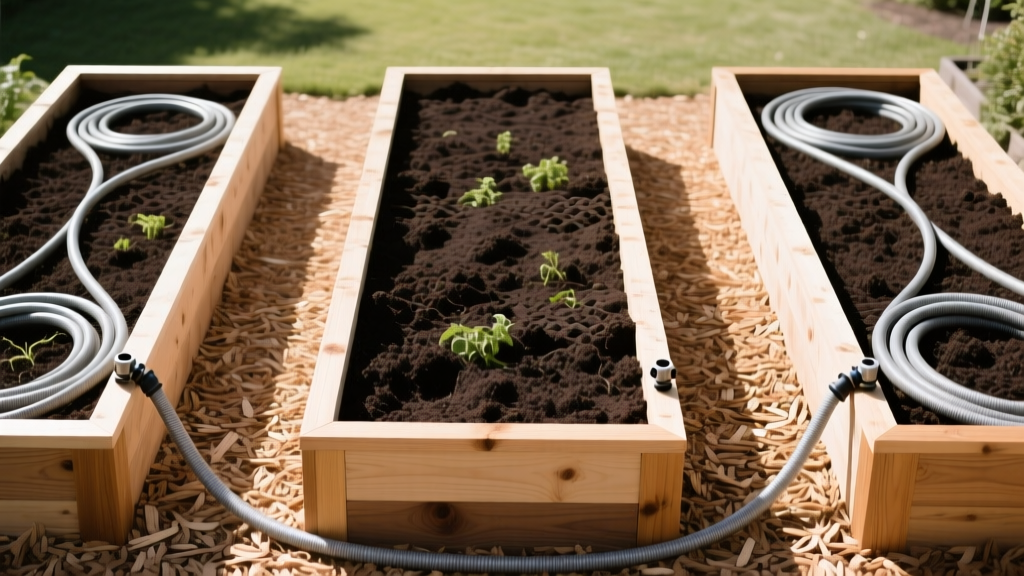
- Phase 1 (Autumn): Site Prep & Hardscaping. Spend $300-$500 clearing sod, leveling the ground, and laying down woven geotextile weed barrier and woodchips. This is labor-intensive but material-cheap.
- Phase 2 (Late Winter): Structure Assembly. Buy lumber during off-peak winter sales when lumber yards are clearing inventory. Assemble the boxes and secure them with rebar stakes. Cost: $800.
- Phase 3 (Early Spring): Soil & Irrigation. Order bulk soil delivery and install drip lines right before planting season. Cost: $600.
- Phase 4 (Year 2): Peripherals. Add trellises, cold frames, and perennial borders using the next year's discretionary income.
ROI and Property Value Impact
Does financing a garden make financial sense upon resale? According to the National Association of Landscape Professionals (NALP), well-executed landscaping and outdoor living features can yield a return on investment of 100% to 200% at the time of sale. However, highly personalized vegetable gardens may not appeal to every buyer. To protect your ROI, ensure your raised beds are built with premium, neutral materials (like composite or clean cedar) and are integrated into a broader, tidy landscape design rather than looking like a temporary farming operation.
Frequently Asked Questions
Is it cheaper to buy or build a raised garden bed?
Building your own from raw lumber is almost always cheaper than buying pre-fabricated kits. A 4x8 cedar kit from a retail brand often costs $350-$500, whereas sourcing the same volume of rough-sawn cedar from a local mill and cutting it yourself will cost roughly $180-$220. The exception is galvanized steel; manufacturing steel panels requires specialized equipment, making DIY steel beds more expensive and difficult than buying modular kits.
Can I use a home improvement store credit card for materials?
Yes, but read the terms carefully. Store cards often offer "6 months special financing," which is usually deferred interest, not 0% APR. If you do not pay the balance in full by month six, you will be charged interest retroactively from the date of purchase, often at punishing rates of 25% to 29%. A general-purpose bank card with true 0% introductory APR is vastly superior for financing building materials.
Written by
Priya KapoorPriya Kapoor is a real estate market analyst and construction economics researcher with expertise in housing affordability, development feasibility, and infrastructure investment. She holds a Master of Regional Planning from Cornell University and previously worked as a senior analyst at CBRE's Investment Properties group, where she modeled returns for $4B in mixed-use development pipelines. Priya now runs an independent research practice advising developers, municipalities, and REITs on construction cost forecasting and market timing. She publishes the quarterly "BuildMat Market Pulse" report tracking material price indices across 12 commodity categories. Based in Austin, TX, Priya serves on the board of Habitat for Humanity Austin and is a marathon runner.
More from Priya Kapoor
View all
Construction Cost
Cost to Build a 1600 Sq Ft Home in 2026: Full Breakdown
Accurate 2026 cost to build a 1600 sq ft home—material, labor, and regional pricing breakdowns included. Plan your budget with real-time estimates.
Aug 11, 2026

Wood & Lumber
Name the Types of Wood for Pressure Treatment and Preservation
Learn how to name the types of wood best suited for pressure treatment. Compare species treatability, chemical retention levels, and 2026 preservation costs.
Aug 4, 2026

Stone & Masonry
Stone Veneer Suppliers Lindenhurst: 2026 Cost Analysis
Analyze 2026 stone veneer costs in Lindenhurst, NY. Compare local supplier pricing, delivery fees, and Suffolk County installation labor rates.
Aug 4, 2026