How Much Does It Cost to Build an RV Park? 2026 Guide
Discover how much it costs to build an RV park in 2026. Complete breakdown of land, infrastructure, utility pedestals, and site prep expenses.

Executive Summary: 2026 RV Park Development Costs
Developing a recreational vehicle park requires navigating complex civil engineering, stringent electrical codes, and heavy-duty paving requirements. In 2026, the cost to build an RV park ranges from $15,000 to $55,000 per pad, excluding raw land acquisition. A standard 50-site park with full hookups, paved roads, and a modest bathhouse typically requires a capital investment between $1.2 million and $2.5 million. Luxury resorts with concrete pads, resort-style pools, and clubhouses frequently exceed $4 million. Understanding where these costs originate is critical for securing commercial financing and avoiding catastrophic budget overruns during the site-work phase.
- Average Cost Per Pad (Mid-Tier): $28,500
- Electrical Pedestal Install (50-Amp): $3,200 - $4,100 per site
- Concrete Pad (20' x 50', 5-inch thick): $6,500 - $8,500 per site
- Typical Development Timeline: 14 to 22 months (permitting to ribbon-cutting)
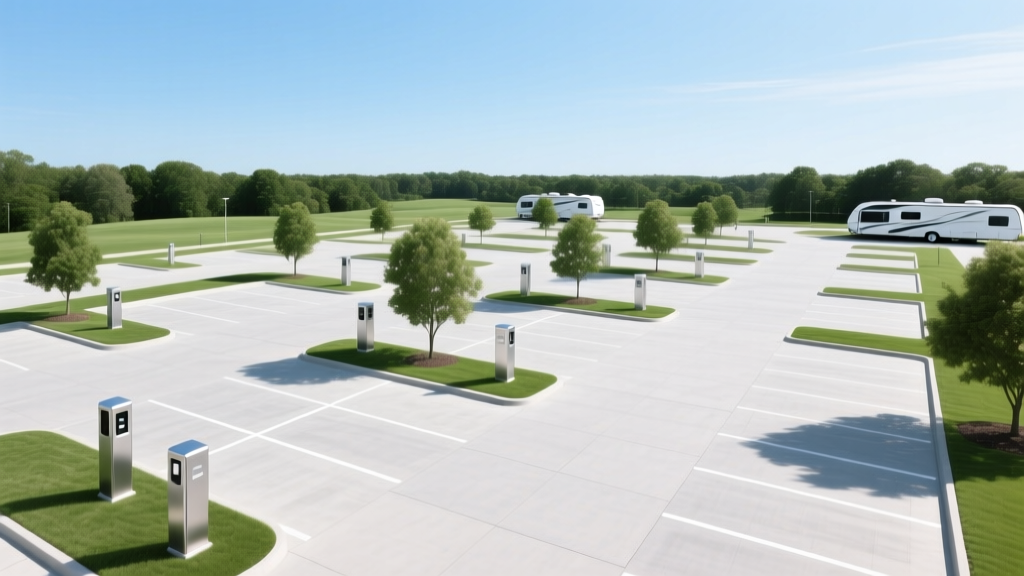
The Core Cost Matrix: Park Tiers and Scale
Not all RV parks are built to the same standard. The target demographic dictates the infrastructure density, pad materials, and amenity footprint. The table below outlines the estimated 2026 infrastructure costs per pad based on development tier.
| Development Tier | Pad Surface | Utility Specs | Est. Cost Per Pad |
|---|---|---|---|
| Budget / Rural | Crushed gravel, dirt roads | 30-Amp electric, shared water spigots, no sewer | $12,000 - $18,000 |
| Mid-Tier / Suburban | Asphalt roads, gravel/concrete pads | 50-Amp electric, individual water/sewer hookups | $22,000 - $35,000 |
| Luxury Resort | Paved roads, full concrete pads, patios | 50-Amp, full hookups, fiber-optic, smart pedestals | $40,000 - $65,000+ |
Phase 1: Earthwork, Grading, and Stormwater
Site preparation is the most unpredictable variable in RV park construction. RVs, particularly Class A motorhomes and fifth-wheel trailers, require exceptionally flat pads and gentle road gradients. A site with a natural slope exceeding 5% will require massive cut-and-fill operations to create terraced, level building envelopes.
Soil Stabilization and Cut/Fill Economics
In 2026, bulk earthmoving costs average $4.50 to $8.00 per cubic yard. However, if soil testing reveals expansive clays or organic peat, you must over-excavate and import structural fill. For RV pads, the subgrade must be compacted to 95% Proctor density to prevent the concrete from fracturing under the 15,000+ lb tongue weights of modern luxury fifth-wheels. Budget an additional $2,500 per pad if geogrid reinforcement or imported aggregate base course (ABC) is required to stabilize poor soils.
Stormwater management is equally costly. Municipalities now mandate on-site retention ponds or underground detention vaults to handle 100-year storm events. An underground stormwater detention system using modular polypropylene crates can cost $45 to $70 per cubic foot of storage capacity, easily adding $150,000 to a 50-site project in heavily regulated watersheds.
Phase 2: Utility Infrastructure (The Budget Maker)
Underground utilities represent 35% to 45% of the total hard construction costs. Trenching, bedding, and backfilling for water, sewer, and electrical lines require precise coordination to avoid catastrophic change orders.
Electrical Systems and NEC Article 551
RV park electrical systems are governed by National Electrical Code (NEC) Article 551. This code mandates specific demand factors and feeder sizing. A standard modern site requires a 50/30/20-amp combo pedestal. In 2026, a heavy-duty, metered pedestal (such as the Milbank M10086 or RV Power Products equivalents) costs between $1,800 and $2,600 per unit. When you add trenching, 4-inch PVC conduit, copper THHN wiring, and a 3-foot by 3-foot concrete mounting pad, the total installed cost per electrical site reaches $3,500 to $4,500. Upgrading to smart pedestals with remote metering and Wi-Fi disconnects adds roughly $600 per unit but significantly reduces long-term operational overhead.
Water and Sewer Engineering
Sewer infrastructure is notoriously expensive. Each site requires a 4-inch ASTM D3034 PVC sewer lateral with a two-way cleanout and a specialized RV dump fitting. The main trunk lines must be sized to handle the massive surge loads generated when 50 RVs empty their black tanks simultaneously on a Sunday morning. If municipal sewer tap fees are prohibitive or unavailable, developers must install on-site wastewater treatment systems. According to EPA wastewater guidelines, commercial package plants or engineered lagoons require rigorous environmental permitting and can cost upwards of $300,000 for a 50-site capacity system.
Water lines utilize 2-inch C900 PVC for mains and 1-inch copper or PEX for service laterals. Every site must feature an individual shut-off valve and a backflow preventer to protect the potable water supply from cross-contamination. Installed water costs average $1,200 to $1,800 per site.
Before purchasing land, verify municipal water and sewer tap fees. In rapidly growing Sunbelt and Mountain West municipalities, sewer impact fees can exceed $15,000 per RV pad, instantly destroying project feasibility. Always request a formal will-serve letter and fee schedule from the local utility authority before closing on raw land.
Phase 3: Paving, Pads, and Accessibility
The surface your guests park on dictates the perceived value of your park. The RV Industry Association (RVIA) and federal campground design guidelines recommend minimum pad dimensions of 20 feet wide by 50 feet long for standard back-in sites, though 60-foot lengths are increasingly necessary to accommodate modern 45-foot motorhomes and their tow vehicles.
Concrete vs. Aggregate Pads
Concrete is the gold standard for luxury and mid-tier parks. A 20' x 50' pad requires 37 cubic yards of concrete. In 2026, specify a 4000 PSI mix with fiber-mesh reinforcement and a broom finish for slip resistance. Poured at a 5-inch thickness, the material and labor cost ranges from $7,000 to $9,500 per pad. For budget parks, a 6-inch layer of 3/4-inch crushed angular aggregate compacted over a non-woven geotextile fabric costs roughly $2,500 per pad, though it requires annual re-grading and weed control.
Roadway Width and Turning Radii
RV navigation requires immense spatial clearance. One-way access roads must be a minimum of 20 feet wide, while two-way thoroughfares require 32 to 40 feet of paved width. Furthermore, the inside turning radius at intersections must be at least 55 feet to allow a 45-foot motorhome towing a vehicle to navigate without jumping the curb. Asphalt paving (3 inches of hot-mix over 6 inches of aggregate base) costs approximately $7.50 to $11.00 per square foot in 2026.
Phase 4: Amenities, Facilities, and Soft Costs
Modern RVers expect resort-level amenities. A standard 2,000-square-foot bathhouse with private shower suites, laundry facilities, and family restrooms costs between $450,000 and $650,000 to construct, factoring in commercial plumbing, heavy-duty water heaters, and ADA compliance. A centralized RV dump station with fresh water fill and a concrete apron costs $35,000 to $50,000.
Navigating Soft Costs and Permitting
Soft costs typically consume 15% to 25% of the total project budget. These include:
- Traffic Impact Studies: $10,000 - $25,000 (Required by DOT for new highway curb cuts)
- Environmental Site Assessments (Phase I & II): $5,000 - $15,000
- Civil Engineering and Architecture: 8% - 12% of hard construction costs
- Permitting and Impact Fees: Highly variable by jurisdiction
Strategic Phasing vs. Turnkey Delivery
To manage cash flow and mitigate risk, many developers utilize a phased construction approach. Phase 1 might include all underground utility mains, road base, and the first 25 pads, while leaving the clubhouse and remaining pads for Phase 2. This allows the park to open, generate revenue, and establish occupancy metrics before securing the second tranche of construction financing. When underwriting your project with the U.S. Small Business Administration (SBA) or rural development lenders, presenting a phased pro-forma demonstrates sophisticated risk management and often results in more favorable debt-service coverage ratios.
Written by
James ThorntonJames Thornton is a construction industry veteran with 25 years of hands-on experience in wood framing, lumber grading, and residential building codes. He started as a framing carpenter in rural Oregon, earned his ICC Residential Building Inspector certification, and eventually became a senior plan reviewer for the City of Portland Bureau of Development Services. James holds a B.S. in Wood Science & Technology from Oregon State University and is a certified lumber grader through the West Coast Lumber Inspection Bureau (WCLIB). He has inspected over 3,000 residential construction sites and authored the city's internal guide on advanced framing techniques (2x6 at 24" O.C.). James lives in Bend, OR, where he builds custom timber-frame cabins and competes in lumberjack sports.
More from James Thornton
View all
Insulation
Best Home Insulation Materials: Complete 2026 Guide
Compare top home insulation materials for 2026. Find R-values, installed costs per square foot, and best uses for fiberglass, spray foam, and mineral wool.
Aug 4, 2026

Sustainable Building
Certify Your Green Building Material for LEED and WELL
Step-by-step guide to certifying a green building material for LEED v5 and WELL v2. Master EPDs, HPDs, and VOC limits for 2026 project specifications.
Aug 4, 2026

Stone & Masonry
Veneer Stacked Stone Panels: Interior Design & Style Showcase
Discover how veneer stacked stone panels transform interiors. Explore modern design profiles, material pairings, and technical installation specs.
Aug 4, 2026