Cost to Build a Tornado Shelter: Budget Guide
How much does it cost to build a tornado shelter? Breakdowns for above-ground, below-ground, FEMA compliance, and site prep fees.

The Baseline: Tornado Shelter Construction Costs
When budgeting for life-saving infrastructure, understanding exactly how much does it cost to build a tornado shelter requires moving beyond basic square-footage metrics. The total investment is dictated by structural engineering standards, site-specific soil conditions, and the chosen installation method. On average, homeowners spend between $4,500 and $9,000 for a standard residential safe room, but custom integrations or complex site preparations can push this figure past $15,000.
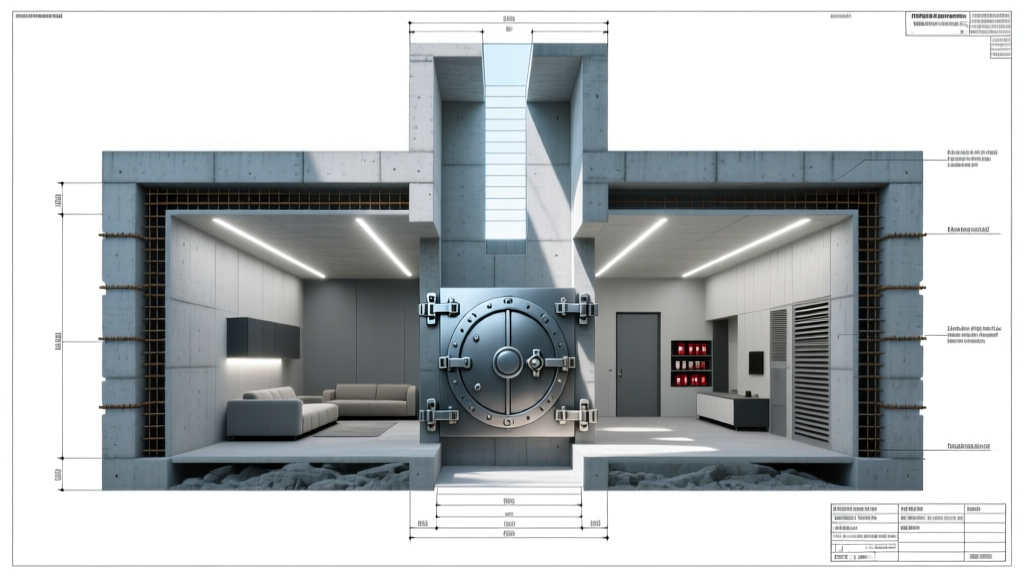
Unlike standard home additions, storm shelters must withstand extreme pressure differentials and high-velocity debris impacts. This necessitates specialized materials, such as 1/4-inch ASTM A36 steel or heavily reinforced concrete masonry units (CMU), which inherently drive up material costs compared to conventional framing.
2026 Residential Shelter Cost Matrix
| Shelter Type | Primary Material | Capacity | Average Cost Range | Installation Timeline |
|---|---|---|---|---|
| Prefab Above-Ground (Interior) | 1/4' Welded Steel | 4-6 Adults | $3,500 - $5,500 | 4 - 8 Hours |
| Precast Concrete Below-Ground | Reinforced Concrete | 6-10 Adults | $5,000 - $8,500 | 1 - 2 Days |
| Poured-in-Place Custom | Poured Concrete / CMU | 10+ Adults | $8,000 - $15,000+ | 3 - 7 Days |
| Garage Slab Anchor-Down | Steel / Kevlar Hybrid | 4-8 Adults | $4,000 - $6,500 | 1 Day |
Above-Ground vs. Below-Ground: A Budgeting Framework
Choosing between an above-ground and below-ground shelter is the most significant budgetary decision you will make. This choice is rarely just about preference; it is heavily dictated by your local geology and water table.
Decision Framework: Site Suitability
- High Water Table (e.g., Coastal Texas, Louisiana, Florida): Below-ground shelters are highly susceptible to hydrostatic uplift. A heavy rain event can cause an empty underground shelter to literally float out of the ground, destroying the surrounding foundation. Above-ground bolt-down models are mandatory here.
- Expansive Clay Soils (e.g., Oklahoma, North Texas): Soil expansion can exert thousands of pounds of lateral pressure on underground concrete walls. If you choose below-ground, you must budget an additional $1,500 to $3,000 for structural engineering reports and reinforced floating slabs to prevent wall bowing.
- Bedrock Shallow Depths (e.g., Missouri Ozarks): Excavating through solid limestone requires heavy machinery and potentially blasting, adding $3,000 to $5,000 to site prep. Above-ground interior closets or garage anchors are vastly more economical.
Itemized Budget Breakdown: Where Your Money Goes
To accurately forecast your budget, you must account for the hidden costs of site preparation and structural integration. The unit price of the shelter itself is often only 60% of the total project cost.
1. Excavation and Heavy Machinery ($1,200 - $3,500)
For below-ground models, excavating a 6x10 foot hole to a depth of 6 feet requires a mini-excavator and skid steer. If access to your backyard is restricted by fences or tight property lines, contractors may need to use a specialized compact track loader or even a crane to lift the precast unit over your house, adding $800 to $1,500 to the machinery rental fees.
2. Anchoring and Load Path Engineering ($400 - $1,200)
Above-ground shelters rely entirely on their connection to the home's foundation. Contractors must use specialized wedge anchors or epoxy-set anchors (such as Hilti Kwik Bolt TZ or Simpson Strong-Tie Titen HD) drilled directly into a minimum 4-inch thick, 3,000 PSI concrete slab. If your garage slab is only 2 inches thick or features post-tension cables, the contractor will need to cut out a section and pour a dedicated structural footing to handle the 250-mph wind uplift loads.
3. Electrical and Ventilation Integration ($300 - $800)
Modern safe rooms require hardwired LED lighting, GFCI outlets, and dedicated communication lines. Below-ground shelters must also be fitted with angled, debris-resistant ventilation shafts or mechanical ventilation systems to prevent CO2 buildup if the entrance is blocked by storm debris.
Navigating FEMA P-361 and ICC 500 Standards
When evaluating quotes, you are paying for compliance with rigorous engineering standards. The two governing frameworks for storm shelters are FEMA P-361 and the ICC 500 standard. While they share similarities, their testing protocols dictate material costs.
To achieve certification, a shelter's walls and doors must pass the debris impact test. This involves firing a 15-pound 2x4 wooden missile at the structure at 100 mph (simulating a 250 mph tornado wind speed). Above-ground steel shelters achieve this through 1/4-inch or 3/8-inch solid steel walls, while concrete shelters require 6-inch to 8-inch thick walls reinforced with #4 or #5 rebar spaced at 12 inches on center.
Warning on 'Storm-Resistant' vs. 'Storm-Proof': Many budget manufacturers sell 'storm-resistant' sheds or panels that meet basic wind load codes but have not been tested for the 15-pound missile impact. Always verify that the specific model you are purchasing is listed on the National Storm Shelter Association (NSSA) registry or holds a Texas Tech University Wind Science and Engineering (WiSE) impact certification.
Offsetting Costs: Grants and Tax Incentives
The raw cost of building a tornado shelter can be significantly reduced through federal, state, and local mitigation programs. Budget planning should always begin with a grant eligibility check.
- FEMA BRIC and HMGP: The Building Resilient Infrastructure and Communities (BRIC) program and Hazard Mitigation Grant Program (HMGP) frequently offer up to 75% reimbursement for safe room construction in declared disaster areas. These funds are usually distributed through local emergency management agencies.
- State-Level Rebates: States with high tornado frequencies often run dedicated rebate programs. For example, Oklahoma's SoonerSafe rebate program historically offers up to $2,000 in direct rebates for the installation of FEMA-compliant safe rooms in primary residences.
- Property Tax Exemptions: Many counties in the Midwest and South exclude the added value of a certified storm shelter from your annual property tax assessment, providing long-term financial relief.
Frequently Asked Questions
Can I build a DIY tornado shelter to save money?
While you can purchase DIY above-ground steel kits, anchoring them correctly to withstand 250-mph uplift forces requires precision drilling and structural knowledge. An improperly anchored DIY shelter can detach during a tornado, becoming a lethal projectile. Professional installation is highly recommended to maintain liability coverage and FEMA compliance.
Does a tornado shelter increase home resale value?
Yes, particularly in 'Tornado Alley' and 'Dixie Alley'. Appraisers and real estate agents note that a certified, permitted below-ground or integrated above-ground shelter can yield a 70% to 100% return on investment at resale, as buyers in these regions actively filter listings for safe room availability.
How much does it cost to maintain a tornado shelter?
Maintenance costs are minimal, averaging $50 to $100 annually. This includes lubricating heavy-duty vault door hinges, checking the rubber weather-seals for dry rot, testing the battery backup for interior LED lights, and ensuring the ventilation shafts are clear of insect nests or debris.
Written by
Priya KapoorPriya Kapoor is a real estate market analyst and construction economics researcher with expertise in housing affordability, development feasibility, and infrastructure investment. She holds a Master of Regional Planning from Cornell University and previously worked as a senior analyst at CBRE's Investment Properties group, where she modeled returns for $4B in mixed-use development pipelines. Priya now runs an independent research practice advising developers, municipalities, and REITs on construction cost forecasting and market timing. She publishes the quarterly "BuildMat Market Pulse" report tracking material price indices across 12 commodity categories. Based in Austin, TX, Priya serves on the board of Habitat for Humanity Austin and is a marathon runner.
More from Priya Kapoor
View all
Construction Cost
Cost to Build a 1600 Sq Ft Home in 2026: Full Breakdown
Accurate 2026 cost to build a 1600 sq ft home—material, labor, and regional pricing breakdowns included. Plan your budget with real-time estimates.
Aug 11, 2026

Wood & Lumber
Name the Types of Wood for Pressure Treatment and Preservation
Learn how to name the types of wood best suited for pressure treatment. Compare species treatability, chemical retention levels, and 2026 preservation costs.
Aug 4, 2026

Stone & Masonry
Stone Veneer Suppliers Lindenhurst: 2026 Cost Analysis
Analyze 2026 stone veneer costs in Lindenhurst, NY. Compare local supplier pricing, delivery fees, and Suffolk County installation labor rates.
Aug 4, 2026