How to Maintain and Calibrate Your Fence Stretcher for Perfect Wire Tension
Master your fence stretcher maintenance playbook. Learn cleaning protocols, grip plate calibration, and tension troubleshooting for wire fencing.
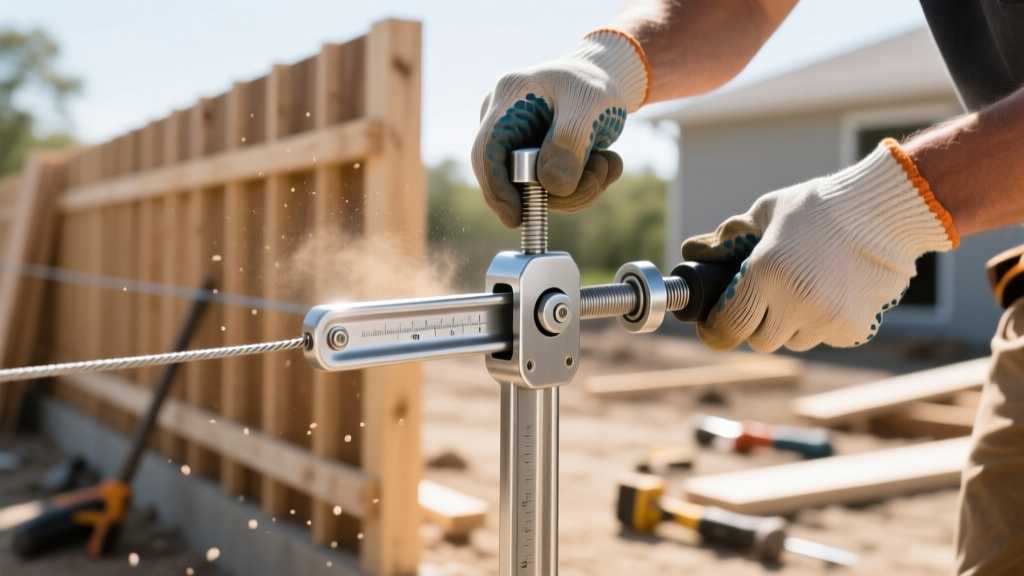
The Hidden Cost of a Neglected Fence Stretcher
A fence stretcher is the most critical mechanical tool in wire fencing installation and repair. Whether you are pulling 12.5-gauge high-tensile wire, woven field fence, or barbed wire, the stretcher must apply exact, even tension without slipping. When a fence stretcher is neglected, zinc dust, mud, and rust compromise the grip plates. The result is catastrophic slippage under load, which not only ruins the wire's temper but creates a severe whip-back safety hazard for the operator.
According to the University of Missouri Extension, proper tensioning is critical to prevent sagging, maintain structural integrity, and ensure livestock containment. This maintenance and cleaning playbook details the exact protocols required to keep your ratchet and lever-style fence stretchers calibrated, clean, and safe for high-tension pulls.
Step-by-Step Cleaning Protocol for Grip Plates and Jaws
Galvanized wire sheds microscopic zinc flakes every time it is pulled through a stretcher. Over a single season of fencing, these flakes combine with ambient moisture to form a hard, slick paste on the grip plates. Cleaning this buildup requires specific solvents and tools to avoid damaging the tool's metallurgy.
1. Mechanical Debridement
Use a stiff brass wire brush (never steel, which can gouge the softer steel of the grip plates and create grooves where the wire will seat unevenly). Scrub the serrated teeth of the jaws in a circular motion to dislodge compacted zinc dust and rust scale. For deep crevices in ratchet mechanisms, use a dental pick or a specialized parts-cleaning brush.
2. Solvent Degreasing
After brushing, wipe the grip plates down with 99% isopropyl alcohol or a dedicated, fast-evaporating brake cleaner. These solvents strip away residual oils from your hands, sap from nearby trees, and microscopic grease without leaving a film. Allow the plates to air-dry completely for 60 seconds before re-engaging the wire.
3. Ratchet and Pawl Maintenance
The ratchet mechanism requires a different approach. Mud and burrs frequently jam the pawl spring, preventing the locking mechanism from fully seating. Blast the ratchet gear and pawl with compressed air. Once clear, apply a PTFE (Teflon) dry lubricant spray. Dry lube penetrates the moving parts and dries to a slick film that repels dust and dirt, unlike wet greases that act as a magnet for pasture debris.
Tension Calibration: Matching the Stretcher to the Wire
Different wire profiles require vastly different tension profiles. Using a fence stretcher without understanding the target tension leads to either snapped wires (over-tensioning) or sagging fences (under-tensioning). Tool manufacturers like Gallagher engineer their strainers with specific gear ratios to help operators 'feel' the tension, but visual and mechanical calibration is still required.
| Wire Type & Gauge | Target Tension (lbs) | Recommended Stretcher Bar | Primary Maintenance Focus |
|---|---|---|---|
| High-Tensile (12.5 ga) | 150 - 200 lbs | Single-Wire Ratchet Gripper | Grip plate serration sharpness |
| Woven Field Fence (10 ga) | Even pull across height | Multi-Wire Pulling Block / Bar | Pulling bar straightness & hook integrity |
| Barbed Wire (15.5 ga) | 50 - 75 lbs (Snug) | Lever-Action Come-Along | Lever pivot pin lubrication |
| Polywire / Poly tape | 10 - 20 lbs | Inline Ratchet Reel | UV degradation of plastic housing |
Troubleshooting Common Fence Stretcher Failures
When a fence stretcher fails mid-pull, it is rarely a sudden mechanical break; it is usually the culmination of ignored wear patterns. Use this diagnostic matrix to identify and fix operational faults in the field.
- Symptom: Jaws slip when tension exceeds 80 lbs on high-tensile wire.
Root Cause: Zinc paste buildup on grip plates, or serrations worn smooth from pulling abrasive, rusty wire.
Field Fix: Remove the stretcher. Scrub plates with a brass brush and brake cleaner. If the serrations are visibly smoothed out, replace the grip plates immediately (replacement plates typically cost $15–$30 depending on the brand). - Symptom: The ratchet handle slips backward under load, failing to lock.
Root Cause: A bent pawl spring, or mud/debris preventing the pawl from dropping fully into the gear teeth.
Field Fix: Disengage the load safely. Clear the gear box with compressed air. Inspect the pawl spring; if it has lost its tension, use needle-nose pliers to stretch it slightly or replace the spring (a $5 part that saves a $100 tool). - Symptom: Woven wire pulls unevenly, bowing at the top or bottom.
Root Cause: The stretcher pulling bar is bent, or the tension chains are of unequal length.
Field Fix: Never attempt to bend a hardened steel pulling bar back into shape in the field, as it may micro-fracture. Swap to a backup bar or use a wooden 2x4 wrapped in baling wire as a temporary load-distribution block until a replacement bar can be sourced.
Proper Storage and Rust Prevention for Longevity
How you store your fence stretcher between jobs dictates its lifespan. Tossing a ratchet stretcher into the back of a truck bed exposes it to rain, road salt, and impact damage that can bend the tension handle.
"High-tensile wire has a vicious memory. If your stretcher slips and the wire whips back, it can easily sever a finger or cause severe lacerations. Treat your stretcher's grip plates with the same respect you would treat the cutting edge of a saw blade."
To protect your investment, implement the following storage protocol:
- Canvas Tool Rolls: Store ratchet stretchers in heavy-duty canvas rolls. This prevents the steel jaws from banging against other tools, which can dull the serrations.
- VCI Paper: Wrap the metal components in Volatile Corrosion Inhibitor (VCI) paper. VCI paper emits a microscopic vapor that settles on the metal, neutralizing oxidation without requiring you to coat the tool in messy grease.
- Silica Gel Desiccants: Drop two or three 10-gram silica gel packets into the storage roll or toolbox drawer to absorb ambient moisture, particularly if you operate in high-humidity coastal or southern environments.
Recommended Maintenance Schedule
To ensure your fence stretcher performs flawlessly, adhere to this operational checklist:
- Pre-Job (Daily): Wipe grip plates with isopropyl alcohol. Test the ratchet pawl engagement by hand without a load to ensure it clicks cleanly into every gear tooth.
- Mid-Job (Every 50 pulls): Inspect grip plate serrations for zinc buildup. Clear debris from the ratchet gear box using a brush or compressed air.
- Post-Season (Annual): Fully disassemble the ratchet mechanism if the manufacturer allows. Soak gears in a mild degreaser, dry completely, apply PTFE dry lube, and reassemble. Inspect all pulling chains and hooks for stretched links or micro-fractures, replacing any hardware that shows a 5% or greater deformation.
By treating your fence stretcher as a precision calibration tool rather than a blunt pulling implement, you ensure safer installations, longer wire life, and a fence that stands plumb and tight for decades.