Pressure Treated Wood for Fence Posts: Brand & Retention Guide
Compare top brands of pressure treated wood for fence posts. Learn AWPA UC4 retention levels, chemical types, and pricing to prevent ground-line rot.
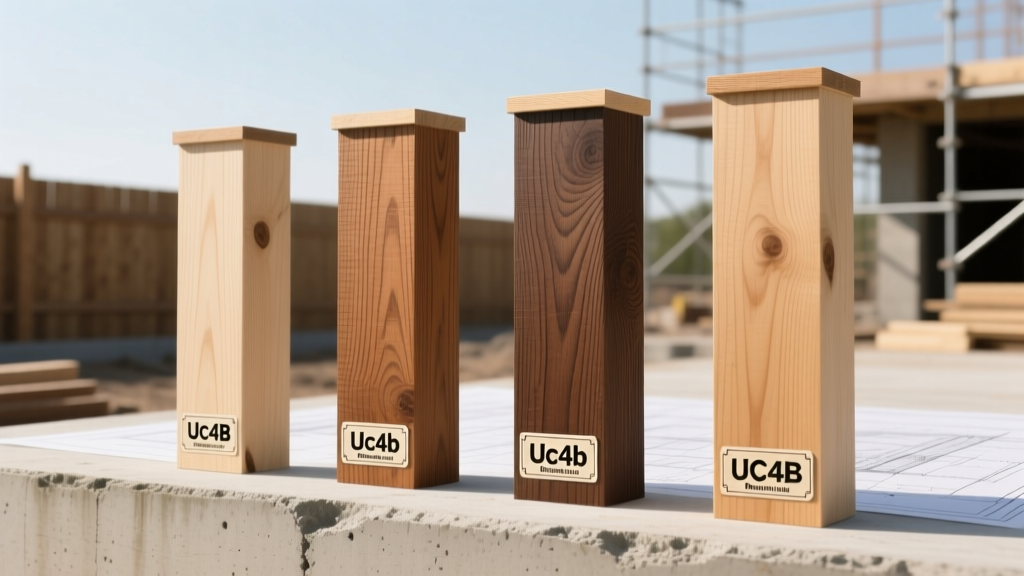
The Critical Flaw in Standard Fence Post Lumber
When sourcing pressure treated wood for fence posts, the most common and expensive mistake contractors and homeowners make is treating all 'ground contact' lumber as identical. A fence post operates in the most hostile biological environment of any exterior wood structure: the ground-line interface. Here, oxygen, moisture, and soil-borne fungi intersect, creating a perfect incubator for decay. In 2026, with material replacement costs averaging $85 to $120 per linear foot for a finished fence, selecting the wrong retention level or chemical formulation guarantees premature structural failure.
This deep-dive analyzes the leading brands of pressure treated wood for fence posts, decoding the chemical retention matrices and AWPA (American Wood Protection Association) standards that dictate a post's actual lifespan. We will move beyond the generic 'ground contact' label to evaluate specific product lines like ProWood MCA, YellaWood MicroPro, and standard CA-C big-box offerings.
Decoding AWPA Use Categories for Fence Posts
The American Wood Protection Association (AWPA) classifies treated wood into Use Categories based on biological hazard severity. For fence posts, you must navigate the UC4 (Ground Contact) sub-categories. Buying a post stamped simply 'Ground Contact' without verifying the sub-category is a primary cause of 7-year rot failures.
Many big-box retailers stock UC4A (General Ground Contact) 4x4s. UC4A requires a minimum chemical retention of 0.25 pcf (pounds per cubic foot). While sufficient for deck posts on concrete piers above the soil, UC4A is structurally inadequate for direct soil burial for fence posts in high-moisture climates. You must demand UC4B.
- UC4A (General Ground Contact): 0.25 pcf retention. Acceptable for landscaping timbers or deck posts with proper drainage, but risky for continuous soil-embedded fence posts.
- UC4B (Heavy Duty Ground Contact): 0.40 pcf retention. The absolute minimum standard for pressure treated wood for fence posts. Designed for critical structural components buried in soil with poor drainage.
- UC4C (Ground Contact - Foundation): 0.60 pcf retention. Typically reserved for permanent wood foundations and agricultural posts in severe decay zones. Overkill for residential fencing, but offers maximum longevity.
Brand Deep-Dive: Chemical Formulations and Product Lines
Not all copper-based preservatives perform identically. The shift away from CCA (Chromated Copper Arsenate) led to the development of micronized and dissolved copper systems. Here is how the top brands engineer their pressure treated wood for fence posts.
1. ProWood (MCA-C and KDAT Lines)
ProWood utilizes Micronized Copper Azole (MCA-C). Unlike older dissolved copper systems, MCA-C uses sub-micron-sized copper particles suspended in water, rather than dissolved copper salts. This results in a more natural wood color and significantly lower corrosion rates on metal fasteners. ProWood's standout feature for fence installers is their KDAT (Kiln Dried After Treatment) line. Standard treated posts are saturated and shrink as they dry in the sun, causing severe twisting and checking. ProWood KDAT posts are pre-shrunk, meaning the 4x4 you set in the ground today will remain dimensionally stable tomorrow.
2. YellaWood (MicroPro)
YellaWood's MicroPro line also leverages micronized copper technology. The primary advantage of MicroPro is its compatibility with standard hot-dipped galvanized fasteners and aluminum brackets without the severe galvanic corrosion associated with older ACQ (Alkaline Copper Quaternary) treatments. For fence posts, YellaWood offers a dedicated UC4B 'Heavy Duty' tag. Their southern yellow pine substrate is denser than standard SPF (Spruce-Pine-Fir), providing superior screw-holding power for heavy gate hinges and tension wires.
3. Severe Weather / Store Brands (CA-C)
Often sold under the 'Severe Weather' label at major home improvement centers, these posts are typically treated with Copper Azole Type C (CA-C). CA-C relies on dissolved copper and tebuconazole as a co-biocide. While highly effective against termites and fungal decay, dissolved copper systems are more corrosive. If using CA-C pressure treated wood for fence posts, you must use G185 hot-dipped galvanized or stainless steel brackets and fasteners; standard zinc-plated hardware will corrode within 24 months.
2026 Product Matrix: Retention, Pricing, and Specs
The following matrix reflects current 2026 wholesale and retail pricing averages for 4x4x8 and 6x6x8 fence post stock. Prices fluctuate regionally based on Southern Pine market availability and local treatment plant capacities.
| Brand / Line | Chemical | AWPA Category | Retention (pcf) | KDAT? | Avg Price (4x4x8) |
|---|---|---|---|---|---|
| ProWood MCA | MCA-C | UC4B | 0.40 | Yes | $18.50 - $22.00 |
| YellaWood MicroPro | MCA | UC4B | 0.40 | No | $16.00 - $19.50 |
| Severe Weather | CA-C | UC4A / UC4B | 0.25 / 0.40 | No | $13.00 - $17.00 |
| ProWood FR (D-Blaze) | MCA + FR | UC4B | 0.40 | Yes | $26.00 - $31.00 |
Real-World Failure Modes at the Ground Line
Even when utilizing premium UC4B pressure treated wood for fence posts, improper installation mechanics can negate the chemical protection. The most prevalent failure mode in modern fencing is the Concrete Collar Sponge Effect.
When a post is set in a sonotube and concrete is poured flush or slightly above grade, the concrete cures with microscopic capillaries. Over time, surface water pools at the wood-concrete interface. The concrete acts as a sponge, holding moisture directly against the end-grain and side-grain of the post. Furthermore, as the wood undergoes seasonal swelling and shrinking, it breaks the bond with the concrete, creating a gap where water accumulates but cannot drain. The result is severe rot precisely at the grade line, often snapping the post while the buried portion remains perfectly intact.
Abandon the traditional 'bag of dry mix' method. For maximum lifespan with pressure treated wood for fence posts, use a crushed angular gravel base (minimum 6 inches) and backfill the remaining hole with tamped 3/4-inch crushed stone. Angular gravel locks the post in place with friction comparable to concrete, while allowing instantaneous hydrostatic drainage away from the wood.
Installation Protocol for a 30-Year Post Lifespan
To maximize the ROI on UC4B treated lumber, follow this rigorous installation sequence designed to mitigate ground-line decay:
- Excavation: Dig the post hole to a depth that exceeds the local frost line by at least 6 inches. For a standard 6-foot fence, this typically means a 30-inch to 36-inch hole depth.
- Capillary Break: Pour 6 inches of 3/4-inch crushed angular gravel into the bottom of the hole. Tamp it solid. This prevents the post end-grain from sitting in trapped water.
- End-Grain Sealing: If you cut the bottom of the post to length, you have exposed untreated heartwood. Brush a heavy coat of copper naphthenate (e.g., Cuprinol Green) onto the cut end-grain and let it penetrate for 30 minutes before setting.
- Setting and Backfilling: Plumb the post and backfill in 4-inch lifts with crushed stone, tamping aggressively with a 2x4. Do not use rounded pea gravel, as it lacks interlocking shear strength.
- Grade Sloping: At the top 2 inches of the hole, use a polymer-modified concrete patch or mounding soil to create a 45-degree slope away from the post. This sheds surface runoff away from the critical ground-line interface.
Sourcing and Final Procurement Advice
When procuring pressure treated wood for fence posts in 2026, always physically inspect the end-tags at the lumber yard. Do not rely on the signage in the aisle, as store employees frequently mix UC4A and UC4B stock in the same bins. Look for the specific AWPA U1 stamp indicating 'UC4B' or '0.40 pcf'. If your local supplier only stocks UC4A, pivot to a specialized landscape or fencing wholesaler. The $3 to $5 premium per post for UC4B lumber yields an exponential return by preventing the $150+ labor and material cost of replacing a rotted post three years down the line.