Terracotta Tile Flooring: Brand & Product Line Deep Dive
Compare top terracotta tile flooring brands, product lines, pricing, and technical installation frameworks for unglazed clay tiles.
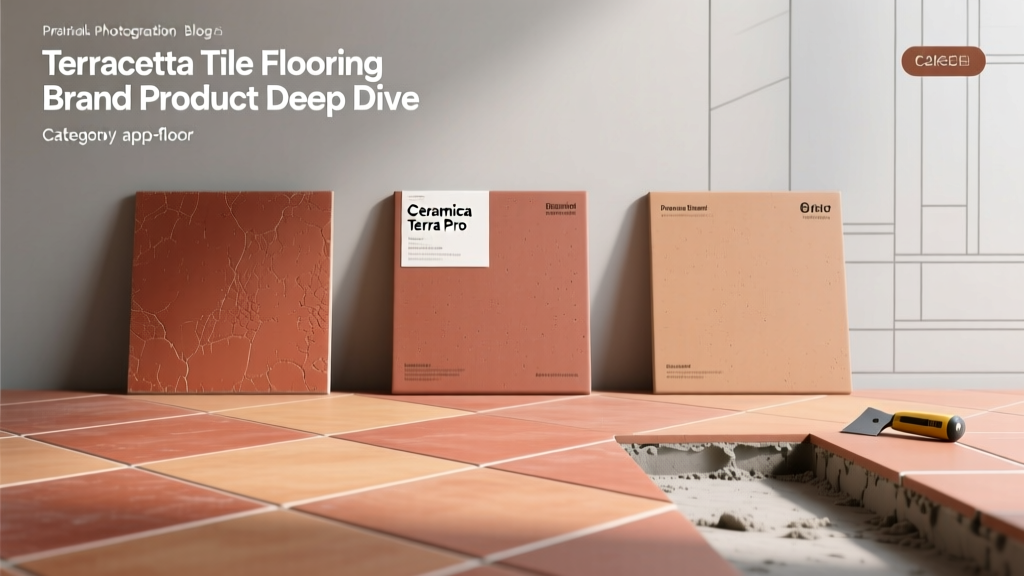
The Material Baseline: Understanding Unglazed Terracotta
Terracotta, literally translating to "baked earth," remains one of the most historically significant and aesthetically enduring flooring materials available. When specifying tile flooring terracotta options for residential or light-commercial spaces, architects and homeowners must navigate a market split between two distinct manufacturing processes: extruded (machine-pressed) and hand-pressed (artisanal). As of 2026, supply chain stabilization has significantly reduced lead times for imported Mexican Saltillo tiles, while domestic artisanal manufacturers have expanded their high-density clay offerings.
Unglazed terracotta is inherently non-vitreous. According to the ASTM C373 Water Absorption Standard, true terracotta typically exhibits a water absorption rate greater than 3.0%, classifying it as a highly porous material. This porosity dictates everything from the required subfloor preparation to the specific chemical sealers needed to prevent staining and efflorescence.
Technical Specifications Snapshot
- Mohs Hardness: 3 to 4 (Susceptible to scratching from quartz-rich sand; requires entryway catch mats)
- Water Absorption: >3.0% (Non-vitreous; mandates penetrating sealers)
- DCOF (Dynamic Coefficient of Friction): Typically >0.50 when unsealed (Excellent slip resistance, but drops if topical waxes build up)
- Thermal Conductivity: High (Ideal for radiant floor heating systems due to clay's heat retention properties)
Brand Deep-Dive 1: Clay Imports (The Modern Saltillo Standard)
Clay Imports has positioned itself as the bridge between traditional Mexican manufacturing and modern American building codes. Their terracotta lines are kiln-fired in Puebla, Mexico, but undergo rigorous quality control to ensure dimensional consistency that older Saltillo tiles notoriously lacked.
Featured Product Lines
- The Tradición Collection: Features classic 12x12 and 16x16 square formats with slight pillowing (convex surface). The edges are hand-chipped, providing a rustic, undulating profile. 2026 Pricing: $5.50 - $6.50 per sq. ft.
- The Antiguo Collection: A distressed line where tiles are intentionally tumbled and treated with a light manganese wash before firing, yielding deep browns, charcoals, and burnt oranges. 2026 Pricing: $6.50 - $7.50 per sq. ft.
Edge Case Warning: The Tradición line's pillowed surface creates a natural lippage. Installers must use a wider grout joint (minimum 3/8") and a sanded grout to accommodate the dimensional variance. Attempting a tight 1/8" joint with this specific line will result in severe lippage tripping hazards.
Brand Deep-Dive 2: Mission Tile West (Artisanal & Hand-Pressed)
For projects demanding absolute artisanal authenticity, Mission Tile West manufactures hand-pressed terracotta in Southern California. Unlike extruded tiles that are cut from a continuous clay ribbon, Mission Tile West uses wooden molds and local alluvial clays, resulting in a denser, harder final product with lower water absorption than standard Mexican imports.
Manufacturing Process & Performance
Because the clay is compressed manually and slow-dried in climate-controlled rooms for up to 14 days before firing, the internal micro-fissures common in rapid-fired commercial terracotta are virtually eliminated. This results in a Mohs hardness approaching 5, making it significantly more resistant to point-load scratching from furniture legs.
The Hexagon & Arabesque Lines: Mission Tile West excels in complex geometric terracotta shapes. Their 8-inch hexagon terracotta is a staple for high-end Mediterranean revival projects. 2026 Pricing: $9.00 - $12.50 per sq. ft. (Reflecting the premium for domestic, slow-fire artisanal labor).
Brand Deep-Dive 3: Rustico Tile (Budget-Friendly Authenticity)
Rustico Tile operates as a high-volume distributor of authentic San Luis Potosí Saltillo tiles. They are the go-to source for large-scale residential projects where budget constraints preclude artisanal domestic tiles, but the aesthetic of genuine terracotta is non-negotiable.
Volume Lines & Finish Options
- Spanish Classic: The traditional, unsealed, bright orange/red terracotta. Requires heavy on-site sealing. 2026 Pricing: $3.50 - $4.25 per sq. ft.
- Manganese: Fired with manganese dioxide additives to create dark, almost black edges and deep burgundy centers. Highly favored for Spanish Colonial Revival architecture. 2026 Pricing: $4.00 - $5.00 per sq. ft.
- Pre-Sealed (Pro-Line): Factory-sealed with a penetrating acrylic, reducing on-site labor costs by roughly 30%. 2026 Pricing: $4.75 - $5.50 per sq. ft.
Comparative Matrix: Terracotta Product Lines
| Brand / Line | Manufacturing | Price / Sq. Ft. | Lead Time | Best Application |
|---|---|---|---|---|
| Clay Imports (Antiguo) | Kiln-fired, hand-chipped | $6.50 - $7.50 | 4-6 Weeks | Rustic kitchens, patios |
| Mission Tile West (Hex) | Hand-pressed, slow-dried | $9.00 - $12.50 | 8-12 Weeks | High-end interiors, baths |
| Rustico (Spanish Classic) | Traditional Saltillo extrusion | $3.50 - $4.25 | 2-4 Weeks | Large-scale residential |
| Rustico (Pre-Sealed) | Factory acrylic-impregnated | $4.75 - $5.50 | 2-4 Weeks | Quick-turnaround remodels |
Installation & Sealing Framework for Unglazed Terracotta
Installing unglazed terracotta requires a fundamental departure from standard ceramic tile protocols. The National Tile Contractors Association (NTCA) explicitly outlines the risks of moisture migration in non-vitreous tiles. Failure to follow a strict moisture-management sequence will result in catastrophic aesthetic failures within months of installation.
Step-by-Step Installation Protocol
- Subfloor Isolation: Terracotta is brittle and highly susceptible to substrate cracking. Apply a crack isolation membrane such as Schluter-DITRA or a liquid-applied membrane like RedGard over the plywood or concrete subfloor. Do not skip this step on concrete slabs; vapor transmission will destroy the tile sealer.
- The Critical Pre-Seal (Do Not Skip): Before mixing any thinset, apply a heavy coat of a penetrating impregnating sealer (e.g., Aqua Mix Sealer's Choice Gold or Miracle Sealants 511 Impregnator) to the face and edges of the raw tiles. If you skip this, the porous clay will instantly suck the moisture and pigments out of your thinset and grout, resulting in permanent "picture-framing" (dark, stained edges) and grout haze that cannot be removed.
- Adhesive Selection: Use a high-quality, polymer-modified thinset mortar. Mapei Ultraflex 2 or Custom Building Products MegaFlex are industry standards. Avoid unmodified mastics entirely; the organic solvents in mastic will bleed through the terracotta and cause permanent yellowing.
- Grouting: Use a high-performance sanded grout for joints 1/8" or larger. Keep the grout wet during the curing process by misting it lightly for 48 hours to prevent shrinkage cracks.
- Final Topical Seal: Once the grout has fully cured (minimum 72 hours), apply a topical enhancing sealer or a traditional paste wax (like Lundmark Clear Paste Wax) to enrich the color and provide a sacrificial wear layer against scuffs.
Common Failure Modes & Troubleshooting
1. Efflorescence (White Powdery Residue)
The Cause: Soluble salts from the concrete slab or the thinset mortar are drawn to the surface of the porous terracotta by migrating moisture. As the water evaporates, it leaves behind a white, crystalline powder.
The Fix: Do not use muriatic acid, which can etch the clay and react with the metallic oxides in the terracotta, causing permanent rust-colored staining. Instead, use a diluted sulfamic acid cleaner, scrubbing with a stiff nylon brush, followed by immediate neutralization and re-sealing.
2. Permanent Grout Haze
The Cause: The installer failed to pre-seal the tiles before grouting. The terracotta absorbed the Portland cement from the grout into its microscopic pores.
The Fix: If caught within 24 hours, a specialized grout haze remover (like Custom Building Products Aqua Mix Grout Haze Clean-Up) may lift it. If the haze has set for more than a week, the only remedy is mechanical: lightly sanding the face of the tile with a 120-grit diamond sanding pad, followed by a complete re-seal.
3. Chalking and Powdering Surface
The Cause: Over-application of a topical acrylic sealer without proper cleaning between coats, or using a sealer incompatible with the clay's pH level.
The Fix: Strip the floor using a heavy-duty alkaline stripper (e.g., Miracle Sealants Sealant and Coating Stripper). Agitate with a black scrub pad, extract the slurry with a wet vac, allow to dry for 48 hours, and reapply a breathable, solvent-based penetrating sealer rather than a topical acrylic.
"Terracotta is not a 'set it and forget it' material like porcelain. It is a living, breathing clay that requires a dedicated maintenance protocol. Homeowners who want zero-maintenance flooring should look at terracotta-look porcelain alternatives, but those willing to embrace the patina and maintenance will be rewarded with a floor that genuinely ages and improves over decades."