2026 Salvage Trends: Inside Gerson's Used Building Materials Tucson
Explore 2026 architectural salvage trends with Gerson's used building materials Tucson. Discover pricing, sourcing strategies, and code compliance.

The Circular Economy and Urban Mining in the Southwest
The construction industry is undergoing a structural pivot from linear 'take-make-dispose' models to circular economies driven by material scarcity and carbon accounting. According to the Environmental Protection Agency (EPA), construction and demolition (C&D) debris accounts for over 600 million tons of waste annually in the United States. In response, 'urban mining'—the practice of reclaiming valuable materials from existing structures—has moved from a niche aesthetic choice to a core procurement strategy for commercial and high-end residential projects.
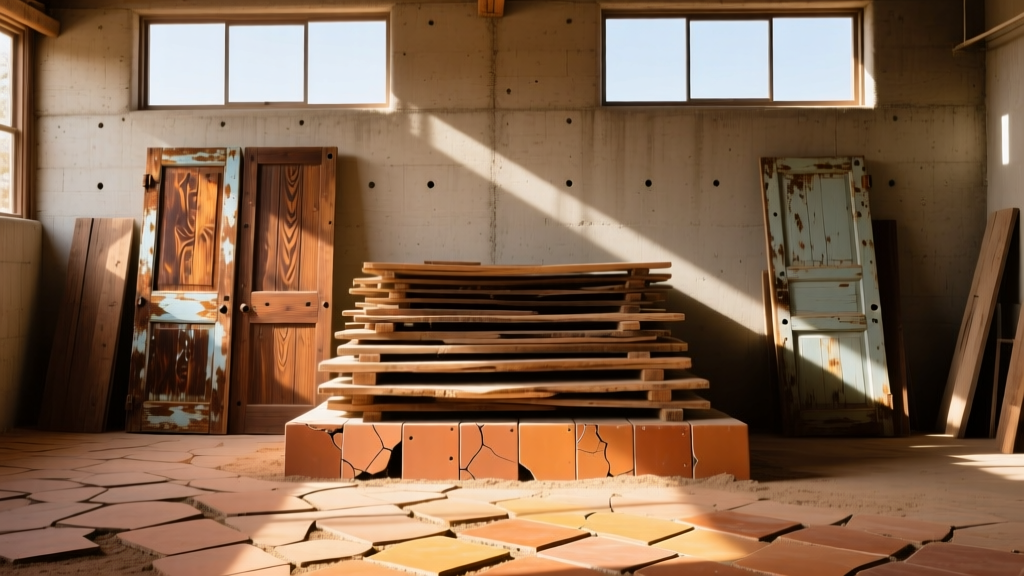
In the Sonoran Desert region, this macro trend is highly visible. For contractors, architects, and designers sourcing authentic elements, Gerson's used building materials Tucson represents a critical node in the regional supply chain. As a premier architectural salvage yard, the facility serves as a bellwether for Southwest design trends, capturing the inventory of demolished mid-century modern homes, aging Pueblo Revival estates, and decommissioned commercial sites before it reaches the landfill.
Inventory Breakdown: Regional Salvage Trends at Gerson's
Walking the aisles of a salvage yard in 2026 reveals distinct shifts in buyer demand. The post-pandemic supply chain disruptions taught regional builders the value of localized, off-grid material sourcing. At Gerson's, three specific material categories are experiencing unprecedented turnover rates:
1. Mid-Century Modern (MCM) Millwork and Hardware
Tucson's rich MCM architectural heritage means that demolished 1950s and 1960s homes yield high-value components. Solid core flush doors, original Baldwin brass mortise locksets, and terrazzo threshold transitions are being snapped up by restoration specialists. Unlike modern hollow-core or MDF alternatives, vintage solid wood doors offer superior acoustic dampening (STC ratings of 30+) and thermal mass.
2. Pueblo Revival Masonry and Timber
Authenticity cannot be manufactured. Reclaimed hand-hewn vigas (roof beams), carved wooden corbels, and antique extruded terracotta roofing tiles are in high demand for custom luxury builds. Sourcing these from Gerson's allows builders to bypass the 14-to-20-week lead times associated with custom masonry and timber milling.
3. Vintage Plumbing and Cast Iron
With the cost of new cast iron manufacturing skyrocketing due to foundry closures and raw material costs, salvaged clawfoot tubs, deep apron-front fireclay sinks, and brass bridge faucets offer a 40% to 60% discount compared to new heritage-line reproductions.
2026 Cost Analysis: New Production vs. Architectural Salvage
Procurement officers and general contractors must weigh the upfront cost savings of salvage against the labor required for restoration. The table below outlines current 2026 regional pricing comparisons for high-demand items typically found in Tucson salvage yards.
| Material Category | New Production Cost (2026) | Salvaged Cost (Gerson's Avg.) | Restoration Labor Factor |
|---|---|---|---|
| Solid Core Wood Door (32x80) | $450 - $850 | $120 - $220 | Medium (Hinge routing, stripping) |
| Reclaimed Mesquite Flooring | $16.00 - $24.00 / sq. ft. | $7.50 - $12.00 / sq. ft. | High (Milling, sanding, finishing) |
| Vintage Cast Iron Clawfoot Tub | $1,800 - $3,500+ | $450 - $900 | Medium (Re-glazing, foot polishing) |
| Terracotta Roof Tile (Per Piece) | $3.75 - $5.00 | $1.25 - $2.25 | Low (Cleaning, sorting) |
| Brass Mortise Lockset (Vintage) | $350 - $600 (Reproduction) | $85 - $160 | Low (Ultrasonic cleaning) |
Field-Tested Sourcing Protocols for Contractors
Successfully integrating salvaged materials into modern builds requires rigorous on-site evaluation. The Building Materials Reuse Association (BMRA) emphasizes that visual inspection is insufficient for structural or wet-area applications. When sourcing from architectural salvage yards, professionals should deploy the following protocol:
- Moisture Content Verification: Always use a pinless moisture meter (such as the Wagner Meters Orion 910) on reclaimed interior wood. Wood stored in unconditioned salvage yards can equilibrate to 12-15% moisture content. Installing it directly into a climate-controlled home (target 6-9%) will result in severe checking and joint failure.
- Dimensional Lumber Shrinkage: A vintage '2x4' salvaged from a 1920s bungalow is likely a true 2" x 4" (full dimension), whereas modern framing lumber is milled to 1.5" x 3.5". Framers must adjust rough openings and structural calculations accordingly when mixing vintage and new timber.
- Hardware Backset Checks: Vintage doors often feature a 2-3/8" backset, while modern commercial standards lean toward 2-3/4". Verify the backset and bore hole diameter before purchasing salvaged doors for a project to avoid costly Dutchman patches.
Navigating Code Compliance and Hazardous Materials
The most significant barrier to utilizing salvaged building materials is navigating municipal building codes and environmental hazards. Ignorance of these regulations can lead to failed inspections and severe liability.
Structural Grading of Reclaimed Lumber
If reclaimed timber is to be used for load-bearing applications (beams, joists, headers), it cannot simply be reused based on its historical performance. Under the International Building Code (IBC), reused lumber must be re-graded by a certified lumber grader in accordance with ASTM D245 (Standard Practice for Establishing Structural Grades and Related Allowable Properties for Visually Graded Lumber). For non-structural applications—such as decorative ceiling beams, accent walls, or flooring—this rigorous grading is not required, making non-structural salvage the most frictionless procurement path.
Lead and Asbestos Mitigation
Any salvaged painted wood, vintage window sash, or architectural trim originating from pre-1978 structures is presumed to contain lead-based paint. If the material will be disturbed (sanded, cut, or chemically stripped) on a job site, the contractor must comply with the EPA's Renovation, Repair, and Painting (RRP) Rule. This mandates the use of certified renovators, HEPA vacuum containment, and specific disposal protocols.
When salvaging vintage flooring or tiles, the adhesive (mastic) underneath frequently contains chrysotile asbestos. Never dry-scrape vintage flooring. Always utilize wet methods and HEPA filtration, or hire a licensed asbestos abatement team to remove the backing before integrating the salvaged surface material into your project.
The Regulatory Horizon: Deconstruction Mandates
The business model supporting yards like Gerson's is being fortified by shifting municipal policies. Historically, buildings were demolished via mechanical wrecking, crushing valuable materials into mixed C&D debris. Today, forward-thinking municipalities are implementing 'deconstruction mandates' for structures built before 1940 (and increasingly, before 1970). These ordinances require buildings to be carefully dismantled by hand to maximize material recovery.
According to the National Park Service (NPS) Preservation Briefs, preserving the embodied energy of historic materials is a cornerstone of sustainable heritage conservation. As more Southwestern cities adopt deconstruction ordinances to meet aggressive 2030 carbon reduction targets, the supply of high-quality, pre-sorted architectural salvage will stabilize. For the savvy builder, mastering the integration of these reclaimed elements is no longer just an aesthetic choice—it is a vital competency for the future of resilient, low-carbon construction.
Written by
Priya KapoorPriya Kapoor is a real estate market analyst and construction economics researcher with expertise in housing affordability, development feasibility, and infrastructure investment. She holds a Master of Regional Planning from Cornell University and previously worked as a senior analyst at CBRE's Investment Properties group, where she modeled returns for $4B in mixed-use development pipelines. Priya now runs an independent research practice advising developers, municipalities, and REITs on construction cost forecasting and market timing. She publishes the quarterly "BuildMat Market Pulse" report tracking material price indices across 12 commodity categories. Based in Austin, TX, Priya serves on the board of Habitat for Humanity Austin and is a marathon runner.
More from Priya Kapoor
View all
Construction Cost
Cost to Build a 1600 Sq Ft Home in 2026: Full Breakdown
Accurate 2026 cost to build a 1600 sq ft home—material, labor, and regional pricing breakdowns included. Plan your budget with real-time estimates.
Aug 11, 2026

Wood & Lumber
Name the Types of Wood for Pressure Treatment and Preservation
Learn how to name the types of wood best suited for pressure treatment. Compare species treatability, chemical retention levels, and 2026 preservation costs.
Aug 4, 2026

Stone & Masonry
Stone Veneer Suppliers Lindenhurst: 2026 Cost Analysis
Analyze 2026 stone veneer costs in Lindenhurst, NY. Compare local supplier pricing, delivery fees, and Suffolk County installation labor rates.
Aug 4, 2026