What Are Building Materials? A Complete Cost Analysis and Budget Guide
Understand what building materials are through a financial lens. Explore 2026 cost breakdowns, lifecycle pricing, and hidden procurement expenses.

Defining Building Materials Through a Financial Lens
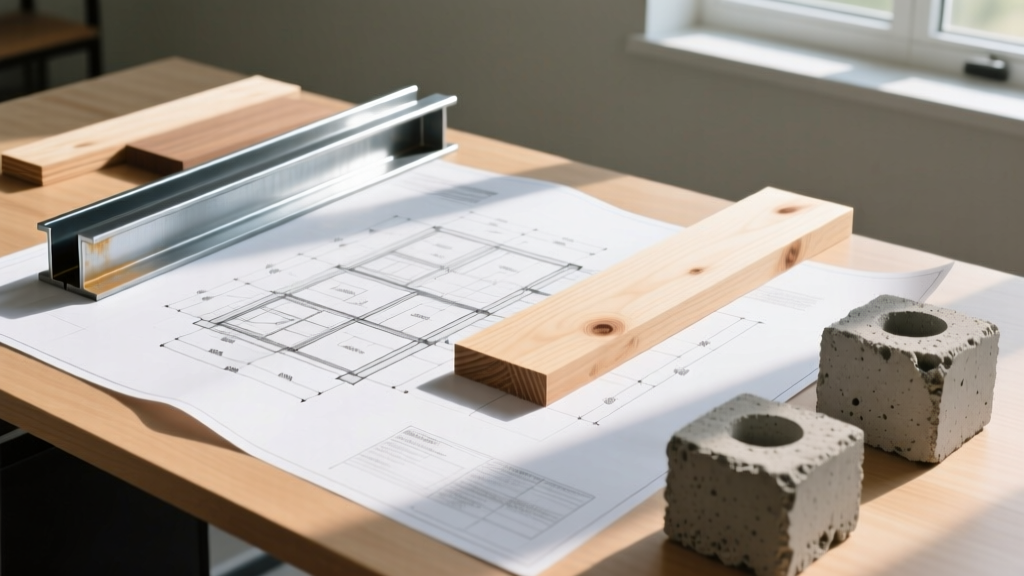
When project stakeholders ask, 'what are building materials,' the answer extends far beyond physical commodities like wood, steel, and concrete. From a cost analysis and project management perspective, building materials represent the foundational capital expenditure of any construction venture. According to data from the National Association of Home Builders (NAHB), materials consistently account for 50% to 60% of total hard construction costs, making them the single largest line item in any project budget.
Financially, building materials are categorized not just by their physical properties, but by their procurement timelines, depreciation rates, and lifecycle costs. A comprehensive understanding requires moving past basic definitions and analyzing how material selection directly dictates cash flow, risk exposure, and long-term asset valuation.
The Core Categories and 2026 Unit Costs
To accurately forecast budgets, estimators divide materials into structural, enclosure, and interior finishing categories. The pricing below reflects early 2026 market rates, adjusted for recent supply chain stabilization and shifts in the Bureau of Labor Statistics Producer Price Index (PPI) for construction inputs.
| Material Category | Standard Specification | Average Unit Cost (2026) | Budget Allocation (% of Hard Costs) |
|---|---|---|---|
| Ready-Mix Concrete | 4,000 PSI, 3/4" aggregate | $145 - $165 / cubic yard | 12% - 15% |
| Structural Steel | W-Shapes (ASTM A992 Grade 50) | $1.15 - $1.35 / pound | 10% - 14% |
| Dimensional Lumber | SPF #2, 2x6 framing | $0.85 - $1.10 / linear foot | 14% - 18% |
| Fire-Rated Drywall | 5/8" Type X Gypsum Board | $0.55 - $0.75 / square foot | 4% - 6% |
| Exterior Cladding | Fiber Cement (e.g., James Hardie) | $6.50 - $9.00 / square foot | 8% - 12% |
| Commercial Roofing | 60-mil TPO Single-Ply Membrane | $4.20 - $5.80 / square foot | 3% - 5% |
Structural vs. Finishing Materials: Where the Money Goes
While structural materials (concrete, steel, framing lumber) consume the largest upfront capital due to their sheer volume and critical load-bearing requirements, finishing materials (cladding, flooring, millwork) introduce the highest cost volatility. Finishing materials are highly susceptible to design changes, client preferences, and supply chain disruptions for specialized manufactured goods. Estimators must apply a higher contingency reserve—typically 10% to 15%—to finishing materials compared to the 5% standard for structural commodities.
Lifecycle Cost Analysis (LCCA) vs. Upfront Procurement
Answering 'what are building materials' also requires defining them as long-term operational liabilities or assets. Upfront procurement costs only tell half the story. Lifecycle Cost Analysis (LCCA) evaluates the total cost of ownership, including installation, maintenance, energy efficiency, and eventual replacement.
When evaluating two competing materials, use this baseline formula over a 50-year building horizon:
Total LCCA = Initial Cost + (Annual Maintenance × 50) + (Replacement Cost × Number of Replacements) - Residual Value
Always discount future costs to present value using a standard real discount rate (typically 3% to 5% for commercial real estate).
Real-World LCCA Example: Roofing Systems
Consider the choice between architectural asphalt shingles and standing seam metal roofing for a 10,000 sq. ft. commercial facility:
- Architectural Asphalt Shingles: Upfront cost is roughly $4.50/sq. ft. installed ($45,000 total). However, with a 20-year lifespan, the roof must be replaced twice over a 50-year period. Factoring in tear-off costs ($1.50/sq. ft.) and inflation, the 50-year LCCA exceeds $165,000.
- Standing Seam Metal (24-gauge Galvalume): Upfront cost is $12.00/sq. ft. installed ($120,000 total). With a 50-year lifespan and minimal maintenance, the LCCA remains close to $135,000 when factoring in minor fastener and sealant maintenance.
Despite a 166% higher initial capital outlay, the metal roofing system yields a net savings of over $30,000 in present-value dollars, demonstrating why material selection must be viewed as a financial strategy rather than a mere purchasing decision.
Hidden Costs in Material Procurement
Novice estimators often calculate material costs by multiplying the net quantity by the supplier's quoted unit price. This approach guarantees budget overruns. Professional cost analysts utilizing RSMeans data factor in several hidden variables that inflate the true landed cost of building materials:
- The Waste Factor: Materials are rarely used with 100% efficiency. Standard dimensional lumber carries a 10% waste factor, while complex rooflines or custom tile layouts can push waste factors to 15% or 20%. You must purchase and pay for the gross quantity, not the net.
- Freight and Fuel Surcharges: Heavy materials like concrete masonry units (CMU) and structural steel incur significant transportation costs. In 2026, regional freight surcharges typically add 4% to 8% to the base material invoice, especially for projects located more than 50 miles from the manufacturing plant or batch plant.
- Offloading and Hoisting: The quoted price of a steel beam does not include the crane time required to lift it, nor the rigging labor. Material handling equipment rentals and specialized operator labor must be allocated directly to the material budget.
- Storage and Security: High-value finishing materials (HVAC units, copper wiring, smart glass panels) require secure, climate-controlled on-site storage to prevent theft and moisture damage. Budgeting $0.15 to $0.30 per square foot of stored material per month for secure site logistics is a standard industry practice.
Strategic Sourcing: Optimizing the Material Budget
How you buy is just as important as what you buy. Procurement strategies heavily influence the final cost basis of building materials. Below is a comparison of the two dominant procurement frameworks used in modern construction.
| Procurement Strategy | Best Use Case | Cost Impact & Financial Risk | Pros & Cons |
|---|---|---|---|
| Bulk Purchasing (Forward Buying) | Commodities with predictable consumption (concrete, rebar, standard framing lumber). | Locks in pricing, protecting against market inflation. Requires high upfront capital and incurs storage costs. | Pro: Eliminates price volatility risk. Con: Ties up cash flow; risk of material degradation on-site. |
| Just-In-Time (JIT) Delivery | High-value, easily damaged, or space-intensive materials (drywall, millwork, MEP equipment). | Reduces storage and handling costs, preserving cash flow. Exposes the project to supply chain delays and spot-market price spikes. | Pro: Minimizes on-site damage and theft; optimizes site space. Con: High risk of schedule delays if logistics fail. |
Frequently Asked Questions
What percentage of a construction budget should be allocated to materials?
For standard commercial and residential projects, materials typically consume 50% to 60% of the total hard costs. The remaining 40% to 50% is allocated to direct labor, equipment rentals, and subcontractor fees. In highly specialized facilities (like cleanrooms or data centers), the equipment and specialized material costs can push the material allocation above 70%.
How do tariffs and trade policies affect building material costs?
Trade policies directly impact the baseline cost of imported commodities. For example, Section 232 tariffs on imported steel and aluminum permanently elevated the baseline cost of structural steel and metal cladding in the US market. When estimating, always verify the country of origin for major components and apply a 15% to 25% tariff buffer if sourcing relies on international supply chains subject to active trade disputes.
Are sustainable building materials more expensive?
Upfront, yes. Materials certified by the Forest Stewardship Council (FSC) or low-VOC specialized adhesives typically carry a 5% to 15% premium over conventional alternatives. However, when factoring in energy rebates, tax incentives (such as the 179D Commercial Buildings Energy-Efficiency Tax Deduction), and reduced HVAC loads due to higher-performance insulation, sustainable materials often achieve cost parity or net-positive ROI within the first five to seven years of building operation.
Written by
Priya KapoorPriya Kapoor is a real estate market analyst and construction economics researcher with expertise in housing affordability, development feasibility, and infrastructure investment. She holds a Master of Regional Planning from Cornell University and previously worked as a senior analyst at CBRE's Investment Properties group, where she modeled returns for $4B in mixed-use development pipelines. Priya now runs an independent research practice advising developers, municipalities, and REITs on construction cost forecasting and market timing. She publishes the quarterly "BuildMat Market Pulse" report tracking material price indices across 12 commodity categories. Based in Austin, TX, Priya serves on the board of Habitat for Humanity Austin and is a marathon runner.
More from Priya Kapoor
View all
Construction Cost
Cost to Build a 1600 Sq Ft Home in 2026: Full Breakdown
Accurate 2026 cost to build a 1600 sq ft home—material, labor, and regional pricing breakdowns included. Plan your budget with real-time estimates.
Aug 11, 2026

Wood & Lumber
Name the Types of Wood for Pressure Treatment and Preservation
Learn how to name the types of wood best suited for pressure treatment. Compare species treatability, chemical retention levels, and 2026 preservation costs.
Aug 4, 2026

Stone & Masonry
Stone Veneer Suppliers Lindenhurst: 2026 Cost Analysis
Analyze 2026 stone veneer costs in Lindenhurst, NY. Compare local supplier pricing, delivery fees, and Suffolk County installation labor rates.
Aug 4, 2026