Fiberglass Attic Insulation Cost Calculator & 2026 Pricing Guide
Calculate your fiberglass attic insulation costs for 2026. Get exact pricing for batts and blown-in glass wool, R-value requirements, and quantity formulas.
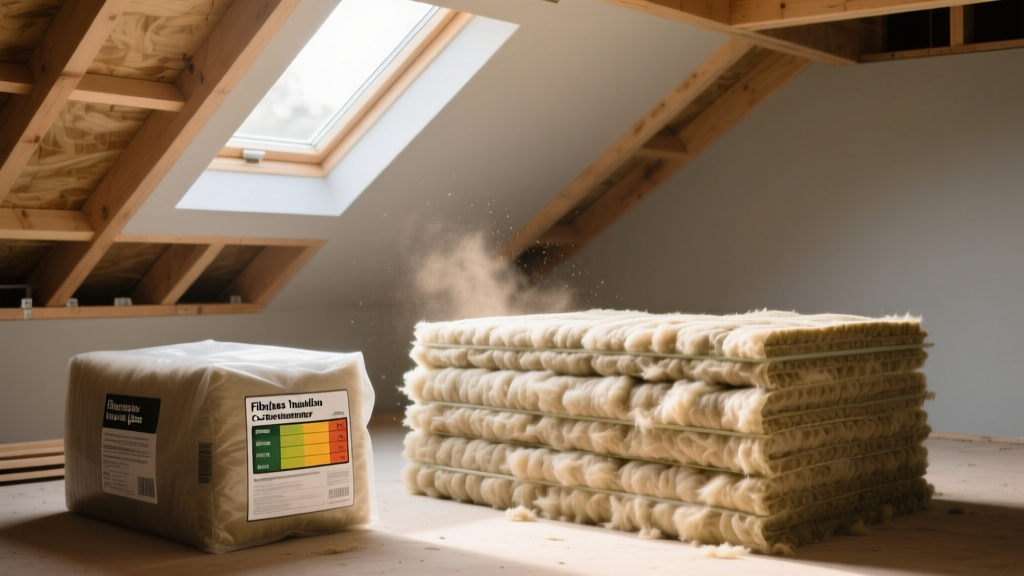
The True Cost of Fiberglass Attic Insulation in 2026
Estimating the cost of fiberglass attic insulation requires more than multiplying square footage by a generic price tag. In 2026, material costs for fiberglass batts range from $0.85 to $1.45 per square foot, while blown-in (loose-fill) fiberglass ranges from $0.95 to $1.30 per square foot for materials alone. Professional installation adds $1.20 to $2.50 per square foot depending on attic accessibility and existing debris removal.
2026 Quick Cost Summary (1,500 Sq Ft Attic)
- DIY Fiberglass Batts (R-38): $1,450 - $1,850 (Materials only)
- DIY Blown-In Fiberglass (R-49): $1,500 - $1,950 (Materials + machine rental)
- Professional Blown-In (R-49): $3,200 - $4,500 (Fully installed)
- Professional Air Sealing Add-on: $1,800 - $3,000
Step 1: Calculating Attic Square Footage and Waste Factor
The most common error in insulation estimation is calculating based on the home's conditioned floor space rather than the actual attic footprint. Attics often extend beyond exterior walls via cantilevers, dormers, and eaves.
The Waste Factor Matrix
When purchasing fiberglass, you must account for cutting waste around HVAC chases, plumbing vents, and recessed lighting. Apply the following multipliers to your raw square footage:
| Attic Complexity | Batt Waste Factor | Blown-In Waste Factor | Description |
|---|---|---|---|
| Simple (Open Rectangle) | + 5% | + 2% | Minimal obstructions, standard trusses. |
| Moderate (Hips/Valleys) | + 10% | + 5% | Multiple corners, standard HVAC runs. |
| Complex (Dormers/Scuttles) | + 15% | + 8% | Heavy framing obstructions, skylight shafts. |
Step 2: Determining Required R-Value by Climate Zone
The U.S. Department of Energy categorizes regions into distinct climate zones that dictate minimum thermal resistance (R-value) requirements for unconditioned attics according to DOE insulation guidelines. In 2026, building codes in most northern and transitional zones mandate a minimum of R-49 to R-60 for attic spaces to meet energy efficiency standards.
| IECC Climate Zone | Target R-Value | Fiberglass Batt Thickness | Blown-In Thickness |
|---|---|---|---|
| Zones 1-2 (Deep South) | R-30 to R-38 | 9.5" - 12" | 10" - 13" |
| Zones 3-4 (Mid-Atlantic) | R-38 to R-49 | 12" - 16" | 13" - 17" |
| Zones 5-8 (North/Mountains) | R-49 to R-60 | 16" - 20" (Layered) | 17" - 22" |
Step 3: Material Cost Breakdown and Specific SKUs
Pricing varies significantly based on the facing (kraft paper vs. unfaced) and the manufacturing technology. High-density and advanced fiber formulations command a premium but offer better R-value per inch.
2026 Retail Pricing Matrix (Batts)
- Owens Corning PINK Next Gen R-38 (Unfaced, 12" thick): ~$1.11 per sq. ft. (Sold in bundles covering 88 sq. ft. for ~$98). Ideal for standard 16" on-center joist spacing.
- Knauf EcoBatt R-30 (Kraft-Faced, 9.5" thick): ~$0.96 per sq. ft. (Bundles cover 88 sq. ft. for ~$85). The kraft facing acts as a Class II vapor retarder, crucial for cold climates.
- Johns Manville R-49 (Unfaced, 16" thick): ~$1.35 per sq. ft. Requires cross-layering (installing a base layer between joists and a second layer perpendicular across the joists) to achieve full R-49 without compressing the material.
2026 Retail Pricing Matrix (Blown-In / Loose-Fill)
Blown-in fiberglass, such as Johns Manville Insul-Safe XC or Owens Corning PROPINK L77, is sold in compressed bags weighing roughly 15 to 30 lbs. A standard 30-lb bag of Insul-Safe XC costs approximately $48 to $55. At an R-49 target (requiring about 16.5 inches of settled thickness), one bag covers roughly 35 to 40 square feet. This translates to a material cost of $1.20 to $1.35 per square foot.
The Quantity Calculator Formulas
Use these exact formulas to generate your shopping list or contractor bid verification.
Formula 1: Fiberglass Batts
Total Rolls/Bags = (Attic Sq Ft × Waste Factor Multiplier) / Coverage per Bag
Example: 1,500 sq ft attic (Moderate complexity = 1.10 multiplier). Using R-38 bundles covering 88 sq ft.
(1,500 × 1.10) / 88 = 18.75. Order 19 bundles.
Formula 2: Blown-In Fiberglass
Total Bags = (Attic Sq Ft × Waste Factor Multiplier) / Coverage per Bag at Target R-Value
Example: 1,500 sq ft attic (Simple complexity = 1.02 multiplier). Target R-49 (Coverage = 38 sq ft per bag).
(1,500 × 1.02) / 38 = 40.26. Order 41 bags.
Hidden Costs: Air Sealing, Baffles, and Vapor Barriers
Fiberglass insulation is highly permeable to air. According to the EPA's ENERGY STAR Home Seal guidelines, insulating without air sealing reduces the effective thermal performance of the fiberglass by up to 40% due to convective heat loss. Budget for these critical ancillary materials:
- Attic Air Sealing (Professional): $1.20 - $2.50 per sq. ft. Involves applying two-part spray foam or caulk to top plates, wire penetrations, and duct chases before laying fiberglass.
- Soffit Vent Baffles: $1.50 - $3.00 per piece (polystyrene or foam). Required every 4 feet along the eaves to prevent blown-in fiberglass from spilling into the soffits and blocking intake ventilation.
- Recessed Light Covers: $15 - $25 per unit. Non-IC (Insulation Contact) rated can lights must be boxed off to prevent fire hazards and thermal bypasses.
- Insulation Blower Rental: $50 - $100 per day (often free with the purchase of 20+ bags of blown-in insulation at major big-box retailers).
Critical Installation Failure Modes
Warning: The Compression Trap
Never force a thicker batt into a shallow joist cavity. Compressing an R-38 batt (designed for 12 inches) into a 2x10 joist cavity (9.25 inches actual depth) does not yield R-38 in a thinner profile. It destroys the trapped air pockets, dropping the effective R-value to roughly R-30 while increasing the risk of moisture entrapment against the roof deck.
Vapor Retarder Placement Errors
Kraft-faced fiberglass batts feature an asphalt-laminated paper backing that acts as a vapor retarder. In cold climates (Zones 5-8), the facing must point down toward the heated living space to prevent interior moisture from migrating into the cold attic and condensing on the roof sheathing. In hot, humid climates (Zones 1-2), installing a kraft-faced batt with the paper pointing down can trap summer humidity inside the ceiling assembly, leading to mold and drywall degradation. Always use unfaced batts in hot-humid regions, or consult local building codes regarding vapor retarder class requirements.
Frequently Asked Questions
Can I install new fiberglass batts directly over old, compressed insulation?
Yes, but only if the existing insulation is dry, free of mold, and unfaced. If the old layer has a kraft or foil vapor barrier facing upward, you must slice the facing every 6 inches with a utility knife to allow moisture to escape. Always use unfaced batts for the overlay layer. For maximum efficiency, the Insulation Institute recommends cross-layering: lay the new batts perpendicular to the joists, bridging the thermal bridges created by the wood framing.
Does blown-in fiberglass settle over time?
Modern blown-in fiberglass (manufactured post-2010) is engineered with interlocking fiber matrices that resist settling, provided it is installed at the correct density. The manufacturer's coverage chart on the bag specifies the exact number of bags required per 1,000 square feet to achieve the stated R-value after settling. If an installer uses fewer bags than the chart mandates to save time, the installed thickness will be insufficient, and the R-value will fall short of code.
How does fiberglass compare to cellulose for attic applications?
Fiberglass is inorganic and will not support mold growth or combust, making it highly durable in damp environments. However, cellulose offers slightly better air-blocking properties due to its dense packing and higher recycled content. In 2026, fiberglass remains the dominant choice for DIY attic projects due to its ease of handling, lack of chemical fire retardants (like borates used in cellulose), and widespread retail availability.