Fiberglass Sheets: Matching Panel Types to Building Scenarios
Match fiberglass sheets to specific building scenarios. Compare FRP resin types, profiles, and costs for greenhouses, sanitary walls, and industrial roofs.
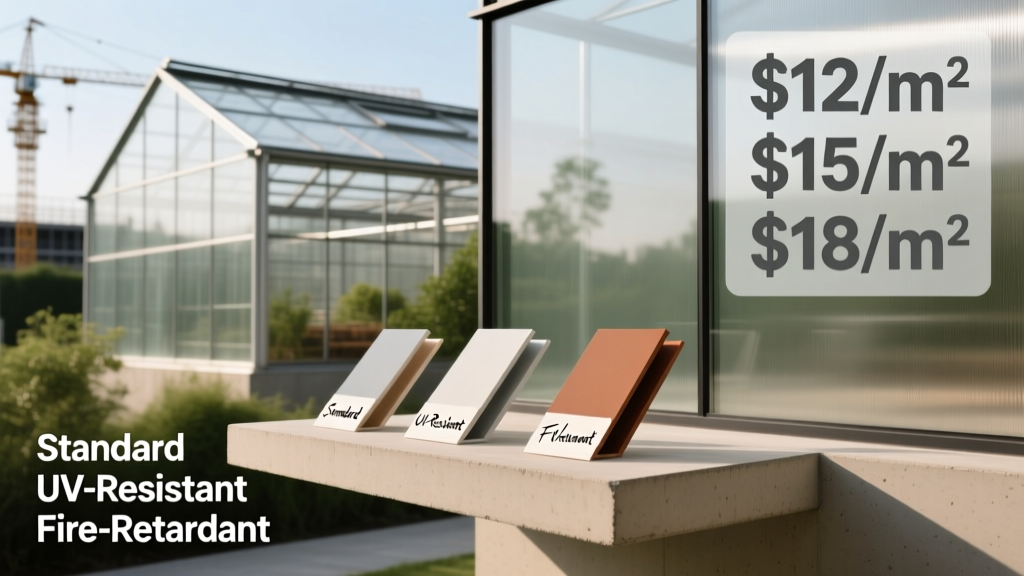
The Scenario-Matching Matrix: Choosing the Right Fiberglass Sheet
Fiberglass sheets, technically classified as Fiberglass Reinforced Plastic (FRP) or Glass Reinforced Plastic (GRP), are not a monolithic building material. The structural integrity, light transmission, and chemical resistance of a fiberglass sheet are dictated by three variables: the resin matrix (orthophthalic, isophthalic, or vinylester), the glass fiber architecture (chopped strand mat vs. continuous woven roving), and the extruded profile. Specifying the wrong combination for a specific environmental load leads to premature UV degradation, structural failure under wind uplift, or severe code violations in commercial interiors.
Before evaluating specific applications, use this decision matrix to align your project requirements with the correct material composition.
| Application Scenario | Recommended Profile | Resin Matrix | Glass Architecture | Critical Property |
|---|---|---|---|---|
| Agricultural Greenhouses | Corrugated (7.2' crown) | Isophthalic Polyester | Chopped Strand Mat (CSM) | Light diffusion & UV stability |
| Food Processing / Sanitary | Flat Panel (4x8 or 4x10) | Orthophthalic / Acrylic | Continuous Roving | FDA compliance & Class A fire rating |
| Industrial Skylights / Roofing | Matched Metal Profile (R-Panel) | Vinylester or Isophthalic | Woven Roving + CSM | Hail impact resistance & tensile strength |
| Chemical Plant Cladding | Corrugated or Flat | Vinylester | Heavyweight CSM | Extreme corrosion / pH resistance |
Scenario 1: Agricultural and Greenhouse Glazing
In controlled environment agriculture, the primary function of fiberglass sheets is light management. Unlike polycarbonate or glass, fiberglass sheets manufactured with Chopped Strand Mat (CSM) provide exceptional light diffusion. The random orientation of the short glass fibers scatters direct solar radiation, eliminating harsh shadow lines and preventing leaf scorch on sensitive crops while ensuring light penetrates deep into the lower canopy.
Resin Selection and UV Inhibition
For exterior greenhouse applications, orthophthalic polyester resins are strictly prohibited; they lack hydrolytic stability and will yellow and become brittle within 24 months of UV exposure. You must specify isophthalic polyester resins paired with a co-extruded UV-inhibited gel coat (typically 10 to 15 mils thick on the weather-facing side). According to research on greenhouse glazing materials by Penn State Extension, maintaining high photosynthetically active radiation (PAR) transmission requires glazing that resists micro-scratching and UV degradation over a 10-to-15-year lifecycle. Premium agricultural fiberglass sheets, such as those utilizing Tedlar-based surface films, maintain 85% or higher light transmission after a decade of solar exposure.
Scenario 2: Sanitary and Food Processing Facilities
Flat fiberglass sheets used in commercial kitchens, abattoirs, and pharmaceutical cleanrooms serve an entirely different purpose: biological containment and hygienic washdown. In these scenarios, light transmission is irrelevant; the focus shifts to surface porosity, chemical resistance, and fire safety.
FDA Compliance and Fire Ratings
Sanitary FRP panels must comply with FDA 21 CFR 175.300 regulations for indirect food additives, ensuring that the resin matrix does not leach toxic compounds when exposed to aggressive sanitizing agents like quaternary ammonium or high-temperature chlorine washdowns. Furthermore, building codes mandate that interior wall and ceiling finishes in commercial egress routes meet strict flame spread indices.
For these environments, specify flat FRP panels (such as Crane Composites Saniguard or Panolam) that carry an ASTM E84 Class A fire rating. As detailed in the ASTM E84-22 standard, a Class A rating requires a Flame Spread Index (FSI) of 25 or less and a Smoke Developed Index (SDI) of 450 or less. Standard un-rated polyester FRP will fail this test, acting as a rapid accelerant in a fire event.
Installation Note: Flat sanitary FRP sheets are typically bonded to drywall or plywood substrates using a solvent-free, FRP-specific adhesive (e.g., T-88 or PL Premium Polyurethane). Never use mechanical fasteners in food processing zones, as the puncture holes create bacterial harborage points that violate USDA sanitation protocols.
Scenario 3: Industrial Roofing and Skylight In-Fills
When integrating natural daylighting into large-footprint metal buildings, fiberglass sheets are used as translucent in-fill panels. The critical requirement here is profile matching and structural wind-load capacity. The fiberglass sheet must perfectly nest with the adjacent metal roofing panels (e.g., R-Panel, PBR, or 7.2-inch corrugated) to maintain the weather seal.
Thermal Expansion and Fastener Protocols
The most common cause of failure in industrial fiberglass roofing is micro-cracking around fastener holes. FRP has a linear coefficient of thermal expansion of approximately 1.5 x 10^-5 in/in/°F, which is roughly 2.5 times higher than steel and 1.5 times higher than aluminum. As the roof cycles between daytime solar heating and nighttime cooling, the fiberglass sheets expand and contract significantly more than the structural steel purlins.
For hail-prone regions, specify structural grade fiberglass sheets that incorporate a dual-layer construction: a woven roving core for high tensile impact resistance, sandwiched between CSM layers for surface finish. These heavy-duty panels (often 0.060 to 0.125 inches thick) can withstand 2-inch hail strikes at terminal velocity without fracturing.
2026 Procurement and Cost Framework
Pricing for fiberglass sheets varies wildly based on resin chemistry and profile complexity. Below is the current market pricing framework for commercial-grade materials (excluding specialized custom molds):
- Agricultural Corrugated (Isophthalic, 0.040' thick): $1.80 to $2.60 per square foot. (Sold in 24' to 48' continuous rolls or cut sheets).
- Sanitary Flat FRP (Class A Rated, 0.090' thick): $3.50 to $5.20 per square foot. (Typically sold in 4x8 or 4x10 rigid sheets).
- Industrial Structural Skylight (Woven Roving, 0.080' thick): $6.50 to $9.50 per square foot. (Custom cut to match specific metal roof profiles like Butler or Star Building systems).
- Chemical Resistant Vinylester Panels: $11.00 to $15.00+ per square foot. (Specialty order, usually requiring minimum square footage commitments from the manufacturer).
Common Failure Modes and Troubleshooting
Even with the correct material specification, improper handling and installation will compromise the building envelope. Review these failure modes before finalizing your construction documents:
- Resin Starvation (Fiber Bloom): If you can see the distinct weave of the fiberglass mat on the surface of the panel, or if the panel feels rough and fuzzy, it suffers from resin starvation. This occurs during manufacturing when the resin-to-glass ratio drops below 60/40. These panels will absorb moisture like a sponge and delaminate. Reject the shipment.
- Galvanic and Chemical Fastener Corrosion: Never use standard zinc-plated or galvanized screws to fasten fiberglass sheets in coastal or agricultural environments. The combination of moisture and fertilizers will corrode the fastener head, causing it to snap off. Always specify 304 or 316 stainless steel fasteners with EPDM sealing washers.
- Silicone Sealant Incompatibility: Do not use standard acetoxy-cure silicone (which smells like vinegar) to seal FRP lap joints. The acetic acid released during curing attacks the polyester resin matrix, causing the sealant to peel away within months. Use a neutral-cure silicone or a specialized polyurethane joint sealant compatible with FRP gel coats.