Fiberglass Ladder Maintenance: A Glazier's Cleaning & Care Playbook
Protect your low-E glass and ensure glazier safety with this comprehensive fiberglass ladder maintenance, cleaning, and UV-protection playbook.
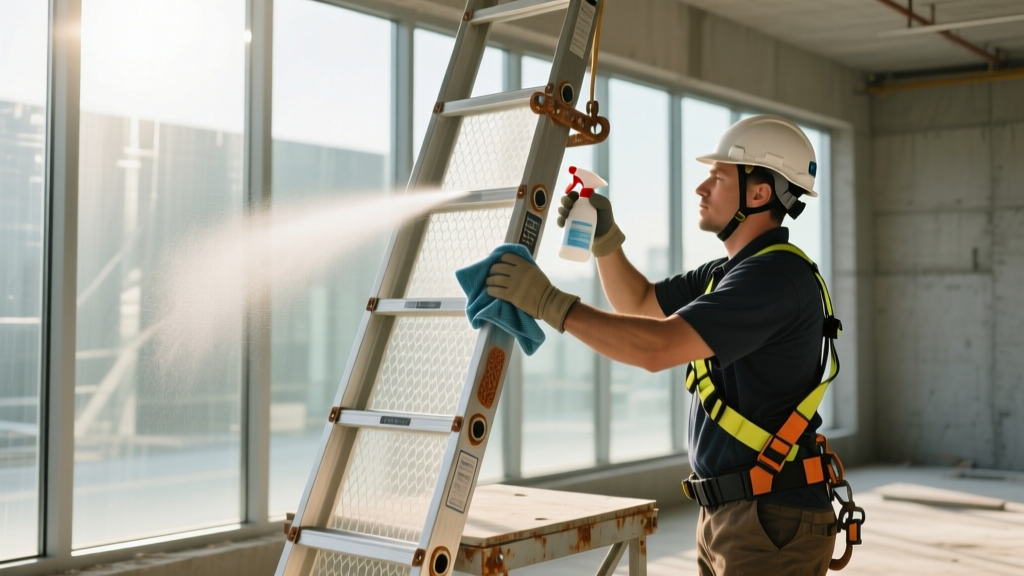
Why Fiberglass is the Glazier's Standard
In the specialized field of architectural glass installation and facade maintenance, access equipment is just as critical as the glazing compounds and structural silicone used on the job site. While aluminum ladders are lightweight, they pose severe risks in glass construction: they can cause galvanic corrosion when resting against aluminum mullions, and their rigid rails can easily scratch delicate low-emissivity (low-E) coatings or structural glass fins. Wood ladders are heavy, absorb moisture, and hide structural defects.
The industry standard for glaziers, window cleaners, and glass block masons is the fiberglass ladder. Fiberglass is non-conductive (essential when working near electrified curtain wall components or integrated LED facade lighting) and, when properly maintained, provides a smooth, non-marring surface. However, fiberglass is not invincible. Without a rigorous maintenance and cleaning playbook, the resin matrix degrades, leading to a phenomenon that can catastrophically damage the very architectural glass you are trying to install or clean.
The Threat of Fiber Bloom to Architectural Glass
Fiberglass reinforced plastic (FRP) ladder rails are constructed from glass fibers bound together by a polyester or vinyl ester resin. Prolonged exposure to ultraviolet (UV) radiation from the sun breaks down this surface resin. As the resin erodes, the microscopic glass filaments become exposed—a condition known in the industry as fiber bloom or 'fiberbloom'.
Preventing fiber bloom is not just about extending the life of your equipment; it is a mandatory quality control measure to prevent costly glass replacement claims on commercial high-rise projects.
The 4-Stage Cleaning Protocol for Glazing Crews
Routine cleaning removes alkaline construction dust, silicone overspray, and acidic pollutants that accelerate resin breakdown. Glazing crews must avoid harsh solvents like acetone, methyl ethyl ketone (MEK), or paint thinners, which will instantly dissolve the FRP resin matrix.
Step 1: Dry Debris Removal
Before introducing moisture, use a soft-bristle nylon brush or a microfiber cloth to wipe down the rails and rungs. This removes abrasive silica dust and dried glazing compound that could be ground into the resin during the wet wash phase.
Step 2: Mild Detergent Wash
Mix a solution of warm water and a mild, non-abrasive dish soap (such as Dawn) or a diluted all-purpose cleaner (like Simple Green at a 1:10 ratio). Using a cellulose sponge, wash the rails from top to bottom. For stubborn silicone sealant smudges, apply a dedicated silicone remover gel, let it sit for three minutes, and wipe gently—never scrape with a metal putty knife.
Step 3: Thorough Rinsing
Rinse the ladder with clean water. Ensure no soap residue remains in the crevices where the rungs meet the rails, as dried soap can attract moisture and dirt, accelerating localized degradation.
Step 4: Air Drying and Inspection
Allow the ladder to dry completely in the shade. Direct sunlight while wet can cause water spots that bake into the resin. Use this drying time to conduct a tactile inspection: run a gloved hand up and down the rails. If you feel a 'fuzzy' or rough texture, fiber bloom has begun, and immediate restoration is required.
Restoring the Gel Coat: Wax vs. Polyurethane
When the FRP surface begins to chalk or fade, the resin matrix requires resealing. Glaziers have two primary pathways for restoration, depending on the severity of the UV damage and the ladder's storage environment.
| Treatment Method | Best Used For | Recommended Product Types | Reapplication Interval |
|---|---|---|---|
| Automotive/Marine Paste Wax | Mild chalking; routine UV protection; ladders stored indoors or in shaded trucks. | 3M 09005 Marine Paste Wax, Meguiar's Gold Paste Wax. | Every 3 to 4 months. |
| Clear Polyurethane Coating | Severe fading; early-stage fiber bloom; ladders permanently stored on exterior roof rigs or open scaffolding. | Watco Satin Polyurethane, Rust-Oleum Clear acrylic enamel (spray). | Annually, or when coating chips. |
Hardware Maintenance and Glass Protection Accessories
The rails are only half the equation. The hardware and feet of a fiberglass ladder must be maintained to prevent damage to architectural glass mullions, structural glass fins, and polished stone surrounds.
- Ladder Mitts and Neoprene Sleeves: Always equip the top contact points of your extension ladder with thick neoprene ladder mitts. Over time, UV exposure causes these rubber sleeves to dry rot and crack. Inspect them monthly and replace them the moment the underlying fiberglass or metal hardware becomes exposed.
- Shoe and Cleat Maintenance: The slip-resistant rubber shoes at the base of the ladder accumulate embedded glass shards and metal shavings from job sites. Use a heavy-duty pick or awl to clean out the treads weekly. A shard of glass embedded in the ladder shoe can easily scratch a polished granite threshold or terrazzo floor when the ladder is repositioned.
- Rivet and Spreaders Check: Lubricate the metal spreader braces and pivot rivets with a dry PTFE (Teflon) spray. Avoid wet oils like WD-40, which attract abrasive dirt and can drip onto newly installed glass blocks or curtain wall sealants, causing staining and adhesion failures.
ANSI A14.5 Compliance and Retirement Criteria
According to the American National Standards Institute (ANSI A14.5) and guidelines referenced by the Occupational Safety and Health Administration (OSHA), reinforced plastic ladders must be removed from service immediately if they exhibit specific structural defects. Glazing contractors must enforce a strict retirement policy to protect both their workers and their liability.
Retire the fiberglass ladder immediately if you observe any of the following:
- Deep Gouges or Impact Cracks: Any crack that penetrates the outer gel coat and exposes the inner structural roving compromises the ladder's load-bearing capacity (typically rated at 300 lbs for Type I or 375 lbs for Type IA).
- Excessive, Untreatable Fiber Bloom: If the rails feel excessively fuzzy and the structural integrity of the outer layer is flaking off in large sheets, the UV damage has penetrated too deeply for polyurethane encapsulation.
- Heat or Chemical Blistering: Bubbles or blisters in the fiberglass indicate that the ladder was exposed to extreme heat (e.g., left too close to a roofing torch or hot bitumen) or corrosive chemical spills that have delaminated the resin from the glass mat.
- Loose or Spinning Rungs: If a rung can be rotated by hand, the internal adhesive bond has failed. This is a critical fall hazard, especially when a glazier is carrying heavy vacuum cups or structural silicone cartridges.
For comprehensive safety manuals and inspection checklists specific to your ladder model, always consult the manufacturer's resources, such as the Werner Co Safety and Training portal, which provides detailed PDF guides for reinforced plastic ladder maintenance.
Frequently Asked Questions
Can I use a pressure washer to clean my fiberglass ladder?
No. Pressure washers, even at low PSI settings, can force water into the micro-crevices of the fiberglass weave and delaminate the resin from the glass fibers. Furthermore, high-pressure water can strip away protective wax coatings and accelerate the onset of fiber bloom. Always use the manual sponge-and-bucket method outlined in the cleaning protocol.
Does the color of the fiberglass ladder affect UV degradation?
Yes. The pigments used in FRP manufacturing play a role in UV absorption. Yellow and orange ladders tend to show chalking and fading faster than darker colors, though the structural degradation rate is similar across all colors if left unprotected. Regardless of color, a clear UV-inhibiting polyurethane topcoat is the most effective defense for ladders stored on open glass facade scaffolding.
How should I store the ladder on a glass installation site?
Never leave a fiberglass ladder resting directly against an unprotected glass pane overnight. Wind can cause the ladder to vibrate, and the hard FRP rail will eventually wear through the glass surface or scratch the mullion finish. Always lay the ladder flat on the ground or a scaffold deck when not in active use, and store it in a shaded, dry gang box or equipment trailer at the end of the shift.