Exterior Limewash Cost Guide: Calculator & Pricing for 2026
Calculate your exterior limewash project costs for 2026. Detailed pricing, coverage rates, and material estimators for brick, stucco, and stone facades.
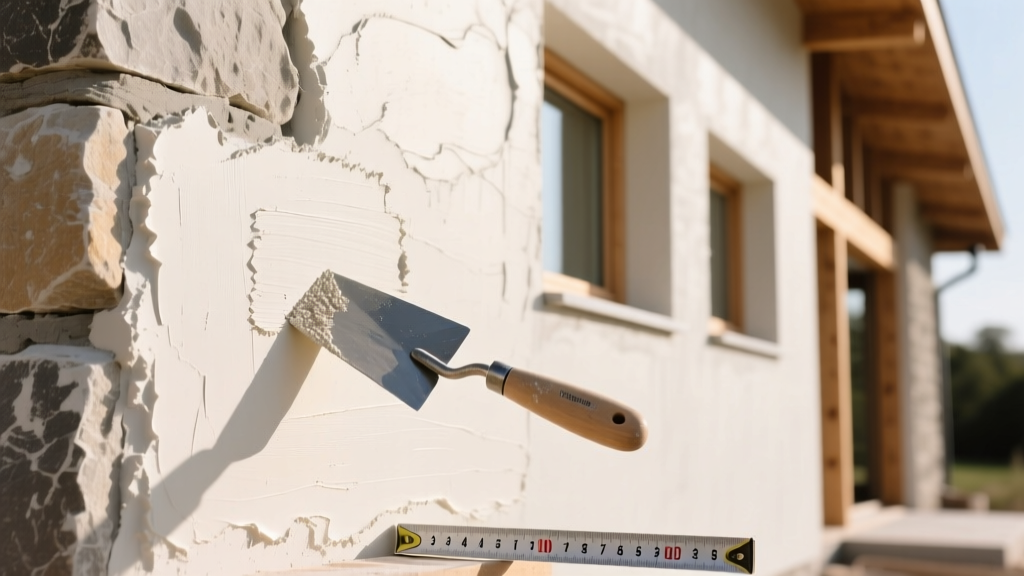
The True Cost of Exterior Limewash in 2026
Applying exterior limewash to a masonry facade costs between $3.50 and $6.50 per square foot installed, depending on substrate porosity, scaffolding requirements, and the specific mineral slurry brand selected. Unlike acrylic or elastomeric paints that sit on the surface, limewash penetrates the pore structure of brick, stone, and stucco, calcifying into a breathable, integral finish. This fundamental difference in chemistry dictates both the material pricing and the labor techniques required for a successful application.
For a standard 2,500-square-foot single-story home with an unsealed red brick exterior, expect total project costs to range from $8,750 to $16,250. This estimate encompasses surface preparation, mineral priming (if required), two coats of premium limewash, and professional labor. Attempting to cut costs by applying limewash over non-porous surfaces or previously sealed masonry without a specialized mineral primer will result in catastrophic adhesion failure within the first freeze-thaw cycle.
Material Cost Breakdown & Product Comparison
The market for architectural limewash has consolidated around a few high-performance, pre-slaked formulations that eliminate the need for on-site mixing of lime putty and water. These commercial products include proprietary binders and mineral pigments that ensure consistent curing and UV stability.
| Product Brand & Model | Unit Size | Average 2026 Cost | Coverage (1 Coat) | Cost per Sq Ft (Material) |
|---|---|---|---|---|
| Romabio Classico Limewash | 4 Gallon Bucket | $275.00 | 1,600 sq ft | $0.17 |
| Colorantic Limewash | 4 Gallon Bucket | $220.00 | 1,200 sq ft | $0.18 |
| LimeWorks.us Ecologic Limewash | 3 Gallon Bucket | $180.00 | 900 sq ft | $0.20 |
| Limewash Co. Traditional Slurry | 5 Gallon Pail | $310.00 | 1,800 sq ft | $0.17 |
Note: Coverage rates assume a single coat applied to a moderately porous substrate. Two coats are standard for opaque, solid-color finishes, effectively doubling the material requirement.
Step-by-Step Exterior Limewash Quantity Calculator
Accurate estimation requires adjusting for the specific absorption rate of your masonry. A highly porous, handmade clay brick will consume significantly more limewash than a dense, wire-cut extruded brick or a smooth cementitious stucco.
Step 1: Calculate Net Square Footage
Measure the total exterior wall area (Gross Area). Subtract the square footage of all non-masonry elements, including windows, exterior doors, and large architectural vents. Net Area = Gross Area - Openings.
Step 2: Apply Substrate Porosity Multipliers
Multiply your Net Area by the appropriate absorption multiplier below to find your Adjusted Area. This accounts for the volume of slurry that will be pulled into the masonry pores rather than resting on the surface.
| Substrate Type | Porosity Profile | Absorption Multiplier |
|---|---|---|
| Unsealed Handmade / Reclaimed Brick | Highly Porous | 1.3x |
| Unsealed Standard Red Clay Brick | Moderately Porous | 1.2x |
| Cement Stucco / Traditional Plaster | Moderate | 1.0x |
| Dense CMU / Poured Concrete | Low Porosity | 0.9x |
| Previously Painted Masonry | Non-Porous (Requires Primer) | 1.0x (Primer adds separate cost) |
Step 3: Determine Total Material Volume
Multiply your Adjusted Area by 2 (for two coats). Divide this final number by the coverage rate of your chosen product to determine the exact number of buckets required. Always round up to the nearest full bucket to account for spillage, spray loss, and touch-ups.
Hidden Costs: Surface Preparation and Priming
The most frequently underestimated cost in limewash estimation is surface preparation. Limewash requires a chemically compatible, mineral-based substrate to undergo carbonation. If the brick has been previously treated with a siloxane water repellent, or painted with standard acrylic latex, the limewash will not penetrate and will chalk off within months.
Applying limewash over previously painted brick or highly dense, low-absorption surfaces requires a specialized mineral primer, such as Romabio BioGrip Micro or Keim Contact Plus. Expect to add $0.35 to $0.55 per square foot to your material budget for a high-quality mineral primer. Skipping this step on incompatible substrates guarantees adhesion failure.
Additionally, budget for a professional soft-wash or low-pressure power wash (under 1,500 PSI) using a trisodium phosphate (TSP) or specialized masonry cleaner to remove biological growth, dirt, and efflorescence salts. High-pressure washing will destroy the mortar joints and spall the brick face, creating uneven absorption zones that will ruin the final limewash aesthetic.
Labor Rates and Application Variables
Professional application of exterior limewash commands a premium over standard exterior painting due to the specialized techniques required. Labor rates typically range from $2.50 to $4.50 per square foot. Several variables push this rate toward the higher end:
- Weather Constraints: Limewash cannot be applied if temperatures are below 50°F (10°C) or expected to drop below freezing within 48 hours. Furthermore, applying the slurry in direct, hot sunlight causes the water to evaporate before the lime can react with atmospheric CO2, resulting in a weak, powdery finish. Contractors must work early mornings or follow the shade, extending the project timeline.
- Scaffolding and Access: Multi-story homes require extensive scaffolding or boom lifts. Scaffolding erection and dismantling can add $1,500 to $4,000 to the total project cost, independent of the per-square-foot application rate.
- Application Method: While limewash is traditionally applied using a large, natural-bristle block brush to work the slurry into the mortar joints, some contractors use airless sprayers (equipped with a hopper gun or heavy-duty masonry tip) followed by back-brushing. Back-brushing is mandatory to ensure penetration; spraying alone will leave a weak surface film.
Common Failure Modes and Troubleshooting
Understanding how limewash fails is critical for accurate long-term cost estimation, as premature failure requires expensive remediation. According to guidelines published by the National Park Service regarding breathable masonry coatings, trapping moisture behind impermeable films is the primary cause of masonry degradation. Limewash avoids this, but it has its own specific failure modes:
- Severe Chalking / Dusting: Caused by applying the wash too thick, applying in direct sun, or failing to dampen the wall prior to application. The water flashes off, halting the carbonation process. Fix: Mist the wall continuously during application and re-wash the affected areas.
- Efflorescence Blistering: If soluble salts are present within the masonry, they can migrate to the surface and crystallize behind the limewash film, pushing it off the wall. Fix: Identify and eliminate the moisture source driving the salts, dry-brush the blisters, and apply a localized sacrificial coat.
- Peeling on Mortar Joints: Often occurs if the mortar is harder and less porous than the surrounding brick (e.g., Portland cement mortar on historic lime brick). The limewash cannot penetrate the dense mortar. Fix: Profile the mortar joints mechanically before application.
Sample Project Estimation: 2,500 Sq Ft Brick Facade
To illustrate the calculator framework, consider a single-story, 2,500 sq ft gross exterior wall area on a standard unsealed red clay brick home.
- Net Area: 2,500 sq ft - 400 sq ft (windows/doors) = 2,100 sq ft.
- Adjusted Area: 2,100 sq ft x 1.2 (Red Brick Multiplier) = 2,520 sq ft.
- Total Coverage Needed (2 Coats): 2,520 sq ft x 2 = 5,040 sq ft.
- Material Selection: Romabio Classico Limewash (1,600 sq ft coverage per bucket). 5,040 / 1,600 = 3.15 buckets. Purchase 4 buckets ($275 x 4 = $1,100).
- Prep Materials: Masonry cleaner and 2 buckets of mineral primer for dense trim/edges ($300).
- Total Materials: $1,400.
- Labor: 2,100 net sq ft x $3.50/sq ft = $7,350.
- Equipment/Scaffolding: Single-story pump jack scaffolding rental and setup = $850.
Total Estimated Project Cost: $9,600 (Approx. $4.57 per gross square foot).
For long-term maintenance, the Building Lime Association notes that properly applied limewash on exterior masonry will slowly erode and chalk over 5 to 10 years, which is a feature, not a bug, as it sacrificially protects the masonry. Budget for a light, single-coat refresh every 7 to 12 years, which requires no scraping or peeling preparation, keeping long-term lifecycle costs significantly lower than traditional elastomeric or acrylic masonry paints.