Brick Color Specifications: How Hue Dictates Density and Durability
Discover how brick color dictates structural performance, firing temperatures, and ASTM durability ratings for clay and concrete masonry.
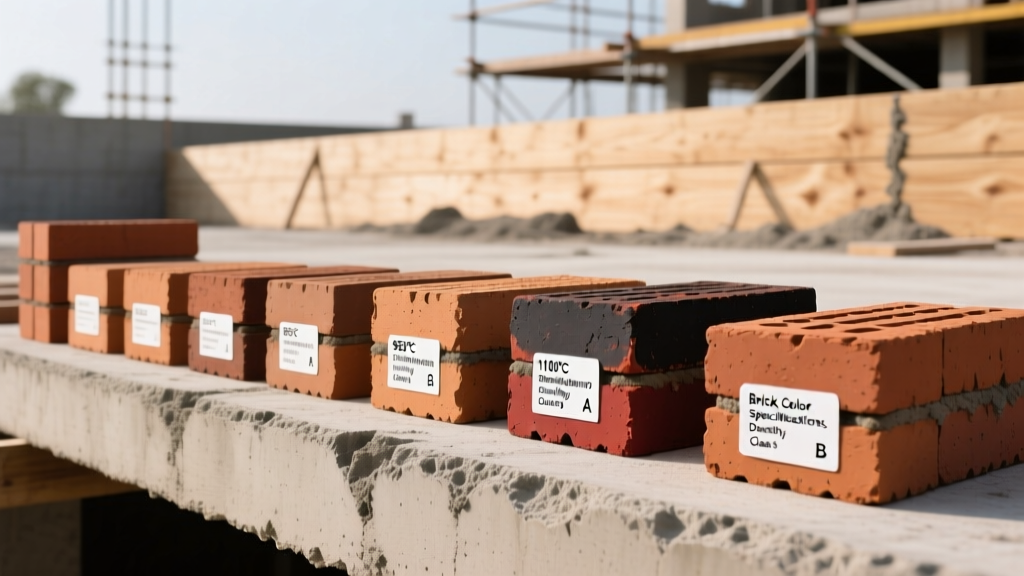
The Physics of Brick Color: Firing Temperatures and Iron Oxide
Brick color is not merely an aesthetic choice applied to the surface; it is a direct visual indicator of the unit's chemical composition, firing temperature, and resulting structural performance. In clay masonry, the hue is dictated by the mineral content of the raw shale or clay and the peak temperature reached in the kiln. Understanding this relationship is critical for architects and masonry contractors specifying materials for extreme weather exposure, high-load structural walls, or strict energy code compliance.
The primary coloring agent in most clay bricks is iron oxide. When raw clay containing hematite is fired in an oxygen-rich environment at standard temperatures (900°C to 1,000°C), it yields the familiar red and orange hues. However, when kiln temperatures are pushed to 1,100°C or higher, the clay body begins to vitrify. The iron oxidizes further, and the unit darkens to deep purple, brown, or black. This vitrification process fundamentally alters the brick's physical properties, closing capillary pores and dramatically increasing compressive strength while reducing water absorption.
ASTM Specifications: Correlating Hue with Absorption and Density
While standards like ASTM C216 Standard Specification for Facing Brick focus heavily on dimensional tolerances and chipping, the underlying durability is governed by weathering grades (Moderate vs. Severe). The color profile of a clay brick is highly predictive of its ability to pass Severe Weathering (SW) criteria, which requires low water absorption and high saturation coefficients.
| Color Profile | Primary Mineral | Kiln Temperature | Typical Absorption (ASTM C67) | Compressive Strength |
|---|---|---|---|---|
| Light Buff / Yellow | Limonite / Low Iron | 900°C - 950°C | 12% - 17% | 3,000 - 4,500 psi |
| Standard Red | Hematite | 950°C - 1,050°C | 7% - 12% | 4,500 - 6,500 psi |
| Dark Red / Purple | Hematite / Manganese | 1,050°C - 1,150°C | 3% - 7% | 8,000 - 12,000 psi |
| Flash / Black | Carbon Reduction | 1,100°C+ | < 3% | 10,000+ psi |
Flash bricks, which feature black or dark blue cores and faces, are created through reduction firing—starving the kiln of oxygen at peak temperatures. This traps carbon within the clay matrix, resulting in an exceptionally dense, nearly impermeable unit. While visually striking, these ultra-low absorption units require specific mortar formulations (such as Type N or O with high water retention) to ensure a proper mechanical bond, as they will not wick moisture from the mortar joint.
Thermal Performance and Solar Reflectance Index (SRI)
As energy codes like the IECC and ASHRAE 90.1 continue to tighten requirements for building envelope thermal performance, the Solar Reflectance Index (SRI) of exterior cladding has become a critical specification metric. Brick color directly dictates a wall's SRI value, influencing both the building's cooling loads and the masonry installation process itself.
Energy Code Compliance for Dark vs. Light Brick
According to data cataloged by the Cool Roof Rating Institute (CRRI) and building envelope researchers, light-colored masonry reflects significantly more solar radiation than dark masonry. A standard buff or light yellow brick typically exhibits an SRI between 35 and 50. In contrast, a dark brown or black ironspot brick will yield an SRI of 15 to 25. In hot climates, specifying dark brick on west-facing elevations can increase the cooling load of the structure by 4% to 8% compared to lighter alternatives, necessitating thicker continuous insulation (ci) layers to compensate for the increased thermal gain.
"Masons must adjust their wetting protocols based on brick color. Dark brick veneers exposed to direct summer sunlight can reach surface temperatures exceeding 140°F (60°C). If not pre-wetted, these hot, dense units will flash-set the mortar, pulling water out of the mix before the cement can fully hydrate, resulting in a weak, crumbly joint."
— Adapted from Brick Industry Association (BIA) Technical Notes on Hot Weather Construction
Concrete vs. Clay: Pigment Stability and UV Degradation Specs
When evaluating brick color specifications, it is vital to distinguish between fired clay brick (ASTM C216/C62) and concrete brick (ASTM C1634). Clay brick color is permanent, baked into the vitrified body. Concrete brick, however, relies on integral synthetic pigments mixed into the cementitious slurry.
- Synthetic Iron Oxides (Red, Brown, Yellow): Highly UV stable. These inorganic pigments do not degrade under solar exposure and will maintain their hue for the lifespan of the concrete unit.
- Carbon Black (Gray, Black, Charcoal): Prone to UV degradation. Carbon black pigments in concrete masonry will oxidize and fade to a mottled gray within 5 to 10 years of direct sun exposure. Specify only for interior or fully shaded applications.
- Chromium Oxide (Green): Excellent UV stability, but significantly more expensive. Often requires a higher cement content to achieve uniform color dispersion.
Efflorescence Potential by Color Profile
Efflorescence—the white, crystalline deposit of soluble salts left on the masonry surface after water evaporation—is a universal challenge in brickwork. However, the visual impact and the underlying risk profile vary heavily by brick color.
Light-colored bricks (buff, white, pale yellow) naturally mask the presence of mild efflorescence. However, because these bricks are typically fired at lower temperatures, they possess higher porosity and greater capillary action. This means they absorb more rainwater, which can dissolve internal sulfates and transport them to the surface. Conversely, dark red and black bricks are highly vitrified and resist water ingress, meaning less internal salt migration. Yet, when efflorescence does occur on a dark brick facade, the high contrast makes it glaringly visible.
To mitigate this, specify low-alkali cements (ASTM C150 Type I or II with low alkali limits) and ensure the dark brick units are tested for soluble salts per ASTM C67. Applying a clear, breathable silane/siloxane water repellent after the wall has fully cured (minimum 28 days) is highly recommended for dark brick installations in wet climates.
Procurement Framework: Specifying Color and Performance Together
To ensure the aesthetic vision does not compromise structural integrity, architects and procurement managers should follow this standardized framework when writing masonry specifications:
- Define the Weathering Grade First: For exterior applications in freeze-thaw zones, mandate ASTM C216 Grade SW (Severe Weathering) regardless of the requested color. This forces the manufacturer to supply a unit with the necessary density, even if a lighter color is requested.
- Specify the Color Range with Physical Samples: Clay brick color varies by kiln batch. Do not rely on digital swatches. Require a minimum 4x8 inch physical sample panel representing the light, dark, and median hues of the acceptable range.
- Mandate Initial Rate of Absorption (IRA) Testing: Dark, vitrified bricks often have an IRA below 5 g/30 sq in, while light bricks can exceed 25 g/30 sq in. Specify that the manufacturer must provide IRA data so the mason can select the correct mortar type (Type S for high IRA, Type N for low IRA) and plan wetting schedules.
- Address Thermal Bridging and SRI: If the project is targeting LEED certification or strict local energy codes, calculate the wall assembly's overall U-factor using the specific SRI of the chosen brick color, adjusting the continuous insulation thickness accordingly.
By treating brick color as a structural and thermal data point rather than just a design finish, construction professionals can prevent premature masonry failure, avoid costly efflorescence remediation, and ensure long-term compliance with modern building codes.