Brick Wallpaper Taxonomy: Selecting Faux Masonry Finishes
Explore the brick wallpaper material taxonomy. Compare vinyl, non-woven, peel-and-stick, and 3D foam types with current costs and installation specs.
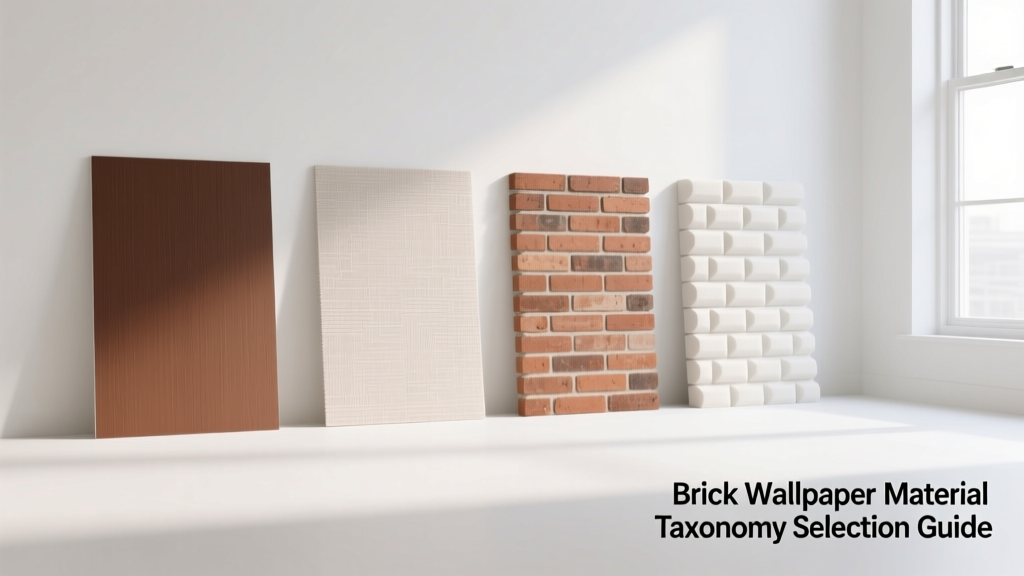
The Anatomy of Faux Masonry: Understanding Brick Wallpaper
Achieving the aesthetic of exposed masonry without the structural load, thermal bridging, or spatial loss of real brick requires precise material selection. Brick wallpaper serves as the primary lightweight veneer in this category, bridging interior design and architectural finishing. However, treating all faux brick wallcoverings as a single product class leads to specification errors, adhesive failures, and premature degradation. The market is divided into four distinct material taxonomies, each with specific substrate requirements, dimensional tolerances, and environmental limitations.
According to the Wallcoverings Association, modern wallcoverings are engineered for specific performance tiers, ranging from scrubbable commercial grades to breathable residential papers. Selecting the correct brick wallpaper requires matching the material's physical properties to the room's humidity, traffic level, and substrate condition.
- High-Moisture / Commercial: Specify Type II Heavy-Duty Vinyl.
- Historic Homes / Plaster Walls: Specify Breathable Non-Woven Paper.
- Renter-Friendly / Temporary: Specify Woven Peel-and-Stick.
- Acoustic Dampening / High Impact: Specify 3D XPE Foam Panels.
Material Taxonomy: The Four Primary Brick Wallpaper Classes
1. Heavy-Duty Vinyl (Commercial Grade)
Commercial vinyl brick wallpaper is manufactured with a PVC face laminated to a woven or non-woven backing. Classified as Type II under federal specifications (CCC-W-408), these rolls typically weigh between 22 and 36 ounces per linear yard. The embossing process creates deep, realistic mortar joints and varied brick textures. Because the PVC face is non-porous, it resists moisture penetration, making it suitable for commercial restrooms, restaurant accent walls, and high-humidity residential kitchens. Installation requires a heavy-duty clear paste (such as ROMAN PRO-880) applied directly to the wall, followed by a booking period to allow the vinyl to relax and expand before hanging.
2. Non-Woven Textured Paper
Non-woven brick wallpaper combines cellulose and synthetic polyester fibers, creating a dimensionally stable, breathable matrix. Unlike traditional paper-backed vinyl, non-woven materials do not expand when wet, allowing for a 'paste-the-wall' installation method that drastically reduces hanging time. The texture is achieved through specialized surface printing and micro-embossing. This material is highly tear-resistant during installation and can be stripped dry from the wall in full sheets years later. It is the premier choice for residential living spaces where indoor air quality and breathability are priorities.
3. Peel-and-Stick (Self-Adhesive Woven Polyester)
Peel-and-stick brick wallpaper utilizes a woven polyester or cotton-blend face coated with a water-activated or pressure-sensitive acrylic adhesive backing. While marketed as a DIY solution, professional installation requires meticulous alignment; the adhesive grabs instantly, making repositioning difficult without stretching the fabric. High-quality variants use a low-VOC acrylic adhesive that removes cleanly from properly primed eggshell or satin finishes. Cheap variants use aggressive rubber-based adhesives that can tear the drywall paper facing upon removal.
4. 3D Expanded Polyethylene (XPE) Foam Panels
While technically a panel rather than a traditional roll, 3D foam brick wallpaper is a dominant player in the faux masonry market. These panels feature a cross-linked polyethylene (XPE) foam core (typically 5mm to 8mm thick) with a printed, textured PVC or aluminum foil top layer. The foam provides minor acoustic dampening and thermal insulation (R-value of approximately 0.5 to 1.0). They are applied using double-sided acrylic mounting tape or neoprene-based contact cement. XPE is highly resistant to moisture and mold but is vulnerable to puncture and permanent denting from furniture impact.
Comparative Matrix: Specifications & Performance
| Material Class | Avg Cost (per sq ft) | Pattern Match Type | Moisture Tolerance | Fire Rating (ASTM E84) |
|---|---|---|---|---|
| Type II Vinyl | $2.50 - $4.00 | Straight / Drop | High (Scrubbable) | Class A (when properly rated) |
| Non-Woven Paper | $2.00 - $3.50 | Straight | Moderate (Wipeable) | Class B / C |
| Peel-and-Stick | $3.50 - $6.00 | Drop Match | Low (Spot Clean) | Unclassified / Varies |
| 3D XPE Foam | $0.80 - $1.50 | Grid Alignment | Very High (Waterproof) | Class A (with fire retardant) |
Cost Breakdown & Material Yields
Budgeting for brick wallpaper requires calculating beyond the raw roll cost. The 'waste factor' is the most frequently miscalculated variable in faux masonry projects. Brick patterns often feature a 20.5-inch or 24-inch drop match to stagger the 'bricks' realistically. A large drop match forces the installer to discard significant portions of the roll to align the mortar lines across adjacent strips.
- Standard Straight Match: Add 10% to total square footage for waste and trimming.
- 20.5-Inch Drop Match: Add 15% to 20% waste factor.
- Complex Corners & Outlets: Add an additional 5% for rooms with multiple windows, doors, and electrical cutouts.
Furthermore, substrate preparation materials must be factored in. A high-quality wallcovering primer (e.g., ROMAN PRO-999 Rx-35 or Zinsser Shieldz) costs approximately $45 to $60 per gallon, covering roughly 350 square feet. Skipping this primer to save $50 is the leading cause of adhesive failure in peel-and-stick applications.
Critical Failure Modes & Edge Cases
Vinyl Tension Shrinkage: If heavy-duty vinyl is not 'booked' (folded paste-to-paste and left to relax for 5-10 minutes) before hanging, the material will expand on the wall. As it dries, it shrinks back to its original dimension, pulling the seams apart and exposing the white substrate beneath. This is particularly glaring in dark-colored faux brick patterns.
EPS/XPE Foam Off-Gassing: Low-cost 3D foam panels imported without strict quality control often utilize adhesives and blowing agents that emit volatile organic compounds (VOCs) for weeks after installation. The Environmental Protection Agency (EPA) notes that indoor VOC levels can spike significantly after installing new synthetic building materials. Always specify XPE foam panels that carry GREENGUARD Gold certification to ensure low chemical emissions.
Substrate Preparation & Moisture Limits
The longevity of any brick wallpaper installation is dictated by the substrate. Gypsum board (drywall) and plaster must be structurally sound, clean, and within specific moisture thresholds.
- Moisture Testing: Use a pinless moisture meter on the drywall. Readings must be below 4%. Applying non-woven or vinyl wallpaper over damp drywall traps moisture, leading to black mold proliferation behind the impermeable PVC layer.
- Surface Sealing: Unprimed drywall acts as a sponge, absorbing the water from the wallpaper paste before it can cure, resulting in a weak bond. Apply an acrylic wallcovering primer to seal the surface and provide a uniform tack profile.
- Joint Compound Curing: Ensure all drywall mud is fully cured. Uncured joint compound contains high alkalinity, which can degrade the adhesive and cause yellowing (alkali burn) to bleed through lighter-colored faux white brick patterns.
Expert Specification Note: When specifying brick wallpaper for commercial corridors or egress paths, verify the product's ASTM E84 Surface Burning Characteristics rating. Many standard residential wallcoverings do not meet the Class A (Flame Spread Index 0-25) requirement mandated by the International Building Code (IBC) for commercial exit enclosures. Request the manufacturer's independent lab test certificate before procurement.
Sourcing & Specification Standards
Procurement should prioritize manufacturers that provide full technical data sheets (TDS) including weight, fire ratings, and recommended adhesive pairings. Brands like York Wallcoverings, Brewster Home Fashions, and Graham & Brown offer commercial-grade faux brick lines that meet rigorous durability standards. For architectural specifications, always reference the Gypsum Association's guidelines for wallboard finishing levels (Level 4 or Level 5) to ensure that the underlying drywall seams do not telegraph through the wallpaper, ruining the illusion of authentic masonry.