Firebrick Performance Ratings: ASTM Specs and Temperature Limits
Analyze firebrick performance ratings, ASTM C27 and C155 specifications, thermal limits, and structural densities for high-heat masonry.
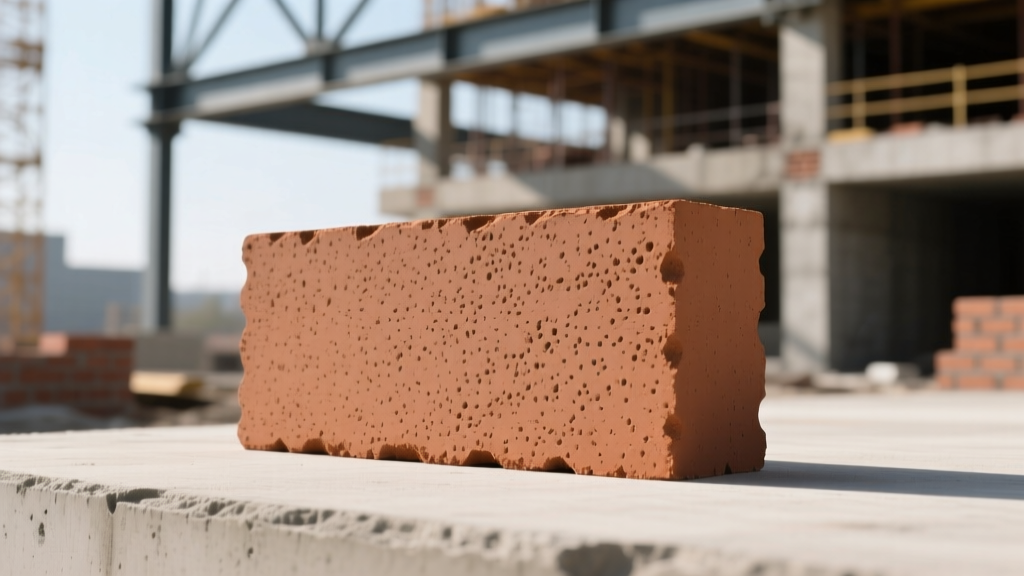
Standard clay bricks (governed by ASTM C62) undergo catastrophic structural failure above 1,200°F due to quartz inversion and vitrification limits. Firebricks, technically classified as refractory bricks, are engineered with precise alumina (Al2O3) and silica (SiO2) ratios to maintain structural integrity at extreme temperatures. Selecting the correct firebrick requires a strict adherence to performance ratings, thermal conductivity metrics, and mechanical strength specifications outlined by the ASTM Committee C08 on Refractories.
Decoding Firebrick Classifications: Dense vs. Insulating
The refractory industry divides firebrick into two primary categories, each governed by distinct ASTM standards. Misapplying these categories is the most common cause of premature kiln, forge, and fireplace failure.
ASTM C27: Dense Fireclay Refractories
Dense firebricks are characterized by high bulk density and low porosity. They are designed to withstand mechanical abrasion, chemical slag attack, and heavy structural loads. Because of their high thermal mass, they absorb and retain significant heat, making them ideal for the hot faces of industrial kilns, glass furnaces, and high-friction environments like rotary cement kilns.
ASTM C155: Insulating Firebrick (IFB)
Insulating firebricks are engineered with high porosity (often 60% to 80%) to trap air and minimize thermal conductivity. According to Morgan Advanced Materials, modern IFBs utilize precise extrusion and burnout techniques to create a uniform micro-pore structure. They are strictly used for backup linings or low-abrasion hot faces where heat retention and energy efficiency are paramount.
The Core Performance Metrics
When evaluating refractory materials engineering data sheets, four metrics dictate the operational viability of a firebrick in high-heat masonry.
| Metric | Insulating (JM23 IFB) | Dense High-Duty Firebrick | Significance |
|---|---|---|---|
| Bulk Density | 35 - 50 lbs/ft³ | 130 - 150 lbs/ft³ | Determines thermal mass and structural weight load. |
| Porosity | 65% - 75% | 12% - 18% | Higher porosity equals lower thermal conductivity but higher vulnerability to chemical penetration. |
| Cold Crushing Strength (CCS) | 180 - 250 psi | 4,500 - 6,000 psi | Measures resistance to mechanical load and physical impact at room temperature. |
| Modulus of Rupture (MOR) | 150 - 200 psi | 1,200 - 1,800 psi | Indicates flexural strength and resistance to thermal shock-induced cracking. |
| Thermal Conductivity | 0.15 - 0.25 BTU·in/hr·ft²·°F | 8.0 - 12.0 BTU·in/hr·ft²·°F | Crucial for calculating required insulation thickness and exterior shell temperatures. |
Temperature Ratings and Duty Cycles
Firebricks are classified by their maximum continuous service temperature. The alumina content is the primary driver of this limit; as alumina percentage increases, so does the refractory ceiling.
- Low Duty (Up to 1,900°F): Typically 25-30% alumina. Used in residential fireplaces and low-temperature flue linings.
- Medium Duty (Up to 2,200°F): 30-35% alumina. Standard for residential wood stoves and basic pottery kilns.
- High Duty (Up to 2,850°F): 40-45% alumina. Required for blacksmithing forges, high-fire ceramics (Cone 10), and industrial boiler arches.
- Super Duty (Up to 3,100°F+): 50%+ alumina. Reserved for specialized metallurgical furnaces and glass melting tanks.
"The designation of an insulating firebrick, such as JM23 or JM28, directly correlates to its temperature rating in hundreds of degrees Fahrenheit. A JM26 brick is rated for continuous service at 2,600°F."
Real-World Failure Modes and Mitigation
Understanding how firebricks fail is critical for specifying the correct material. Refractory degradation rarely occurs from pure heat; it is almost always a secondary chemical or mechanical reaction.
Warning: Thermal Spalling
Cause: Rapid temperature fluctuations cause the exterior of the brick to expand or contract faster than the interior, generating tensile stress that fractures the face.
Mitigation: Specify bricks with higher silica content or utilize silicon carbide (SiC) refractories, which possess vastly superior thermal shock resistance compared to standard high-alumina firebricks. Implement strict kiln cooling schedules (e.g., dropping no more than 200°F per hour below 1,000°F).
Warning: Chemical Slag Attack (Fluxing)
Cause: Wood ash, coal clinker, and metallic oxides contain alkalis (potassium, sodium) and iron. At high temperatures, these act as fluxes, reacting with the silica in the firebrick to form a low-melting-point glassy slag that eats away the masonry.
Mitigation: For wood-fired pizza ovens or biomass boilers, standard high-duty firebrick will flux and melt within months. You must specify high-alumina (60%+) or phosphate-bonded refractory bricks that resist alkali penetration.
Installation Specifications: Mortar and Joint Tolerances
The performance of a firebrick lining is entirely compromised if standard Portland cement mortar is used. Portland mortar dehydrates and turns to dust at 800°F, leading to joint failure and structural collapse.
Refractory Mortar Selection
- Air-Setting Refractory Mortar (e.g., Sairset, Greenpatch): Contains sodium silicate and fine refractory grog. It sets upon exposure to air and develops ceramic bonds upon firing. Maximum joint thickness: 1/16" to 1/8". This is the mandatory choice for 95% of IFB and dense firebrick installations.
- Heat-Setting Refractory Mortar: Requires the heat of the kiln to develop its bond. Used for thicker joints (up to 1/4") in heavy industrial applications, but requires careful bracing during initial construction.
Expansion Joint Engineering
Firebricks expand linearly when heated. A 10-foot run of high-duty firebrick heated to 2,000°F will expand by approximately 1/8 to 3/16 of an inch. If laid tight without expansion allowances, the bricks will buckle and "pop" out of the lining. Installers must incorporate ceramic fiber expansion joints (e.g., 1/4" Kaowool blanket) every 8 to 10 feet in linear runs and around the perimeter of rigid steel shells.
Sourcing and Cost Matrix (2026 Market Pricing)
Refractory material costs have stabilized following recent supply chain adjustments, but high-alumina formulations remain premium-priced due to bauxite market fluctuations. Below is the current pricing landscape for standard 9" x 4.5" x 2.5" straight bricks.
| Brick Type / Grade | Common Model / Brand | Alumina Content | Avg. Cost Per Brick (2026) |
|---|---|---|---|
| Insulating (2300°F) | JM23 / K-23 | ~38% | $4.50 - $5.50 |
| Insulating (2800°F) | JM28 / K-28 | ~45% | $7.00 - $8.50 |
| Dense High-Duty | Super Duty / High Duty | 40% - 45% | $3.50 - $4.50 |
| Dense Super-Duty | 90% Alumina Brick | 90%+ | $14.00 - $18.00 |
| Silicon Carbide (SiC) | Nitride-Bonded SiC | N/A (SiC based) | $45.00 - $65.00 |
When specifying firebrick for any thermal application, prioritize the operational environment over the base temperature rating. A 2,300°F rated JM23 insulating brick will outlast a 3,000°F rated dense super-duty brick in a backup lining due to its superior energy efficiency, but will be destroyed in weeks if used as a hot face in a high-friction forge. Match the ASTM classification to the specific mechanical, chemical, and thermal demands of the enclosure.