Brick Trap or Log Trap: Choosing the Right Masonry Site Interceptor
Compare brick traps and log traps for construction sites. Learn sizing, pH-resistant materials, and SWPPP compliance for masonry washout interceptors.

The Role of Debris Interceptors in Masonry Construction
Managing construction site runoff is a critical component of modern building projects, governed by strict Stormwater Pollution Prevention Plan (SWPPP) regulations enforced by the EPA Construction Stormwater Guidelines. When setting up temporary or permanent drainage for masonry work areas, site managers frequently face a specific specification dilemma: should the site utilize a brick trap or a log trap? While both are designed to intercept solids before they enter municipal sewer systems or stormwater retention ponds, their engineering, chemical resistance, and target debris profiles are fundamentally different.
Choosing the wrong interceptor for a masonry washout station or a land-clearing runoff channel can result in catastrophic system failures, hardened blockages, and severe environmental fines. This guide provides a deep technical breakdown of brick traps (masonry sediment interceptors) and log traps (woody debris catchments), equipping contractors with the exact specifications, sizing formulas, and installation protocols required for 2026 construction sites.
The Anatomy of a Brick Trap (Masonry Interceptor)
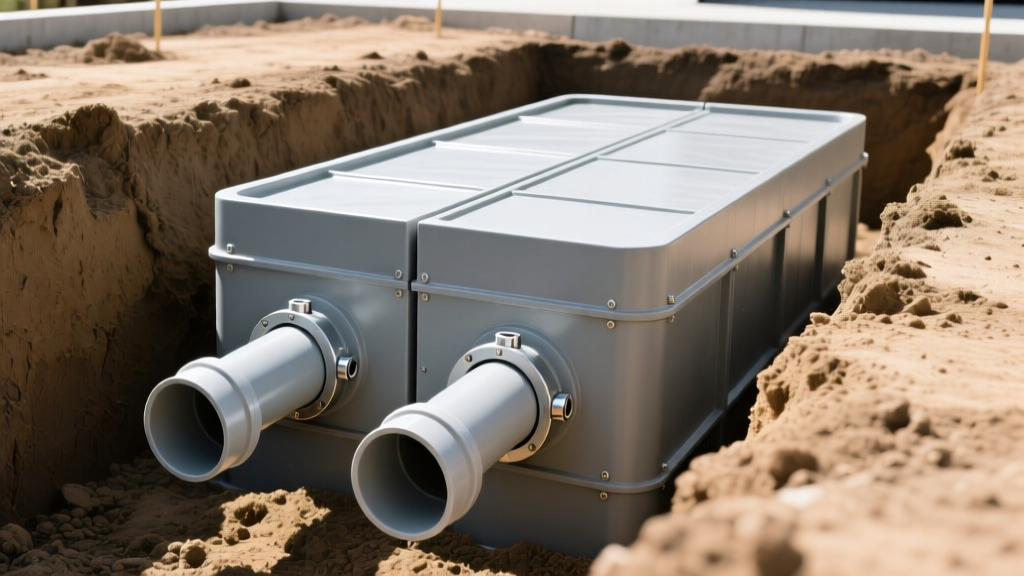
A brick trap—formally classified in plumbing engineering as a masonry sediment interceptor or plaster trap—is engineered specifically to handle the unique physical and chemical challenges of bricklaying and masonry washout areas. When masons clean their tools, buckets, and mixers, the runoff contains a slurry of Portland cement, hydrated lime, fine masonry sand, and heavy brick chips.
Chemical Resistance and Material Selection
The most critical failure point for standard plumbing traps in masonry environments is chemical corrosion. Wet mortar and concrete slurry are highly alkaline, typically registering a pH between 12 and 13. Standard cast-iron interceptors will rapidly corrode, pit, and fail when exposed to this caustic environment. For a brick trap to survive a multi-phase commercial build, it must be constructed from High-Density Polyethylene (HDPE) or feature a heavy-duty, acid-and-alkali-resistant epoxy coating over cast iron.
Modern HDPE brick traps, such as those conforming to Plumbing and Drainage Institute (PDI) Standards for sediment interceptors, utilize smooth-walled internal baffles. These baffles slow the water velocity, allowing heavy brick fragments and dense sand to settle into a primary sump, while a secondary baffle prevents the floating lime scum from migrating into the outlet pipe.
Discharging untreated masonry washout water directly into municipal storm drains is a direct violation of the Clean Water Act. The high pH of mortar runoff can kill aquatic life and disrupt municipal water treatment bacteria. A properly sized brick trap is your first line of defense, but it must be paired with a pH-neutralization basin if the effluent exceeds a pH of 9.0 before entering the public sewer.
Understanding the Log Trap (Woody Debris Interceptor)
Conversely, a log trap is a heavy-duty stormwater management structure designed for site preparation, land clearing, and timber framing phases. Rather than catching dense, sunken mineral solids, a log trap is engineered to intercept buoyant or large-scale organic debris—such as fallen branches, timber offcuts, wood chips, and root balls—before they wash into retention ponds or culverts.
Log traps are rarely installed indoors or tied directly to sanitary plumbing. They are typically large-scale, exterior concrete or corrugated metal vaults featuring heavy-duty skimmer walls and trash racks. The hydrodynamics of a log trap rely on surface skimming; water flows under a submerged baffle wall, leaving floating logs and organic matter trapped on the inlet side, while heavier silt drops into a deep forebay.
Brick Trap vs. Log Trap: Technical Comparison Matrix
To specify the correct unit for your site's SWPPP and plumbing blueprints, review the operational differences outlined below.
| Feature | Brick Trap (Masonry Interceptor) | Log Trap (Woody Debris Interceptor) |
|---|---|---|
| Primary Target Debris | Brick chips, cured mortar, sand, lime scum | Timber offcuts, branches, wood chips, roots |
| Debris Buoyancy | Heavy / Sinking (requires deep sump) | Buoyant / Floating (requires skimmer baffles) |
| pH Tolerance | High (pH 12-14 with HDPE/Epoxy) | Neutral (pH 6-8, standard concrete) |
| Typical Material | HDPE, Epoxy-coated Cast Iron | Precast Concrete, Corrugated Galvanized Steel |
| Standard Flow Rate | 20 GPM to 100 GPM | 500 GPM to 5,000+ GPM (Storm events) |
| Estimated 2026 Cost | $900 - $3,200 per unit | $4,500 - $12,000+ per vault |
Sizing Calculations for Masonry Washout Stations
Undersizing a brick trap is the most common error on commercial masonry sites. If the flow rate exceeds the trap's rated capacity, the water velocity will re-suspend settled sand and brick dust, carrying it straight into the municipal sewer. To properly size a brick trap, you must calculate the maximum simultaneous discharge from the washout hoses.
The GPM Calculation Method
A standard 5/8-inch garden hose operating at 60 PSI delivers approximately 15 Gallons Per Minute (GPM). If your masonry washout station is designed to accommodate three masons cleaning their tools simultaneously, your peak flow rate is 45 GPM.
- 1 Hose Station: Requires a minimum 20 GPM rated brick trap.
- 2 Hose Stations: Requires a minimum 35 GPM rated brick trap.
- 3+ Hose Stations: Requires a 50 GPM to 75 GPM rated interceptor, or dual 35 GPM units piped in parallel.
Always apply a 1.5x safety factor to your calculated GPM to account for sudden surges when buckets are dumped directly into the washout grate. For a 45 GPM calculated load, specify a 70 GPM HDPE brick trap.
Step-by-Step Installation Protocol for Brick Traps
Proper bedding and leveling are non-negotiable. If a brick trap settles unevenly, the internal water level will skew, causing the outlet baffle to submerge entirely and allowing floating lime scum to escape.
- Excavation and Bedding: Excavate the trench to accommodate the interceptor depth plus 6 inches of clearance. Lay a 4-inch bed of compacted 3/4-inch crushed stone. Do not use sand or loose dirt, which can wash out and cause the heavy, water-filled trap to settle.
- Setting the Basin: Lower the HDPE brick trap into the trench. Use a laser level across the internal rim to ensure the unit is perfectly plumb in both the X and Y axes. A 1-degree tilt can compromise the baffle efficiency by 20%.
- Piping Connections: Connect the inlet and outlet using PVC SDR 35 or Schedule 40 pipe. Use flexible rubber couplings (Fernco-style) with stainless steel shear rings to connect the PVC to the trap's hub, allowing for minor ground settlement without cracking the HDPE housing.
- Flowable Fill Backfill: Do not backfill with native soil and tamp it, as mechanical tamping can crush or deform HDPE traps. Instead, use Controlled Low-Strength Material (CLSM) or flowable fill up to the frost line. This provides uniform lateral support without point-load stresses.
- Grate Installation: Secure the heavy-duty traffic-rated grate. For masonry sites where forklifts or loaded wheelbarrows cross the washout area, specify a ductile iron grate rated for H-20 highway loading, even if the trap body is HDPE.
Maintenance and Curing Prevention
The defining characteristic of masonry debris is that it cures. Unlike organic matter in a log trap, which slowly decomposes, Portland cement and mortar slurry will hydrate and harden into a rock-like mass inside the brick trap's sump if left unattended.
Mandate that the site laborer or masonry foreman vacuums or shovels the brick trap sump every 48 hours during active masonry phases. If mortar is allowed to cure inside the interceptor, it cannot be removed with a wet-vac. It will require manual chipping with a rotary hammer or jackhammer, which risks cracking the HDPE baffles and destroying the unit.
For high-volume commercial sites, consider installing an automated agitator or a continuous-duty sump pump equipped with a macerator impeller specifically rated for abrasive masonry slurry. This keeps the particulate matter in suspension long enough to be pumped into a secondary, above-ground dewatering bag or filter press, keeping the primary brick trap clean and functional throughout the duration of the build.
Frequently Asked Questions
Can I use a standard grease trap instead of a brick trap for masonry washout?
No. Grease traps are designed to catch floating fats and oils using internal baffles that rely on the buoyancy of lipids. They lack the deep, heavy-duty sumps required to catch dense brick chips and sand, and their internal components will quickly corrode from the high pH of mortar slurry.
Do log traps require pH neutralization?
Generally, no. Log traps handle organic, woody debris from land clearing, which does not possess the caustic alkalinity of masonry runoff. However, the water may still require sediment filtration for suspended topsoil before discharging into municipal storm systems.
Written by
Sarah WhitfieldSarah Whitfield is a chartered quantity surveyor (MRICS) and construction cost analyst with 15 years of experience in material pricing, procurement strategy, and project budgeting. She earned her degree in Construction Management from the University of Reading (UK) and has worked on projects ranging from $2M custom homes to $180M mixed-use developments across North America and Europe. Sarah currently leads cost estimating for BuildMat Insight, maintaining a proprietary database of 4,000+ material price points updated quarterly. She is a frequent contributor to RSMeans cost data panels and has presented at the International Cost Engineering Council (ICEC) congress. Based in Denver, CO, Sarah is an avid trail runner and volunteer mentor for Women in Construction.
More from Sarah Whitfield
View all
Wood & Lumber
What Are the Different Types of Wood? A Builder's Guide
Compare structural softwoods, finish hardwoods, and engineered lumber. Analyze Janka ratings, MOE values, and 2026 pricing for construction.
Aug 4, 2026

Walls & Panels
Steel Framing vs Wood Framing: Corrosion and Moisture Defense
Compare steel framing vs wood framing for moisture resistance. Learn about galvanized coatings, condensation risks, and corrosion protection strategies.
Jul 21, 2026

Stone & Masonry
How to Cut Stone Veneer: Wet Saw vs Grinder Comparison
Compare the best tools for cutting stone veneer. We review wet saws, angle grinders, and chop saws to help you achieve clean, chip-free cuts.
Jul 21, 2026