Thin Brick Veneer Durability: Lifespan Analysis and Failure Modes
Discover the true lifespan of thin brick veneer. Analyze durability, common failure modes, mortar selection, and maintenance costs for long-lasting installs.
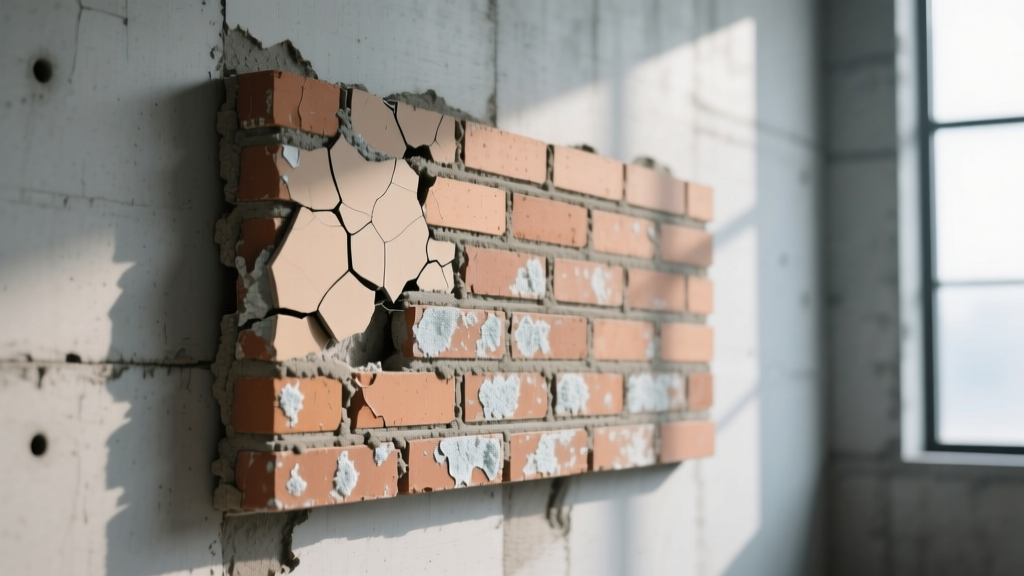
The Real Lifespan of Thin Brick Veneer: Beyond Marketing Claims
Thin brick veneer—typically ranging from 1/2 inch to 3/4 inch in thickness—has become a dominant choice for both interior accent walls and exterior facades. Governed by ASTM C1088 (Standard Specification for Thin Veneer Brick), these units are manufactured from the same high-fired clay as structural brick but are sliced or extruded to reduce weight and material costs. However, because thin brick lacks the mass and structural independence of traditional wythes, its lifespan is entirely dictated by the substrate preparation, adhesive chemistry, and moisture management systems employed during installation.
While manufacturers often claim a 100-year lifespan for the clay units themselves, the functional lifespan of a thin brick veneer assembly is generally between 25 and 75 years. The variance depends almost entirely on whether the system is direct-adhered to a solid substrate or installed over a drained cavity. Understanding this distinction is the first step in predicting long-term durability and avoiding catastrophic assembly failures.
Expected Longevity by Installation Method
| Installation System | Expected Lifespan | Primary Vulnerability | Best Application |
|---|---|---|---|
| Direct Adhered (Interior) | 50 to 75+ years | Substrate deflection causing adhesive shear | Feature walls, commercial interiors |
| Direct Adhered (Exterior) | 25 to 40 years | Moisture entrapment, freeze-thaw spalling | Low-rise residential, protected overhangs |
| Mortar Setting Bed / Drained Cavity | 75 to 100+ years | Weep hole blockage, flashing corrosion | Commercial exteriors, harsh climate zones |
| Prefabricated Panel Systems | 40 to 60 years | Panel joint sealant degradation (requires 20-year resealing) | High-rise facades, rapid enclosure projects |
Critical Failure Modes and Prevention Strategies
When thin brick veneer fails, it rarely degrades uniformly. Failures are highly localized and typically stem from three specific mechanisms: delamination, spalling, and efflorescence-induced bond breakdown.
1. Delamination and Adhesive Shear
Delamination occurs when the thin brick separates from the substrate. In exterior direct-adhered systems, this is most often caused by thermal expansion mismatches. Clay brick expands over time due to moisture absorption (irreversible moisture expansion), while concrete or wood substrates may shrink or deflect. If a rigid adhesive is used, the shear stress exceeds the bond strength, resulting in 'tenting' or complete detachment.
2. Spalling from Freeze-Thaw Cycling
Spalling is the flaking or popping off of the brick face. According to the Brick Industry Association (BIA) Technical Notes, thin brick used in exterior freezing environments must have an initial rate of absorption (IRA) carefully managed, and the final unit must not exceed 8% total absorption. If water penetrates the veneer and freezes, the 9% volumetric expansion of ice creates internal hydrostatic pressure that shatters the clay face.
Prevention: Specify severe weathering (SW) grade brick for any exterior application in climates with freezing temperatures. Additionally, ensure the top of the veneer installation features proper metal flashing and drip edges to prevent bulk water from migrating behind the units.
3. Efflorescence and Bond Degradation
Efflorescence is the white, powdery salt deposit that forms when water-soluble salts migrate to the surface. While often viewed as merely cosmetic, severe efflorescence can crystallize at the brick-adhesive interface (subflorescence). The crystallization pressure can easily exceed 300 psi, mechanically pushing the brick off the wall.
Prevention: Use low-alkali Portland cement mortars and ensure the substrate is fully cured and dry before application. For exterior walls, integrate a weather-resistive barrier (WRB) and a rainscreen mat (like Keene Driwall) to allow incidental moisture to drain rather than evaporate through the brick face.
Mortar and Jointing: The Hidden Lifespan Multiplier
The mortar used to point the joints of thin brick veneer represents roughly 20% of the visible surface area and 100% of the system's moisture-shedding capability. A common, catastrophic mistake in modern thin brick installation is treating the jointing process like traditional masonry.
Why Traditional Type S or Type M Mortar Fails Thin Brick
Traditional masonry mortars (Type S and M) are designed with high compressive strength (1,800 to 2,500 psi) to support the massive dead load of structural brick. Thin brick has zero structural load. When high-strength mortar is used on thin brick, it becomes too rigid. As the wall experiences thermal cycling, the rigid mortar cracks, creating direct pathways for water ingress.
Optimal Jointing Specifications for Thin Brick
- Material: Type N mortar (750 psi) or specialized polymer-modified sanded grout.
- Joint Profile: Concave or V-joint. These profiles compress the mortar against the brick edges, creating a tighter seal than weathered or flush joints.
- Application Tool: Use a standard tile grout float for initial application, followed by a convex jointing iron to compress the material.
- Cost Factor: High-performance polymer grouts (e.g., LATICRETE PermaColor) cost approximately $45 to $65 per 25 lb bag, compared to $12 for standard masonry cement, but they eliminate cracking callbacks.
Lifecycle Maintenance and the Sealing Myth
A pervasive myth in the masonry and landscaping industry is that thin brick veneer must be sealed with a silane or siloxane water repellent to ensure longevity. In reality, applying a film-forming or pore-blocking sealer to exterior thin brick is one of the fastest ways to destroy the assembly.
Brick veneer systems are designed to 'breathe.' Moisture that enters the wall system through micro-cracks or vapor drive must be able to evaporate outward. When a sealer is applied, it traps moisture inside the clay body and the substrate. During winter, this trapped moisture freezes, causing rapid spalling. During summer, it promotes mold growth and substrate rot behind the veneer.
Recommended Maintenance Schedule
- Years 1-10: Annual visual inspections for hairline mortar cracking. Clean with a low-pressure wash (under 400 psi) and a mild, non-acidic detergent. Never use muriatic acid, which degrades the polymer modifiers in modern thinset.
- Years 15-25: Inspect perimeter flashings and weep holes (if installed over a drained cavity). Clear any debris or vegetation bridging the gap between the veneer and the ground.
- Years 30-40: Budget for localized repointing. Even with optimal materials, exterior mortar joints will eventually erode. Repointing costs typically range from $4.00 to $7.00 per linear foot, depending on scaffold requirements.
Comparative ROI: Thin Brick vs. Alternatives
To contextualize the durability of thin brick, it is necessary to compare its lifecycle cost and lifespan against competing facade materials. The following matrix assumes a standard 2,000 sq. ft. exterior residential application in a mixed-humidity climate zone.
| Material | Initial Installed Cost (per sq ft) | Functional Lifespan | 50-Year Maintenance Cost | Durability Verdict |
|---|---|---|---|---|
| Traditional Structural Brick (4" wythe) | $18.00 - $28.00 | 100+ years | $0.50 / sq ft (minimal repointing) | Unmatched longevity, but requires heavy foundation support. |
| Thin Brick Veneer (Direct Adhered) | $14.00 - $22.00 | 30 - 50 years | $2.50 / sq ft (repointing & patch repairs) | Excellent aesthetic ROI; vulnerable to moisture if poorly detailed. |
| Fiber Cement Siding (Lap) | $9.00 - $14.00 | 30 - 40 years | $4.00 / sq ft (requires repainting every 15 years) | Lower upfront cost, but high aesthetic maintenance over time. |
| Manufactured Stone Veneer | $12.00 - $19.00 | 20 - 30 years | $3.00 / sq ft (color fading and chip repairs) | Prone to UV fading and chipping; lacks the permanence of fired clay. |
Expert Verdict: Engineering for Permanence
Thin brick veneer is an exceptionally durable material, provided it is treated as a specialized cladding system rather than a simple tile application. The Masonry Society and modern building codes increasingly emphasize that the longevity of adhered masonry veneers relies on strict adherence to substrate flatness tolerances (typically no more than 1/8 inch deviation in 10 feet), the use of ANSI A118.15 modified mortars, and rigorous moisture management.
For architects and builders, the decision to use thin brick should not be based solely on the $4 to $8 per square foot material savings over structural brick. It should be based on the structural limitations of the building. When installed over a properly flashed, drained cavity system using severe-weathering (SW) grade units, thin brick veneer will easily outlast the building's primary weather-resistive barriers, delivering a century of low-maintenance, high-performance facade durability.