Slate Flooring Maintenance: The Complete Cleaning Playbook
Master slate flooring maintenance with our expert cleaning playbook. Learn exact pH requirements, sealer types, and spalling prevention strategies.
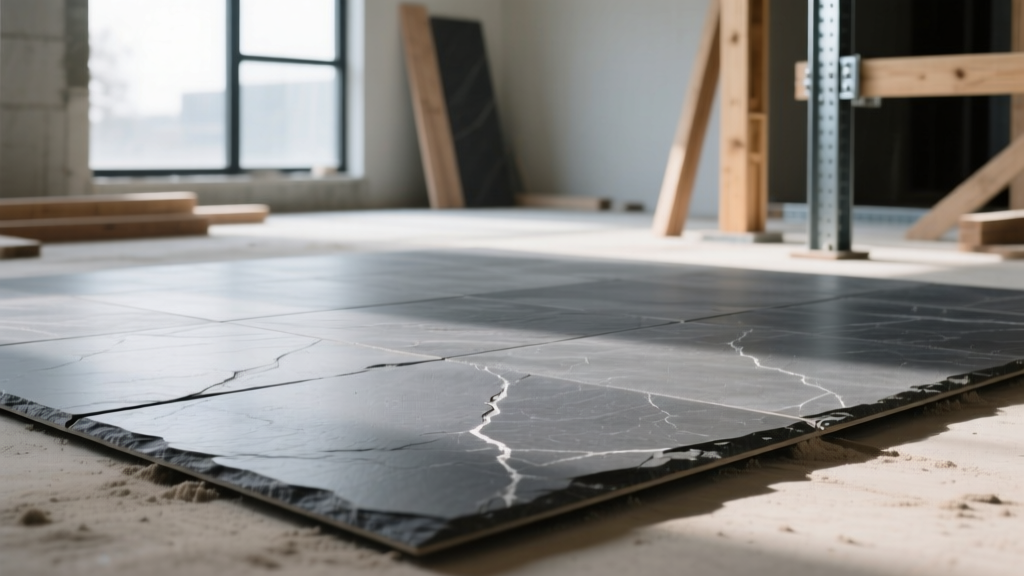
The Metallurgical Reality of Slate: Why It Flakes and Fails
Slate is a foliated metamorphic rock derived from shale. Its defining characteristic—cleavage planes—allows it to be split into thin, durable sheets. However, these same microscopic foliation layers are the primary vulnerability in slate flooring. When moisture penetrates unsealed clefts and undergoes freeze-thaw cycles, or when harsh chemicals degrade the mineral matrix, the layers separate. This failure mode, known as spalling or flaking, is the number one reason slate floors require premature replacement.
Furthermore, commercial slate varies wildly in density. Brazilian slate is often highly silicified and behaves closer to quartzite, making it incredibly dense and stain-resistant. Conversely, many Chinese and Indian slate variants are softer, more porous, and highly susceptible to acid etching and moisture intrusion. Understanding your slate's origin dictates your maintenance aggression level.
The Daily & Weekly Cleaning Protocol
The most common mistake homeowners make is using generic household cleaners on natural stone. Slate is highly sensitive to acidic solutions. Vinegar (acetic acid) and citrus-based cleaners will chemically react with the calcium carbonate and metallic impurities in the slate, causing permanent etching, dulling the cleft, and degrading the sealer.
Your daily and weekly playbook must rely exclusively on pH-neutral or slightly alkaline solutions (pH 7.0 to 8.5). According to guidelines from the Natural Stone Institute, neutral cleaners lift dirt without compromising the protective impregnating sealers beneath the surface.
Cleaner pH Matrix & Product Recommendations
| Product / Solution | Approx. pH | Safe for Slate? | Effect on Stone & Sealer |
|---|---|---|---|
| White Vinegar | 2.5 | NO | Etches surface, strips topical sealers, causes dulling. |
| Bleach (Sodium Hypochlorite) | 12.5 | NO | Oxidizes metallic minerals (iron/pyrite), causing rust spots. |
| Ammonia | 11.0 | CAUTION | Can degrade acrylic sealers over time; leaves streaky residue. |
| StoneTech Daily Cleaner | 8.0 | YES | Lipid-based dirt suspension; safe for all impregnating sealers. |
| Miracle Sealants Neutral Cleaner | 7.2 | YES | True neutral pH; ideal for weekly damp mopping without residue. |
Deep Cleaning & Stain Extraction Playbook
When a spill bypasses the sealer—common with cooking oils, red wine, or pet accidents—surface mopping will not suffice. The stain has penetrated the capillary network of the stone. You must use a poultice to draw the stain out via capillary action and chemical breakdown.
Step-by-Step Poultice Application for Oil Stains
- Preparation: Clean the surface with a pH-neutral degreaser (pH 9.0-10.0) to remove surface lipids. Allow to dry completely.
- Mixing: Combine a diatomaceous earth or kaolin clay poultice powder (e.g., Aqua Mix Poultice Powder) with a 3% hydrogen peroxide solution. Mix to a thick, peanut-butter-like consistency.
- Application: Trowel the mixture over the stain to a thickness of exactly 1/4 inch, extending 1 inch beyond the stain's visible perimeter.
- Sealing: Cover with plastic wrap and tape the edges down with painter's tape. Poke 4-5 small holes in the plastic with a toothpick to allow controlled evaporation.
- Extraction: Leave for 24 to 48 hours. As the water/peroxide evaporates, it pulls the dissolved oil up into the clay matrix.
- Removal: Remove the plastic, let the poultice dry to a hard crust, and gently scrape it off with a plastic putty knife. Rinse with distilled water.
Sealing Strategy: Penetrating vs. Enhancing
Sealing is non-negotiable for slate, but choosing the wrong chemistry will ruin the floor. The market is flooded with topical acrylic sealers that create a surface film. While they provide an initial high-gloss shine, they trap moisture vapor migrating from the concrete subfloor. When this vapor cannot escape, hydrostatic pressure builds, causing the acrylic to peel and the slate beneath to spall.
Always specify penetrating impregnators utilizing siloxane or silane resins. These molecules are small enough to bypass the surface tension and bond within the stone's pore structure, repelling water and oil while remaining vapor-permeable.
Water-Based Penetrators
Top Pick: Laticrete's StoneTech BulletProof Sealer.
Profile: Low VOC, no odor, maintains the natural matte/cleft look of the slate. Excellent for interior residential kitchens. Requires 2 coats on porous Indian/Chinese slate.
Solvent-Based Enhancers
Top Pick: Miracle Sealants 511 Impregnator or Enhance & Seal.
Profile: Solvent carriers penetrate deeper into dense Brazilian slate. 'Enhancing' variants darken the stone, bringing out deep charcoal, rust, and green hues, simulating a 'wet look' permanently.
Troubleshooting Common Slate Failures
Even with meticulous care, environmental factors and installation errors can cause specific pathologies in slate flooring. Here is how to diagnose and remediate the big three:
- Spalling / Flaking: Cause: Moisture trapped beneath a topical sealer, or freeze-thaw cycles in unsealed exterior slate. Fix: Strip the topical coating using a heavy-duty alkaline stripper (like Aqua Mix Sealer & Coating Remover). If the subfloor is emitting excessive moisture (calcium chloride test > 3 lbs/1000 sq ft/24 hrs), you must install a topical moisture mitigation system before re-sealing.
- Efflorescence: Cause: Water-soluble salts from the mortar bed migrating to the surface and crystallizing as a white powder. Fix: Do not wet-mop this; water will just dissolve the salts and push them back into the pores. Dry-brush the powder daily. Once migration stops, treat with a specialized efflorescence remover containing mild phosphoric acid (never muriatic acid, which will pit the slate).
- Sealer Hazing: Cause: Impregnating sealer was applied to a damp floor, or excess sealer was allowed to dry on the surface rather than being buffed off within the 10-minute dwell time. Fix: Buff the haze aggressively with #0000 steel wool and a light mist of the sealer's carrier solvent, or use a dedicated haze remover.
Cost Analysis: DIY Maintenance vs. Professional Restoration
Maintaining slate is highly cost-effective if you stay ahead of the sealing schedule. However, once a floor requires deep restoration, costs escalate rapidly. Below is a cost breakdown for a standard 500-square-foot kitchen area in 2026.
| Service Level | Materials / Labor | Estimated Cost (500 sq ft) | Frequency |
|---|---|---|---|
| DIY Routine Maintenance | 1 Gal pH-Neutral Cleaner, Microfiber pads | $45 - $65 | Annual |
| DIY Resealing | 2 Quarts Premium Siloxane Impregnator | $120 - $180 | Every 3-5 Years |
| Pro Deep Clean & Seal | Rotary scrubbing, wet extraction, pro-grade sealer | $1,250 - $1,800 | Every 5-7 Years |
| Pro Restoration (Spalling) | Chemical stripping, diamond honing, re-clefting, sealing | $2,500 - $4,000+ | As needed (Failure) |
By strictly adhering to pH-neutral cleaning protocols and utilizing vapor-permeable siloxane sealers, you will effectively eliminate the need for the costly restoration tier, preserving the structural integrity and natural cleft beauty of your slate flooring for decades.