White Granite Performance Ratings: ASTM Specs & Durability Data
Analyze white granite performance ratings, ASTM C615 specs, compressive strength, and water absorption data for demanding 2026 construction applications.
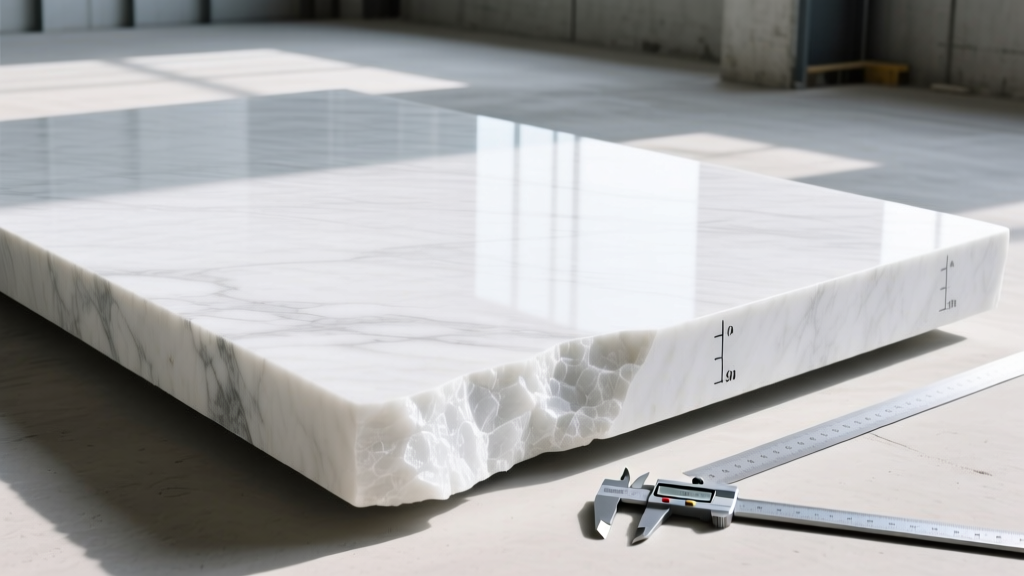
Mineralogical Composition and Structural Baseline
The structural performance of white granite is dictated by its precise mineralogical ratios. Unlike monochromatic black granites (which are often gabbro or norite), true white granites—such as Kashmir White, Alaska White, and River White—are felsic intrusive igneous rocks. They typically consist of 20% to 60% quartz, abundant alkali feldspar (orthoclase), and plagioclase, with minor amounts of muscovite or biotite mica. The white and gray coloration is primarily derived from the feldspar and quartz matrix.
From a performance standpoint, the quartz content provides exceptional abrasion resistance and surface hardness (ranking 6-7 on the Mohs scale). However, the presence of mica introduces natural cleavage planes. In varieties like Kashmir White, higher concentrations of biotite mica and trace garnets can create micro-fissures that slightly reduce overall tensile strength compared to denser, fine-grained white granites like Colonial White. Understanding these mineralogical nuances is critical for structural engineers and fabricators specifying white granite for high-load or exterior applications.
ASTM C615 Physical Property Requirements vs. Field Data
For any dimension stone used in commercial or structural residential construction, compliance with ASTM C615 (Standard Specification for Granite Dimension Stone) is the baseline requirement. This standard establishes the minimum physical thresholds that the stone must meet to be classified as structural granite.
- Compressive Strength: Minimum 19,000 psi (131 MPa)
- Modulus of Rupture: Minimum 1,500 psi (10.3 MPa)
- Water Absorption: Maximum 0.40% by weight
- Abrasion Resistance: Minimum 25 Ha
- Density: Minimum 162 lbs/ft³ (2595 kg/m³)
Key Physical Properties Matrix
While ASTM sets the minimums, premium white granites frequently exceed these baselines. The table below contrasts the ASTM minimums with typical tested averages for high-grade white granite quarried for the North American market.
| Physical Property | ASTM C615 Minimum | Typical White Granite Average | Test Method |
|---|---|---|---|
| Compressive Strength | 19,000 psi | 22,500 - 26,000 psi | ASTM C170 |
| Modulus of Rupture | 1,500 psi | 1,800 - 2,200 psi | ASTM C880 |
| Water Absorption | 0.40% | 0.15% - 0.28% | ASTM C97 |
| Abrasion Resistance | 25 Ha | 38 - 45 Ha | ASTM C241 |
| Bulk Specific Gravity | 2.60 | 2.65 - 2.72 | ASTM C97 |
Flexural Strength and Overhang Limitations
The Modulus of Rupture (flexural strength) is the most critical metric for countertop fabricators and architects designing cantilevered surfaces. White granite's crystalline structure makes it rigid but brittle; it will not bend or deflect significantly before reaching its failure point.
When specifying white granite for kitchen islands, bar tops, or commercial reception desks, unsupported overhang limits must be strictly adhered to based on the slab thickness. Exceeding these limits without mechanical support (corbels, steel brackets, or routed aluminum channels) risks catastrophic tensile failure.
Maximum Unsupported Overhang Guidelines
- 2cm (3/4-inch) Thickness: Maximum unsupported overhang is 6 inches. Any extension beyond this requires concealed steel support brackets anchored to the cabinetry framing, spaced no more than 24 inches apart.
- 3cm (1-1/4-inch) Thickness: Maximum unsupported overhang is 10 to 12 inches, depending on the specific flexural test data of the slab batch. For overhangs exceeding 12 inches, a structural sub-top (typically 3/4-inch plywood or aluminum honeycomb) must be bonded to the underside, or heavy-duty corbels must be installed.
- Post-Formed Edges: If a 2cm slab is built up to appear 3cm at the edge, the structural integrity remains that of a 2cm slab. Overhang limits for the built-up profile must still follow the 2cm (6-inch) rule.
Porosity, Absorption, and Stain Susceptibility
Despite its low water absorption rate (typically under 0.25%), white granite is not entirely impervious. The feldspar and quartz matrix contains microscopic capillary networks. In white granites, stain visibility is a primary concern; while dark granites can mask minor oil or tannin penetration, white granites will immediately highlight organic stains, rust, or chemical etching.
Factory Resining Protocols: Over 90% of commercial white granite slabs undergo epoxy or polyester resining at the quarry. This process involves heating the slab, applying a penetrating resin, and curing it under UV light to fill natural micro-fissures and pits. Fabricators must verify that the resin used is UV-stable; older, non-UV-stable resins can yellow over time, severely compromising the aesthetic of white stone.
Sealer Chemistry and Application
For long-term stain resistance, penetrating sealers are mandatory. Solvent-based acrylic sealers should be avoided on white granite, as they can leave a yellowish residue in the stone's pores. Instead, specify fluoropolymer or siloxane-based impregnators. These molecules are small enough to penetrate the dense crystalline structure of the granite and create a hydrophobic barrier without altering the stone's optical properties. Reapplication intervals depend on traffic, but high-quality siloxane sealers typically require reapplication only every 3 to 5 years in residential settings.
Thermal Shock and Exterior Cladding Viability
White granite is highly rated for exterior dimension stone applications, including ventilated facades and paving. Its low porosity translates to excellent freeze-thaw durability. When tested under ASTM C666 (Standard Test Method for Resistance of Concrete to Rapid Freezing and Thawing, adapted for stone), high-density white granites exhibit negligible mass loss and dynamic modulus reduction after 300+ cycles.
However, thermal shock resistance varies based on the slab's mineral homogeneity. Slabs with large, concentrated feldspar phenocrysts (large visible crystals, common in Alaska White) are slightly more susceptible to thermal spalling under extreme, localized heat (such as concentrated solar reflection from adjacent low-E glass) compared to fine-grained varieties. For exterior cladding in high-solar-exposure zones, specify a thermal (flamed) or bush-hammered finish rather than a polished finish; the textured surface dissipates heat more effectively and hides potential micro-spalling.
Exterior Anchoring Specifications
For exterior veneer installations, mechanical anchoring is non-negotiable. Adhesive-only installations are prohibited by modern building codes for stone exceeding 10 lbs/ft². Standard anchoring systems for 3cm white granite panels include:
- Kerf Slots: Minimum 1/8-inch wide, 1/2-inch deep slots cut into the top and bottom edges, engaging with stainless steel (Type 304 or 316) clips.
- Dowel Pins: 1/4-inch diameter stainless steel pins set in epoxy grout within drilled holes at the panel joints.
- Undercut Anchors: For high-wind load zones, undercut mechanical anchors provide the highest pull-out resistance, utilizing the compressive strength of the granite rather than its edge tensile strength.
Quality Assurance and Sourcing Verification
Procuring white granite for large-scale commercial projects requires rigorous quality assurance. Visual inspection alone is insufficient to verify structural integrity. Project specifications should mandate that the supplier provide a Mill Test Report (MTR) or third-party laboratory certification confirming compliance with ASTM C615 for the specific block or lot being supplied.
Furthermore, sustainability and traceability have become critical in modern construction specifications. Referencing the ANSI/NSI 373 Sustainable Production of Natural Dimension Stone standard ensures that the white granite is quarried using environmentally responsible water management, chain-of-custody documentation, and safe labor practices. Specifying NSI 373-certified stone not only guarantees a higher baseline of quality control but also contributes to LEED v4.1 and BREEAM material sourcing credits.