Concrete Deck Blocks Maintenance: Cleaning, Sealing, and Re-Leveling Playbook
Master concrete deck blocks maintenance with this cleaning and sealing playbook. Learn to remove efflorescence, mitigate frost heave, and apply siloxane sealers.
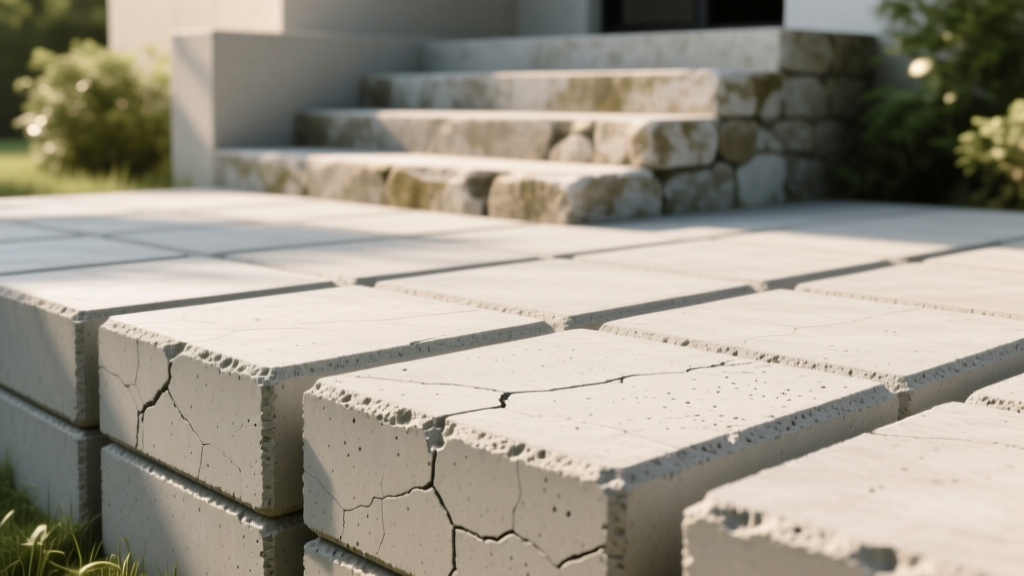
The Degradation Mechanics of Precast Deck Blocks
Precast concrete deck blocks are unreinforced, air-entrained structural nodes designed to transfer dead and live loads from floating decks directly into the soil. Typically measuring 10x10x10 or 12x12x12 inches and weighing between 50 and 70 pounds, these blocks are manufactured with a compressive strength of 3,000 to 4,000 PSI. However, because they sit precisely at the soil-air interface, they are subjected to a unique dual-threat environment: capillary moisture wicking from the subgrade below, and aggressive freeze-thaw cycling from the atmosphere above.
Without a rigorous maintenance and cleaning playbook, the porous nature of the concrete matrix allows water infiltration. When this water freezes, it expands by 9%, generating internal tensile stresses that exceed the concrete's capacity, leading to micro-cracking, spalling, and eventual structural failure. According to the Portland Cement Association, proper air-entrainment and surface moisture management are the only reliable defenses against this freeze-thaw degradation.
Diagnostic Matrix: Identifying Surface and Structural Failures
Before applying any chemical cleaners or structural jacks, conduct a thorough diagnostic assessment of your deck blocks. Use the following matrix to identify the root causes of visible degradation.
| Symptom | Root Cause | Severity & Action Required |
|---|---|---|
| White, powdery surface crust | Efflorescence (calcium carbonate deposits migrating to the surface) | Moderate. Requires acid washing and subsequent sealing to halt moisture migration. |
| Green/black slimy film on shaded sides | Biological growth (algae, mildew, lichen) thriving in damp, low-UV conditions | Low to Moderate. Creates slip hazards and retains moisture against the concrete face. |
| Flaking, peeling, or pitting of the top surface | Spalling caused by freeze-thaw cycles or the use of non-breathable acrylic sealers | High. Indicates structural compromise of the bearing surface. Requires patching or replacement. |
| Deck joist no longer resting flush in the block notch | Differential settlement or frost heave altering the block's plumb and level | High. Requires immediate mechanical re-leveling and subgrade base correction. |
The Cleaning Playbook: Chemical and Mechanical Protocols
Cleaning concrete deck blocks is not merely an aesthetic exercise; it is a preparatory requirement for waterproofing. Sealers will not bond to concrete that is contaminated with biological matter, dirt, or mineral salts.
Protocol A: Eradicating Biological Growth
Algae and lichen secrete mild acids that slowly etch the concrete surface, increasing its porosity. Avoid using standard pressure washers on deck blocks, as the high-velocity water stream can erode the cement paste and expose the aggregate, creating a rough surface that traps more dirt in the future.
- The Oxygen Bleach Method (Preferred): Mix 1 cup of powdered oxygen bleach (sodium percarbonate) per gallon of warm water. Apply generously to the block using a pump sprayer. Allow a 15-minute dwell time to break down the cellular structure of the algae, then agitate with a stiff nylon-bristle brush. Rinse with a standard garden hose. This method is safe for surrounding vegetation and pressure-treated lumber joists.
- The Sodium Hypochlorite Method (Heavy Infestations): For severe black mold, use a 50/50 mix of household bleach (5.25% sodium hypochlorite) and water. Add one ounce of liquid dish soap as a surfactant to help the solution cling to vertical block faces. Dwell time should not exceed 10 minutes. Warning: Pre-wet all surrounding soil and plants with plain water to prevent chlorine burn.
Protocol B: Dissolving Efflorescence
Efflorescence occurs when water-soluble calcium hydroxide within the concrete migrates to the surface and reacts with atmospheric carbon dioxide to form insoluble calcium carbonate. Wire brushing is ineffective and will only polish the deposits into the pores.
- Dry Brush: Remove loose, powdery deposits with a dry, stiff-bristle brush.
- Acid Application: Use a diluted phosphoric acid or muriatic acid solution. For standard efflorescence, a 1:10 ratio of muriatic acid to water is sufficient. Always add acid to water, never water to acid.
- Neutralization: Apply the acid solution, agitate lightly, and allow it to fizz for 3 to 5 minutes. Neutralize the surface immediately by spraying a solution of 1 cup baking soda per gallon of water, followed by a thorough water rinse.
For comprehensive guidance on masonry cleaning agents and safety protocols, refer to the University of Minnesota Extension guidelines on concrete maintenance.
Structural Maintenance: Mitigating Frost Heave and Settlement
Because concrete deck blocks are "floating" foundations, they are not anchored below the frost line. In climates where the ground freezes, moisture in the soil expands, gripping the sides of the concrete block and lifting it—a phenomenon known as adfreezing or frost heave. When the soil thaws, the block may not settle back into its original position, resulting in an uneven deck.
Step-by-Step Re-Leveling Procedure
If a deck block has settled or heaved more than 1/4 inch out of level, it must be mechanically corrected.
- Support the Load: Place a 20-ton hydraulic bottle jack on a stable piece of 3/4-inch plywood adjacent to the affected block. Use a 4x4 timber as a lifting beam against the deck joist.
- Lift the Joist: Pump the jack until the joist is lifted exactly 1/2 inch above the settled concrete deck block, relieving all downward pressure.
- Correct the Subgrade: Remove the deck block. Excavate the displaced soil or degraded gravel beneath it. Tamp the subgrade with a hand tamper, then add fresh 3/4-inch crushed angular gravel, compacting it in 2-inch lifts until the original grade height is restored.
- Reset and Lower: Place the deck block back onto the compacted gravel, ensuring the notch is perfectly aligned with the joist. Slowly release the hydraulic jack, allowing the joist to seat firmly back into the block's notch.
Sealing Strategies: Silane/Siloxane Penetrants vs. Film-Formers
Applying a sealer to concrete deck blocks is the most effective way to halt the freeze-thaw degradation cycle. However, selecting the wrong chemistry will accelerate failure. Film-forming sealers (like acrylics and epoxies) create a plastic-like barrier on the surface. While they block liquid water from entering, they also trap water vapor inside the concrete. When the sun heats the block, the trapped vapor expands, causing the acrylic film to blister and peel, taking the top layer of concrete with it.
The Superior Choice: Silane/Siloxane Water Repellents
Penetrating silane/siloxane sealers react chemically with the free lime and alkalis in the concrete to form a hydrophobic resin within the pore structure. They do not alter the surface appearance or traction, and they allow the concrete to "breathe," letting internal moisture vapor escape while repelling liquid water.
| Sealer Type | Molecule Size | Penetration Depth | Best Use Case for Deck Blocks | Recommended Product Example |
|---|---|---|---|---|
| Silane | Very Small | Deep (up to 3/8 inch) | Dense, high-strength concrete; vertical faces exposed to driving rain. | Prosoco Siloxa-Tek 8500 |
| Siloxane | Medium | Subsurface (1/8 to 1/4 inch) | Standard precast deck blocks; horizontal bearing surfaces and notches. | Foundation Armor SX5000 WB |
| Acrylic (Film) | N/A (Surface) | Zero (Surface only) | Avoid. Traps moisture, causes spalling in freeze-thaw climates. | N/A |
Application Specifics: Apply siloxane sealers using a low-pressure pump sprayer. The concrete must be completely dry (minimum 48 hours after cleaning) and the ambient temperature must be above 50°F. Apply two coats wet-on-wet. Standard coverage rates are approximately 175 square feet per gallon. Because a standard 12-inch deck block has roughly 4 square feet of surface area, one gallon of sealer will protect over 40 individual blocks.
Annual Maintenance Calendar
To maximize the lifespan of your floating deck foundation, adhere to this seasonal maintenance schedule:
- Early Spring (Post-Thaw): Inspect all blocks for frost heave. Run a string line across the deck joists to check for level. Re-level any blocks that have shifted more than 1/4 inch using the hydraulic jack protocol.
- Late Spring: Inspect the 3/4-inch gravel base. Rake away any wind-blown topsoil or organic debris that has accumulated around the base of the blocks, as this material retains moisture and promotes biological growth.
- Mid-Summer: Perform the biological cleaning protocol (oxygen bleach) on any blocks showing early signs of algae or mildew. This is also the optimal time to apply penetrating siloxane sealers, as the concrete is thoroughly dried out from summer heat.
- Late Autumn: Clear all fallen leaves and organic matter from the deck surface and the ground beneath it. Ensure water drainage paths are clear so that winter meltwater flows away from the deck block footprint, minimizing the risk of adfreezing and frost heave.