How Much Did the Biltmore Estate Cost to Build? Modern Comparison
Discover how much the Biltmore Estate cost to build in 1895 and compare its historical construction expenses to modern luxury home building costs.

The Original Price Tag: Biltmore’s 1895 Construction Costs
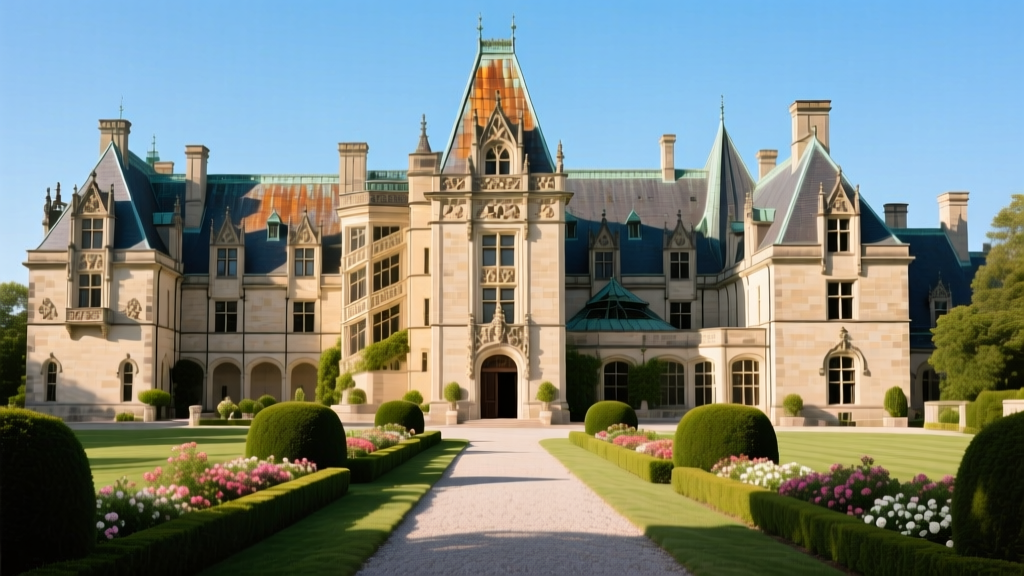
When George Washington Vanderbilt II commissioned architect Richard Morris Hunt to design his Asheville, North Carolina retreat, the project redefined American residential construction. To answer the core historical question: how much did the Biltmore Estate cost to build? The widely accepted figure for the house's construction is approximately $6 million in 1895 dollars. This figure covered the 178,926-square-foot main residence, excluding the broader 125,000-acre land acquisition and the extensive landscape architecture executed by Frederick Law Olmsted.
- Total Floor Area: 178,926 sq. ft. (250 rooms)
- Original Build Cost: ~$6,000,000 (House only)
- Cost Per Square Foot (1895): $33.53
- Construction Timeline: 6 years (1889–1895)
- Primary Exterior Material: Indiana Bedford Limestone
According to official Biltmore historical archives, the $6 million budget was astronomical for the era. For context, the average American home in 1895 cost between $2,000 and $5,000 to build. Vanderbilt’s project required a dedicated on-site brickyard, a private railway spur for material transport, and a temporary village to house the hundreds of European and American artisans hired for the stone carving and woodworking.
Adjusting for Inflation: The Biltmore Estate Cost in Today's Dollars
Estimating historical construction costs requires separating general Consumer Price Index (CPI) inflation from construction-specific inflation. The Engineering News-Record (ENR) Construction Cost Index tracks material and labor volatility much more accurately than standard CPI calculators.
| Cost Metric | 1895 Value | 2026 CPI Equivalent | 2026 Reconstruction Cost |
|---|---|---|---|
| Total House Construction | $6,000,000 | $215,000,000 | $1.2B - $1.5B |
| Cost Per Square Foot | $33.53 | $1,201 | $6,700 - $8,380 |
| Indiana Limestone (Per Ton) | $12 - $15 | $450 | $1,800 - $2,500 (Quarried & Dressed) |
| Artisan Stone Carver (Daily Wage) | $4.00 | $143 | $800 - $1,200 (Specialty Union) |
While a standard CPI calculator suggests $6 million in 1895 equals roughly $215 million today, this is a severe underestimation for luxury construction. As detailed in Smithsonian Magazine's architectural analysis of the estate, the sheer volume of hand-carved materials makes modern replication nearly cost-prohibitive. A true 1:1 replica using identical old-growth timber and hand-chiseled limestone would exceed $1.5 billion in 2026.
Material & Labor Breakdown: Then vs. Now
Masonry and Indiana Limestone
The Biltmore House is clad in Indiana Bedford limestone, chosen for its fine grain and durability. In the 1890s, stone was quarried using channeling machines and hand-split, then shipped via rail directly to the site. Today, environmental regulations, diesel transport costs, and the scarcity of skilled stone dressers have driven the installed cost of custom-cut limestone facades to over $120 per square foot, compared to the pennies-per-square-foot equivalent Vanderbilt paid.
Timber and Framing
The estate utilized old-growth white pine and oak. Modern building codes and structural engineering standards require steel reinforcement or engineered lumber (like LVL or Glulam beams) for spans of this magnitude. Sourcing authentic old-growth timber today requires specialized salvage operations, pushing material costs up by 400% to 600% compared to modern kiln-dried framing lumber.
Skilled Artisan Labor
"The true cost multiplier in Gilded Age architecture wasn't the raw material; it was the uninterrupted access to thousands of specialized artisans. Today, finding a single master plasterer capable of executing a 40-foot coffered ceiling requires international sourcing and premium union contracts."
What It Would Cost to Build the Biltmore Today (2026 Estimates)
When modern cost estimators evaluate mega-mansions, they divide the budget into hard costs (materials/labor) and soft costs (architectural fees, engineering, permitting). Using data benchmarked against RSMeans luxury construction indices, here is how a modern equivalent would be priced.
The 'Replica' Cost vs. 'Equivalent Luxury' Cost
- Exact Historical Replica ($1.5B+): Requires importing European stonemasons, custom-milling 19th-century profile moldings, and bypassing modern energy codes to maintain historical accuracy in window glazing and wall insulation.
- Modern Equivalent Luxury ($250M - $350M): Building a 178,000 sq. ft. home using modern luxury standards (cast stone instead of solid limestone, CNC-routed millwork instead of hand-carved, high-efficiency HVAC hidden in chases). This yields a cost of roughly $1,400 to $1,900 per square foot, aligning with current ultra-luxury builds in markets like Beverly Hills or Aspen.
For a project of this scale, soft costs (architectural design, structural engineering, historical consulting, and environmental impact studies) typically consume 25% to 35% of the total budget. On a $300M build, expect to allocate $75M+ before ground is even broken.
Lessons for Modern Luxury Construction Estimating
Analyzing the Biltmore Estate provides critical frameworks for modern cost estimators handling high-net-worth residential projects:
- Logistics Dictate Budget: Vanderbilt built a private rail spur. Modern mega-builds often require temporary access roads, heavy-duty crane pads, and on-site batch plants for concrete. Site logistics can add 8-12% to hard costs.
- Material Substitution is Mandatory: True old-growth timber and hand-carved stone are financially unviable for 99% of modern builds. Estimators must master the art of specifying high-fidelity alternatives like GFRC (Glass Fiber Reinforced Concrete) for ornate facades.
- Labor Scarcity Multipliers: Always apply a 15-20% labor premium for specialty trades (plasterers, slate roofers, custom metalworkers) in rural or semi-rural locations, as these crews must be relocated and housed during the multi-year build cycle.
Frequently Asked Questions
Did George Vanderbilt go bankrupt building the estate?
No. While the $6 million construction cost was massive, Vanderbilt’s inheritance was approximately $13 million. However, the ongoing maintenance and operational costs of the 125,000-acre estate quickly depleted his liquid assets, forcing his descendants to open the house to tourists in 1930 to fund its upkeep.
How does Biltmore's cost per square foot compare to modern mansions?
Adjusted for standard CPI, Biltmore cost about $1,200 per square foot in today's money. Modern ultra-luxury homes (over 20,000 sq. ft.) typically range from $1,500 to $3,500 per square foot. Biltmore's historical CPI-adjusted cost is surprisingly lower than modern equivalents, primarily due to the vastly cheaper skilled labor and unregulated material extraction of the 1890s.
What was the most expensive single component of the original build?
The interior finishing and imported European furnishings ultimately rivaled the structural shell in cost. The custom-woven tapestries, imported marble fireplaces, and hand-forged ironwork required extensive overseas shipping and customs duties, which were largely unrecorded in the primary domestic construction ledgers.
Written by
Marcus ChenMarcus Chen is a licensed structural engineer (PE) and building materials analyst with over 12 years of experience across residential, commercial, and industrial construction. He holds a Master of Science in Civil Engineering from UC Berkeley and spent six years at Thornton Tomasetti before transitioning to independent consulting and technical writing. Marcus specializes in material selection for seismic-prone regions, concrete reinforcement strategies, and lifecycle cost analysis. His work has been cited by the American Concrete Institute (ACI) and the Structural Engineers Association of California (SEAOC). When he is not on a job site or at his desk, you will find him hiking the Sierra Nevada or restoring a 1920s craftsman bungalow in Oakland, CA.
More from Marcus Chen
View all
Construction Cost
How Much Did the Eiffel Tower Cost to Build?
How much did the Eiffel Tower cost to build in 1889? We adjust for inflation and compare its budget to modern skyscraper construction.
Aug 4, 2026

Fire Resistance
What Is a Fire Resistant Material? Testing & Certification Guide
Discover what is a fire resistant material through ASTM and UL testing. Learn how fire ratings, certifications, and assemblies work in construction.
Aug 4, 2026

Construction Cost
How Much Did the Burj Khalifa Cost to Build?
How much did the Burj Khalifa cost to build? We break down the $1.5B project and extract 5 money-saving strategies for your next build.
Jul 30, 2026