What Is a Fire Resistant Material? Testing & Certification Guide
Discover what is a fire resistant material through ASTM and UL testing. Learn how fire ratings, certifications, and assemblies work in construction.

- Accredited laboratories evaluate construction materials against thermal benchmarks to assign fire-resistance ratings.
- Major testing facilities include Underwriters Laboratories (UL Solutions), FM Global, and Intertek Group.
- Standard testing involves exposing 250-millimeter samples to 1,000 degrees Celsius for up to 120 minutes.
Core Testing Methodologies
Laboratories fire classification testing construction materials involves accredited facilities evaluating building products against standardized thermal benchmarks to assign official fire-resistance ratings. This rigorous process ensures structural integrity and limits flame spread during a blaze. This guide is designed for material manufacturers, architects, and compliance officers navigating the 2026 building code landscape.
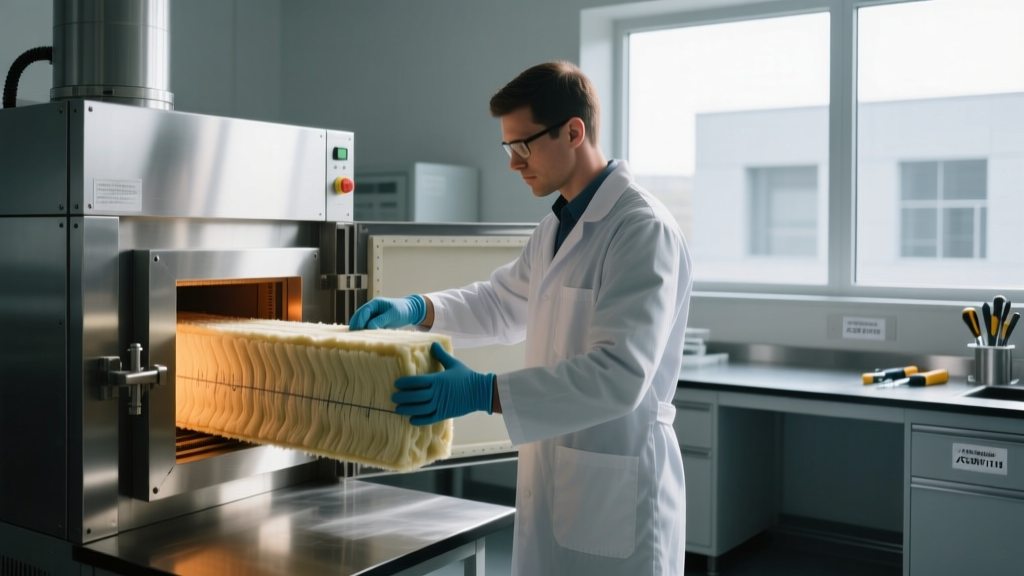
Evaluators place building assemblies inside specialized furnaces. The temperature is rapidly elevated to 1,000 degrees Celsius to simulate a severe structural fire. Technicians monitor the assembly for a duration of 120 minutes to measure heat transmission and structural degradation.
Leading Accredited Testing Laboratories
Manufacturers must partner with recognized facilities to ensure global code acceptance. These organizations maintain strict calibration protocols and employ specialized fire protection engineers.
Underwriters Laboratories (UL Solutions)
UL Solutions operates massive testing campuses capable of evaluating multi-story wall assemblies. They provide comprehensive certification marks that are universally accepted by municipal building authorities across North America.
FM Global
FM Global focuses heavily on industrial and commercial roofing and wall systems. Their testing protocols emphasize real-world property loss prevention, often exceeding baseline municipal code requirements for large-scale facilities.
Intertek Group
Intertek Group provides rapid-turnaround testing for interior finishes and specialized coatings. They maintain a global network of ISO/IEC 17025 accredited laboratories, facilitating international market access for material manufacturers.
Understanding Fire Classification Standards
Global building codes rely on specific frameworks to categorize material performance. Understanding these definitions is critical for product specification and architectural compliance.
Fire Resistance Rating
A Fire Resistance Rating is the duration, measured in minutes or hours, that a material or assembly can withstand a standardized fire exposure while maintaining its structural integrity and limiting heat transfer. This metric dictates where specific products can be legally installed within commercial and residential building codes.
Surface Burning Characteristics
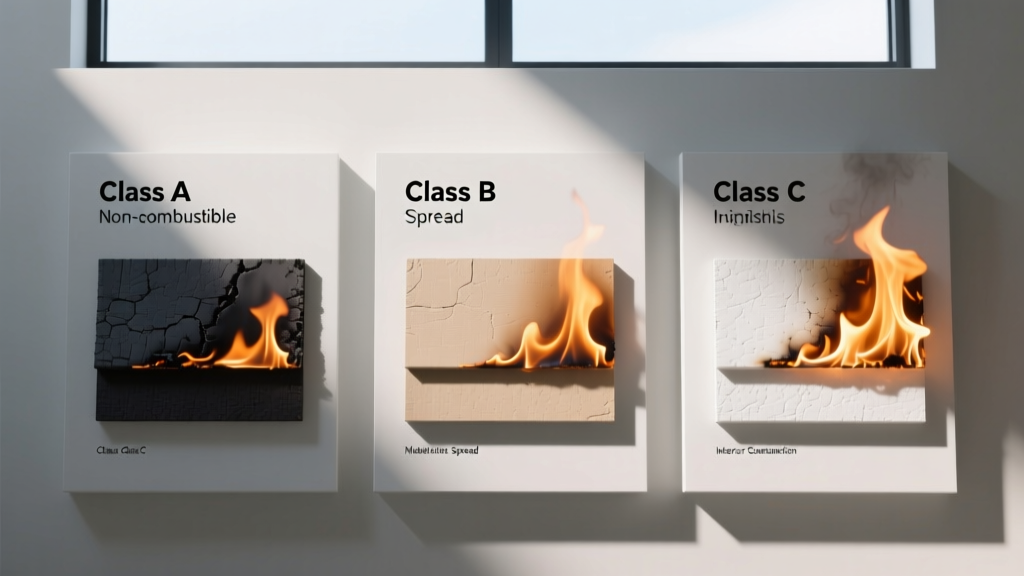
Surface Burning Characteristics describe how quickly flames spread across the exposed face of a building material and the amount of smoke generated during combustion. Evaluators measure these traits using standardized tunnel tests to assign a Class A, B, or C interior finish rating for life safety compliance.
Material Certification Readiness Checklist
Use this framework to prepare your product line before submitting samples to an accredited testing facility.
| Preparation Step | Requirement | Status |
|---|---|---|
| Sample Fabrication | Produce 250-millimeter thick representative prototypes | Pending |
| Documentation | Compile chemical composition and density data sheets | Pending |
| Standard Selection | Identify target ASTM International or EN standards | Pending |
| Budget Allocation | Secure $15,000 USD for comprehensive test battery | Pending |
Frequently Asked Questions
How are construction materials tested for fire resistance?
Construction materials are tested by exposing them to controlled, high-heat furnace environments that simulate real building fires. Sensors measure structural load-bearing capacity, heat transfer rates, and flame penetration over a specified timeframe to determine the material's endurance limit.
What are the fire rating classifications for building materials?
Building materials are classified into structural fire-resistance ratings (measured in hours, such as 1-hour or 2-hour assemblies) and surface burning characteristics (Class A, B, or C based on flame spread and smoke development indices).
Which laboratories are accredited for fire testing construction materials?
The primary accredited laboratories include Underwriters Laboratories (UL Solutions), FM Global, Intertek Group, and SGS. These facilities maintain ISO/IEC 17025 accreditation, ensuring their testing methodologies meet international precision standards.
Next Steps for Material Certification
Selecting the right facility for laboratories fire classification testing construction materials guarantees your products meet stringent 2026 safety codes. Your next step is to compile your material specifications and submit a preliminary scoping request to an ISO/IEC 17025 accredited laboratory to initiate the 45-day certification timeline.
Written by
Marcus ChenMarcus Chen is a licensed structural engineer (PE) and building materials analyst with over 12 years of experience across residential, commercial, and industrial construction. He holds a Master of Science in Civil Engineering from UC Berkeley and spent six years at Thornton Tomasetti before transitioning to independent consulting and technical writing. Marcus specializes in material selection for seismic-prone regions, concrete reinforcement strategies, and lifecycle cost analysis. His work has been cited by the American Concrete Institute (ACI) and the Structural Engineers Association of California (SEAOC). When he is not on a job site or at his desk, you will find him hiking the Sierra Nevada or restoring a 1920s craftsman bungalow in Oakland, CA.
More from Marcus Chen
View all
Construction Cost
How Much Did the Eiffel Tower Cost to Build?
How much did the Eiffel Tower cost to build in 1889? We adjust for inflation and compare its budget to modern skyscraper construction.
Aug 4, 2026

Construction Cost
How Much Did the Burj Khalifa Cost to Build?
How much did the Burj Khalifa cost to build? We break down the $1.5B project and extract 5 money-saving strategies for your next build.
Jul 30, 2026

Construction Cost
Cost to Build a Race Track: Full Breakdown
How much does it cost to build a race track? From 1/4-mile karting circuits to FIA-grade road courses—material and labor pricing.
Jul 30, 2026