How Much Does It Cost to Build a Cell Tower? 2026 Regional Guide
Discover how much it costs to build a cell tower in 2026. Explore regional price variations, material costs, and hidden fees for monopole and stealth towers.

The Baseline: How Much Does It Cost to Build a Cell Tower?
Telecommunications infrastructure remains one of the most capital-intensive construction sectors. When developers and landowners ask how much does it cost to build a cell tower, the answer depends heavily on tower typology, geotechnical conditions, and regional labor markets. In 2026, the national average for a standard 150-foot monopole tower ranges between $220,000 and $350,000. However, urban stealth towers designed to bypass strict municipal zoning can easily exceed $750,000, while rural guyed masts supported by federal broadband subsidies may cost as little as $140,000.
Understanding these costs requires moving beyond surface-level averages. Tower construction involves specialized structural steel, deep foundation engineering, and highly regulated rigging operations. Below is a comprehensive regional price analysis and structural cost breakdown for modern macro-cell sites.
• Rural Guyed Mast: $140,000 - $200,000
• Standard Monopole (Suburban): $220,000 - $350,000
• Lattice / Self-Supporting: $250,000 - $400,000
• Stealth / Concealed (Urban): $450,000 - $850,000+
Core Cost Drivers: Where the Budget Goes
Building a cell tower is not simply about erecting steel; it is an exercise in managing specialized materials and regulatory compliance. The budget is typically divided into five primary phases.
1. Structural Steel and Galvanization
The tower shaft itself accounts for roughly 25% to 35% of the total hard costs. Modern monopoles are fabricated using high-strength, low-alloy steel, typically ASTM A572 Grade 50, which provides the necessary yield strength to withstand extreme wind shear and ice loading. To prevent corrosion, all structural components must be hot-dip galvanized to ASTM A123 standards. In 2026, fluctuating global steel indices and domestic tariffs have pushed raw material costs for a 150-foot, 30-ton monopole to between $85,000 and $130,000, delivered to the site.
2. Geotechnical Engineering and Foundations
The foundation transfers the immense overturning moments of the tower into the earth. A standard monopole requires a massive reinforced concrete pedestal, often utilizing 5,000 PSI compressive-strength concrete and epoxy-coated rebar. If soil borings reveal expansive clay or high water tables, engineers must design deep pile foundations driven to bedrock, which can double the foundation budget from $40,000 to over $90,000.
3. Specialized Rigging and Labor
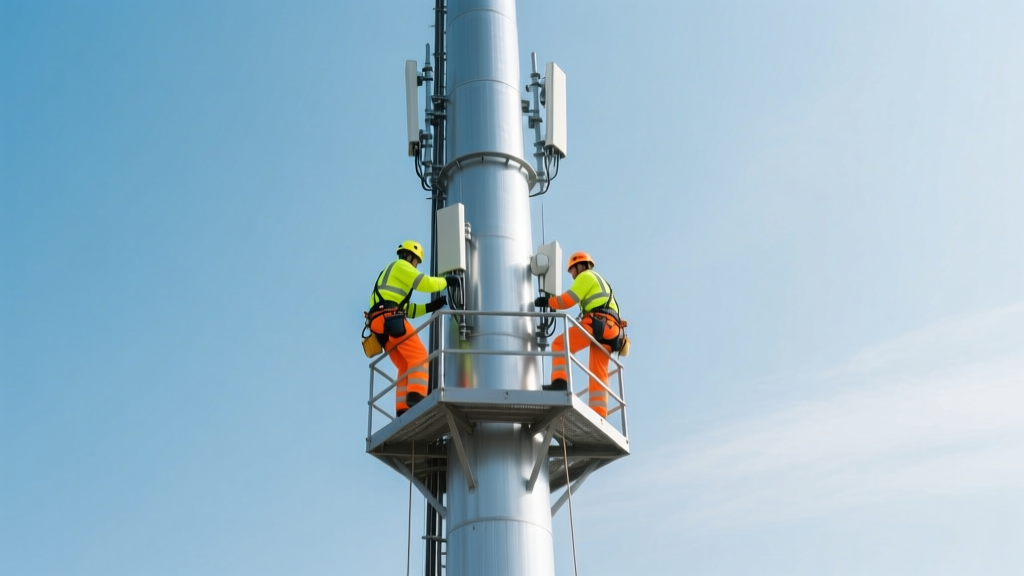
Tower erection is inherently dangerous and heavily regulated. OSHA's communications tower safety guidelines mandate strict adherence to hoisting, fall protection, and rigging standards. Certified tower climbers and crane operators command premium wages. A typical erection crew will cost between $60,000 and $110,000 for a two-to-three-week build schedule, factoring in per diem, heavy crane rentals (often 300-ton hydraulic cranes), and specialized insurance.
Regional Price Analysis: 2026 Breakdown
Geography dictates not only labor rates but also environmental engineering requirements. A tower built in Florida must survive Category 5 hurricane wind loads, while a tower in California requires rigorous seismic structural analysis. The following matrix illustrates how regional variables impact total capital expenditure.
| Region | Primary Cost Drivers | Typical Tower Type | Estimated Total Cost |
|---|---|---|---|
| Northeast | Union labor rates, strict zoning (stealth mandates), rocky soil blasting. | Stealth Pine / Flagpole | $400,000 - $800,000 |
| Midwest | Deep frost-line foundations (4-6 ft), favorable soil, lower labor costs. | Standard Monopole | $180,000 - $280,000 |
| South / Gulf | Extreme wind-load engineering, thicker steel walls, hurricane-rated equipment shelters. | Heavy-Duty Monopole | $240,000 - $380,000 |
| West / Mountain | Seismic engineering, remote logistics, rock excavation, helicopter lifts. | Lattice / Self-Supporting | $300,000 - $550,000 |
Hidden Costs: Permitting, Zoning, and Environmental Compliance
Soft costs frequently derail cell tower budgets. Before a single yard of concrete is poured, developers must navigate a labyrinth of federal, state, and local regulations.
FCC and FAA Clearance
Any structure exceeding 200 feet above ground level, or situated near an airport, requires clearance. Developers must submit FAA Form 7460-1 (Notice of Proposed Construction) and subsequently register the structure via the FCC Antenna Structure Registration (ASR) portal. This process requires specialized RF and aeronautical engineering studies, adding $15,000 to $25,000 in soft costs.
Environmental and Historical Assessments
Under the National Environmental Policy Act (NEPA), tower sites must be evaluated for impacts on wetlands, endangered species habitats, and migratory bird corridors. If a site is flagged, developers may need to commission a Phase I Environmental Site Assessment or biological surveys, costing upwards of $12,000 and delaying construction by months. Furthermore, the USDA broadband initiatives often require strict environmental compliance for rural towers receiving federal grant funding.
Estimator's Warning: Never finalize a land lease or purchase agreement without a contingency clause tied to zoning and FAA clearance. Municipal zoning boards in suburban corridors frequently reject standard monopoles, forcing developers to pivot to stealth designs (e.g., faux water tanks or church steeples) which can increase structural costs by 150% due to the need for RF-transparent fiberglass shrouds.
Tower Typologies and Their Price Tags
Selecting the right structure is a balance of carrier payload requirements, wind-load tolerance, and local aesthetics.
- Monopole Towers (100 - 200 ft): The industry standard. Requires a small footprint (typically a 50x50 ft compound) and utilizes a single central shaft. Ideal for suburban highways and commercial zones. Cost multiplier: 1.0x (Baseline).
- Self-Supporting Lattice Towers (150 - 400 ft): Built with interlocking steel angles. Offers a wider profile, allowing multiple carriers to mount heavy microwave dishes and 5G massive MIMO arrays without overloading a single pole. Requires a larger land footprint but less concrete per ton of steel. Cost multiplier: 1.1x.
- Guyed Masts (300 - 1,000+ ft): Extremely slender towers stabilized by tensioned guy wires anchored to massive concrete deadmen. Highly cost-effective for rural AM/FM broadcast and rural broadband backhaul, but requires acres of clear land for the guy-wire radius. Cost multiplier: 0.6x.
- Stealth / Concealed Structures: Engineered to blend into the environment using RF-transparent materials like radome fiberglass or synthetic bark. The structural steel must support both the antenna payload and the heavy, wind-catching camouflage exterior. Cost multiplier: 2.0x to 3.5x.
Strategic Takeaways for Developers and Landowners
Estimating the cost to build a cell tower requires a localized approach. A $250,000 budget that comfortably funds a 150-foot monopole in Ohio will barely cover the geotechnical engineering and zoning legal fees for a stealth tower in Connecticut. For landowners evaluating lease offers, understanding the carrier's capital expenditure helps in negotiating fair market rent and collocation revenue shares. For developers, the key to margin preservation lies in early-stage geotechnical due diligence and securing municipal zoning variances before committing to structural steel fabrication.
Written by
James ThorntonJames Thornton is a construction industry veteran with 25 years of hands-on experience in wood framing, lumber grading, and residential building codes. He started as a framing carpenter in rural Oregon, earned his ICC Residential Building Inspector certification, and eventually became a senior plan reviewer for the City of Portland Bureau of Development Services. James holds a B.S. in Wood Science & Technology from Oregon State University and is a certified lumber grader through the West Coast Lumber Inspection Bureau (WCLIB). He has inspected over 3,000 residential construction sites and authored the city's internal guide on advanced framing techniques (2x6 at 24" O.C.). James lives in Bend, OR, where he builds custom timber-frame cabins and competes in lumberjack sports.
More from James Thornton
View all
Insulation
Best Home Insulation Materials: Complete 2026 Guide
Compare top home insulation materials for 2026. Find R-values, installed costs per square foot, and best uses for fiberglass, spray foam, and mineral wool.
Aug 4, 2026

Sustainable Building
Certify Your Green Building Material for LEED and WELL
Step-by-step guide to certifying a green building material for LEED v5 and WELL v2. Master EPDs, HPDs, and VOC limits for 2026 project specifications.
Aug 4, 2026

Stone & Masonry
Veneer Stacked Stone Panels: Interior Design & Style Showcase
Discover how veneer stacked stone panels transform interiors. Explore modern design profiles, material pairings, and technical installation specs.
Aug 4, 2026