How Much Does It Cost to Build a House in Colorado? Savings Guide
Learn how much it costs to build a house in Colorado and discover expert money-saving strategies to cut your construction budget without sacrificing quality.
The True Cost to Build a House in Colorado: Regional Breakdown
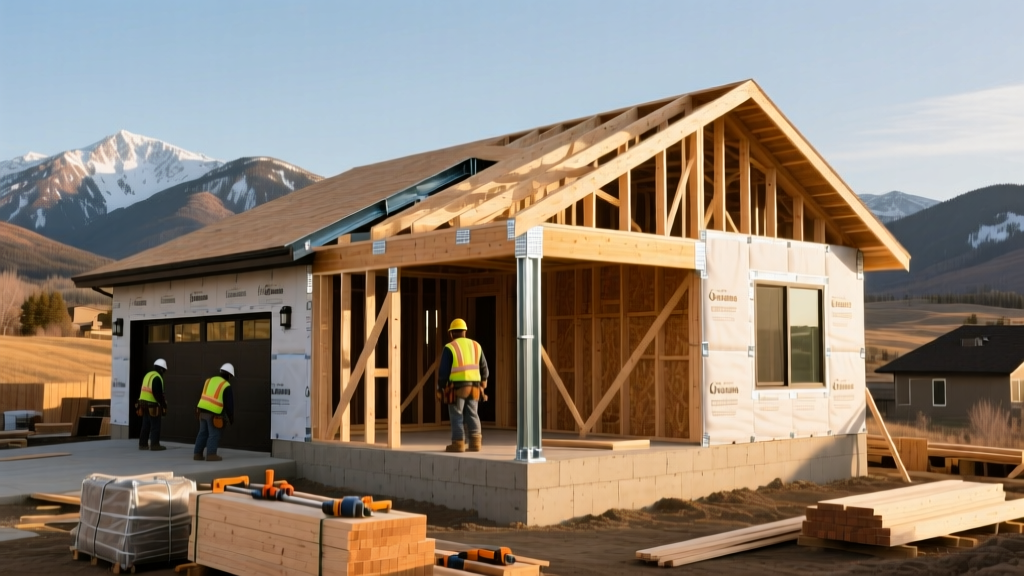
When calculating how much it costs to build a house in Colorado, you must account for extreme geographic and climatic variances. The state is essentially split into three distinct construction zones: the Front Range urban corridor, the Western Slope, and the high-altitude Mountain Resorts. According to regional construction data tracked by the U.S. Census Bureau, labor and material premiums in mountainous terrain can push costs up to 60% higher than the national average.
| Region | Avg. Cost Per Sq. Ft. (2026) | Estimated Cost for 2,500 Sq. Ft. Home | Primary Cost Drivers |
|---|---|---|---|
| Denver Metro / Front Range | $225 - $285 | $562,500 - $712,500 | Expansive soils, high labor demand |
| Colorado Springs / Pueblo | $190 - $240 | $475,000 - $600,000 | Wildfire mitigation codes, slope grading |
| Western Slope (Grand Junction) | $200 - $250 | $500,000 - $625,000 | Water rights, material transport |
| Mountain Resorts (Summit/Eagle) | $400 - $650+ | $1,000,000 - $1,625,000+ | Snow load engineering, short build seasons |
Where the Budget Bleeds: Hidden Colorado Construction Costs
Many out-of-state builders quote standard national averages, only to hit massive overruns during site prep. In Colorado, budget-killing surprises usually come from three sources: bentonite clay soils that require deep structural piers, Wildland-Urban Interface (WUI) mandates requiring Class A fire-rated exteriors, and heavy snow load engineering requiring reinforced roof trusses rated for 100+ PSF in alpine zones.
Understanding these localized variables is the first step in protecting your margin. The most effective money-saving strategies do not involve buying cheaper, lower-quality materials; instead, they require intelligent engineering substitutions and climate-specific system designs.
5 High-Impact Money-Saving Strategies for Colorado Builds
1. Engineer for Expansive Soils, Don't Just Excavate
The Front Range (particularly Douglas and Adams counties) is notorious for highly expansive bentonite soils that swell when wet and shrink when dry. The traditional, expensive fix is over-excavation—digging out 5 to 10 feet of native soil and replacing it with imported structural fill, which can cost $15,000 to $30,000. A highly effective money-saving alternative is utilizing a post-tensioned concrete slab or helical pier foundation system. Helical piers are screwed deep into the bedrock or stable strata below the active soil zone, bypassing the expansive clay entirely. This can reduce foundation costs by 20% to 30% while providing superior structural stability.
2. Right-Size HVAC with Cold-Climate Heat Pumps
Historically, Colorado homes relied on oversized natural gas furnaces. However, with the state's aggressive push toward electrification and updated energy codes, installing a cold-climate air-source heat pump is both an ecological and financial win. Models like the Mitsubishi SVZ Hyper-Heat or Bosch IDS 2.0 maintain 100% heating capacity at temperatures as low as -5°F. By pairing a heat pump with a well-sealed envelope, you eliminate the need for a separate central AC unit and a massive gas furnace. Furthermore, the Colorado Energy Office and local utilities like Xcel Energy offer substantial rebates for heat pump installations in 2026, effectively lowering your upfront mechanical costs by thousands of dollars.
3. Optimize the Envelope with SIPs in Mountain Zones
If you are building above 7,500 feet, traditional 2x6 stick framing with batt insulation is a financial liability. The labor shortage in mountain towns makes framing crews incredibly expensive, and achieving the required R-40+ wall values with stick framing requires double-studding or thick exterior rigid foam. Structural Insulated Panels (SIPs), manufactured by companies like Premier Building Systems, solve both problems. SIPs arrive pre-cut and insulated, allowing a small crew to dry in a house in days rather than weeks. The continuous insulation eliminates thermal bridging, drastically reducing your long-term heating bills and shrinking the size (and cost) of the HVAC system required to heat the home.
4. Navigate Wildland-Urban Interface (WUI) Codes Smartly
Building in a designated WUI zone mandates non-combustible exteriors. Many homeowners default to standing seam metal roofing and heavy timber, which can blow the exterior budget up by $40,000 or more. To save money while remaining strictly code-compliant, specify Class 4 impact-rated, Class A fire-rated architectural asphalt shingles, such as the Malarkey Vista AR. They cost a fraction of metal roofing but meet the strict fire and hail resistance requirements of Colorado mountain counties. For siding, utilize fiber cement boards (like James Hardie) with a non-combustible rain screen gap, which is significantly cheaper than masonry or steel siding while providing the required fire resistance.
5. Minimize Rock Blasting and Slope Retention
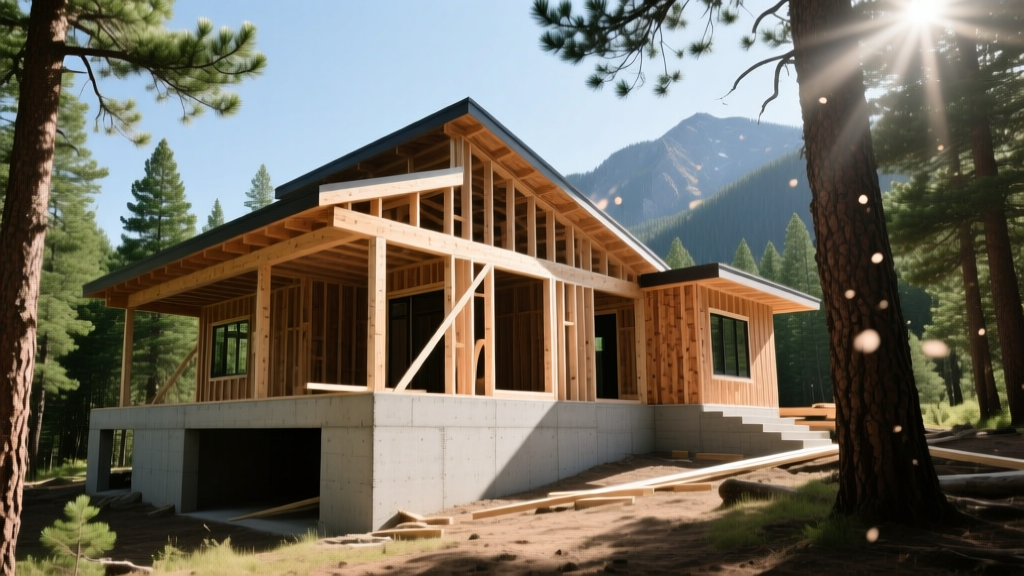
Site preparation in the foothills often involves hitting solid granite or sandstone. Rock blasting and mechanical hammering cost between $15 and $25 per cubic yard. If your lot requires a walk-out basement on a steep slope, you will also need massive engineered retaining walls, which can easily exceed $50,000. Save money by adapting the home's footprint to the natural topography. Opt for a crawlspace or slab-on-grade design that steps down with the slope, utilizing split-level architecture. This minimizes cut-and-fill earthwork, eliminates the need for massive retaining walls, and drastically reduces the volume of rock that needs to be blasted and hauled away.
Material Substitution Matrix: High-End vs. Budget-Smart
Strategic material selection is critical when figuring out how much it costs to build a house in Colorado. The table below outlines specific substitutions that maintain durability in harsh climates while preserving capital.
| Component | Premium Standard | Budget-Smart Alternative | Estimated Savings |
|---|---|---|---|
| Roofing | Standing Seam Metal ($18-$24/sq ft) | Class 4 Asphalt Shingles ($6-$9/sq ft) | $12,000 - $18,000 |
| Exterior Siding | Natural Cedar Shingles ($14-$18/sq ft) | Fiber Cement Lap ($8-$11/sq ft) | $9,000 - $12,000 |
| Decking | Exotic Hardwood / Ipe ($20-$25/sq ft) | Capped Composite ($12-$15/sq ft) | $4,000 - $6,000 |
| Windows | Aluminum-Clad Wood ($1,200+ per unit) | Fiberglass with Low-E3 ($700 per unit) | $10,000 - $15,000 |
The 80/20 Budgeting Framework for Colorado Builders
To maximize your investment, apply the 80/20 rule to your construction budget. Spend heavily on elements that protect the structure from Colorado's extreme environment, and save on cosmetic finishes that can be upgraded later.
- SPLURGE (The 20% that matters most): Geotechnical soil testing, deep foundation piers, high-performance window glazing (Low-E3 or Low-E4 for high-altitude UV protection), and continuous exterior insulation to prevent ice damming.
- SAVE (The 80% where you can cut): Interior trim profiles (use simple, modern flat-stock MDF instead of complex colonial wood mouldings), cabinet hardware, lighting fixtures, and flooring (use luxury vinyl plank in high-traffic/mudroom areas instead of hardwood, which dries out and cracks in Colorado's low winter humidity).
For more detailed data on national and regional building material trends and energy efficiency standards, consult the Department of Energy's building technology resources. By aligning your design with the state's unique geological and meteorological realities, you can significantly lower the cost to build a house in Colorado without compromising on structural integrity or thermal comfort.
Written by
Priya KapoorPriya Kapoor is a real estate market analyst and construction economics researcher with expertise in housing affordability, development feasibility, and infrastructure investment. She holds a Master of Regional Planning from Cornell University and previously worked as a senior analyst at CBRE's Investment Properties group, where she modeled returns for $4B in mixed-use development pipelines. Priya now runs an independent research practice advising developers, municipalities, and REITs on construction cost forecasting and market timing. She publishes the quarterly "BuildMat Market Pulse" report tracking material price indices across 12 commodity categories. Based in Austin, TX, Priya serves on the board of Habitat for Humanity Austin and is a marathon runner.
More from Priya Kapoor
View all
Construction Cost
Cost to Build a 1600 Sq Ft Home in 2026: Full Breakdown
Accurate 2026 cost to build a 1600 sq ft home—material, labor, and regional pricing breakdowns included. Plan your budget with real-time estimates.
Aug 11, 2026

Wood & Lumber
Name the Types of Wood for Pressure Treatment and Preservation
Learn how to name the types of wood best suited for pressure treatment. Compare species treatability, chemical retention levels, and 2026 preservation costs.
Aug 4, 2026

Stone & Masonry
Stone Veneer Suppliers Lindenhurst: 2026 Cost Analysis
Analyze 2026 stone veneer costs in Lindenhurst, NY. Compare local supplier pricing, delivery fees, and Suffolk County installation labor rates.
Aug 4, 2026