The True Cost of Window Replacement by Project Scenario
Discover the true cost of window replacement based on your specific project scenario, from historic restorations to coastal hurricane zones and budget flips.
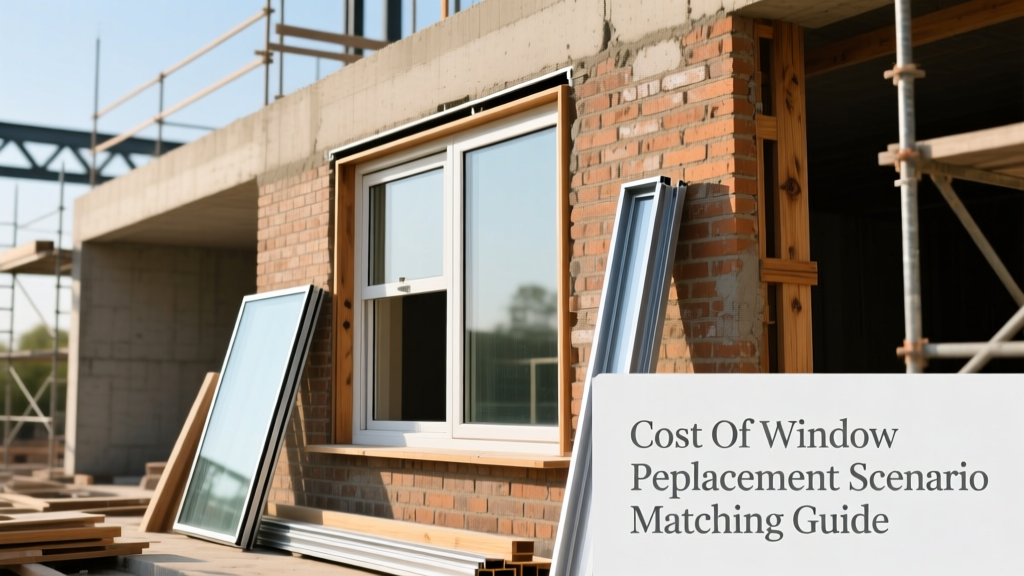
The Scenario-Matching Framework for Window Replacement
Searching for the national average cost of window replacement yields a heavily skewed metric, typically hovering around $650 per unit. This figure is practically useless for accurate construction estimating because it blends $200 builder-grade vinyl pocket replacements with $2,800 custom-milled architectural wood units. To estimate accurately, you must abandon generic averages and apply a scenario-matching framework. The true cost of window replacement is dictated by the intersection of structural requirements, energy codes, and aesthetic mandates specific to your project type.
Scenario 1: The Historic Restoration (Wood & True Divided Lites)
For pre-1940s homes in designated historic districts, window replacement is governed by strict architectural review boards. You cannot simply drop in a modern vinyl unit. The application demands solid wood frames (typically pine or mahogany) and True Divided Lites (TDL), where individual panes of glass are separated by actual muntins, rather than Simulated Divided Lites (SDL) which use grilles over a single pane.
Material & Brand Specifics
The industry standard for this scenario is the Marvin Heritage line or custom millwork from local architectural woodworking shops. For a standard 36x60 inch double-hung window, TDL construction requires individual glazing putty and specialized weatherstripping that accommodates wood movement.
Cost Breakdown & Hidden Variables
- Unit Cost: $1,400 to $2,600 per window (custom sized).
- Lead Paint Abatement: Under EPA RRP Rules, disturbing lead paint in pre-1978 homes requires certified contractors, adding $300 to $600 per opening for containment and disposal.
- Exterior Trim Milling: Historic brickmould and casing replication adds $250 to $450 per unit.
- Total Installed Cost: $2,200 to $3,500+ per opening.
Scenario 2: High-Performance Passive House (Triple-Pane Fiberglass)
When the project goal is extreme energy efficiency—such as achieving Passive House Institute US (PHIUS) certification or Net Zero status—the cost of window replacement shifts entirely toward thermal performance. Standard dual-pane vinyl windows (U-factor ~0.30) fail this application. You need triple-pane, argon-filled units with suspended coated films or specialized low-emissivity (Low-E) glass.
Material & Brand Specifics
Fiberglass is the mandatory frame material here due to its low thermal expansion coefficient and high structural strength, which supports the massive weight of triple-pane glass. Look at the Inline Fiberglass 3000 series or Alpen High Performance Products. These units routinely achieve a U-factor of 0.14 or lower and a Solar Heat Gain Coefficient (SHGC) tuned to the specific cardinal orientation of the wall.
Cost Breakdown & ROI
According to the U.S. Department of Energy, optimizing window SHGC and U-factor can reduce energy bills by 12% to 33%, but the upfront capital is steep.
- Unit Cost: $1,600 to $2,900 per standard unit.
- Installation Premium: Fiberglass triple-pane units weigh up to 40% more than standard windows, requiring reinforced rough openings and specialized flashing tapes (like Prosoco R-Guard) adding $150 per opening.
- Total Installed Cost: $1,900 to $3,200 per opening.
Scenario 3: The Coastal Hurricane Zone (Impact-Rated Aluminum)
In Wind-Borne Debris Regions (WBDR), particularly along the Gulf and Atlantic coasts, building codes mandate impact-resistant fenestration. The cost of window replacement in these zones is driven by Miami-Dade Notice of Acceptance (NOA) testing standards, specifically TAS 201, 202, and 203, which require the glass to withstand a 9-pound 2x4 fired at 34 mph (Large Missile Impact).
Material & Brand Specifics
Heavy-gauge extruded aluminum frames with polyvinyl butyral (PVB) interlayer laminated glass are the standard. The PGT WinGuard aluminum series and CGI Sentinel lines dominate this market. While vinyl impact windows exist, aluminum provides the necessary structural rigidity to resist the extreme negative wind uplift pressures of a Category 4 or 5 hurricane without excessive frame deflection.
Cost Breakdown & Code Requirements
- Unit Cost: $950 to $1,800 per standard double-hung or single-hung unit.
- Engineering & Permitting: Coastal municipalities often require a Notice of Commencement and specific wind-load engineering stamps, adding $800 to $1,500 to the overall project soft costs.
- Total Installed Cost: $1,200 to $2,100 per opening.
Scenario 4: The Landlord Flip (Budget Vinyl Pocket Replacement)
For investment properties, multi-family rentals, or quick pre-sale flips where the goal is cosmetic refresh and basic code compliance, minimizing capital expenditure is the priority. The application fit here is a 'pocket' or 'insert' installation, which leaves the existing exterior wood frame, casing, and trim completely intact.
Material & Brand Specifics
Builder-grade or mid-tier vinyl is the only logical choice. Brands like Reliabilt (available at Lowe's) or Silver Line offer adequate NFRC-certified performance for standard residential codes. Stick to white or beige frames; dark-colored vinyl absorbs solar heat and is prone to warping and seal failure in budget extrusions.
Cost Breakdown & Lifespan Trade-offs
The National Fenestration Rating Council (NFRC) labels on these budget units will typically show a U-factor of 0.27 to 0.32. They are functional but lack the longevity of premium welds.
- Unit Cost: $180 to $350 per unit (stock sizes).
- Labor: Pocket installs take 45 to 60 minutes per window, drastically reducing labor costs compared to full-frame tear-outs.
- Total Installed Cost: $350 to $600 per opening.
Comparative Cost Matrix: Scenario vs. Application Fit
| Project Scenario | Recommended Brand/Line | Frame Material | Avg Cost (36x60 DH) | Target U-Factor | Install Method |
|---|---|---|---|---|---|
| Historic Restoration | Marvin Heritage / Custom | Solid Wood (TDL) | $2,200 - $3,500 | 0.32 - 0.45 | Full-Frame Tear-Out |
| Passive House / Net Zero | Alpen / Inline Fiberglass | Fiberglass (Triple-Pane) | $1,900 - $3,200 | 0.14 or lower | Full-Frame + Membrane |
| Coastal Hurricane Zone | PGT WinGuard / CGI | Extruded Aluminum | $1,200 - $2,100 | 0.25 - 0.35 | Full-Frame + Structural Anchors |
| Landlord Flip / Budget | Reliabilt / Silver Line | Extruded Vinyl | $350 - $600 | 0.27 - 0.32 | Pocket / Insert Only |
Installation Variables That Skew the Cost of Window Replacement
Beyond the unit and base labor, estimators must account for site-specific variables that frequently trigger change orders mid-project:
- Dry Rot and Structural Sill Repair: When removing full-frame windows, concealed rot in the rough opening sill is discovered in roughly 30% of older homes. Budget $75 to $150 per linear foot for pressure-treated lumber replacement and epoxy consolidation.
- Scaffolding and Height Premiums: Second-story or third-story window replacements require OSHA-compliant scaffolding or boom lifts. Scaffolding erection and teardown will add $1,500 to $3,500 to the total project cost, regardless of the window unit price.
- Interior Drywall and Trim Repair: Full-frame replacements inevitably damage interior drywall returns and wood casing. If the estimate does not include a line item for interior carpentry, mudding, taping, and painting, the final invoice will increase by 15% to 20%.
"A window is only as efficient as its installation. A $2,000 Passive House window installed with standard caulk and no fluid-applied flashing membrane will perform worse than a $300 vinyl window installed with perfect, airtight detailing."
Expert Decision Flowchart: Which Scenario Are You?
Use this rapid decision matrix to lock in your estimating parameters before soliciting bids:
- Is the property in a designated historic overlay? Yes → Stop. You must use Scenario 1. Contact the local historic preservation office for the specific muntin profile and material mandates before pricing.
- Is the property within 1 mile of the coast in a WBDR? Yes → Stop. You must use Scenario 3. Verify the exact wind-load requirements (e.g., 150 mph vs 175 mph) with the local building department, as this dictates the aluminum gauge and anchor spacing.
- Are you pursuing LEED, PHIUS, or Net Zero certification? Yes → Stop. You must use Scenario 2. The windows must be modeled in PHPP or REM/Rate software to determine the exact SHGC required for each elevation.
- Is this a cosmetic rental refresh with no structural or historic mandates? Yes → Proceed with Scenario 4. Measure the existing sash openings to order exact-fit pocket replacements and minimize labor hours.