How Much Do F1 Cars Cost to Build? A 2026 Detailed Breakdown
Discover exactly how much F1 cars cost to build in 2026. We break down physical component prices, power unit caps, and hidden R&D expenses.

The Physical Bill of Materials vs. The FIA Cost Cap
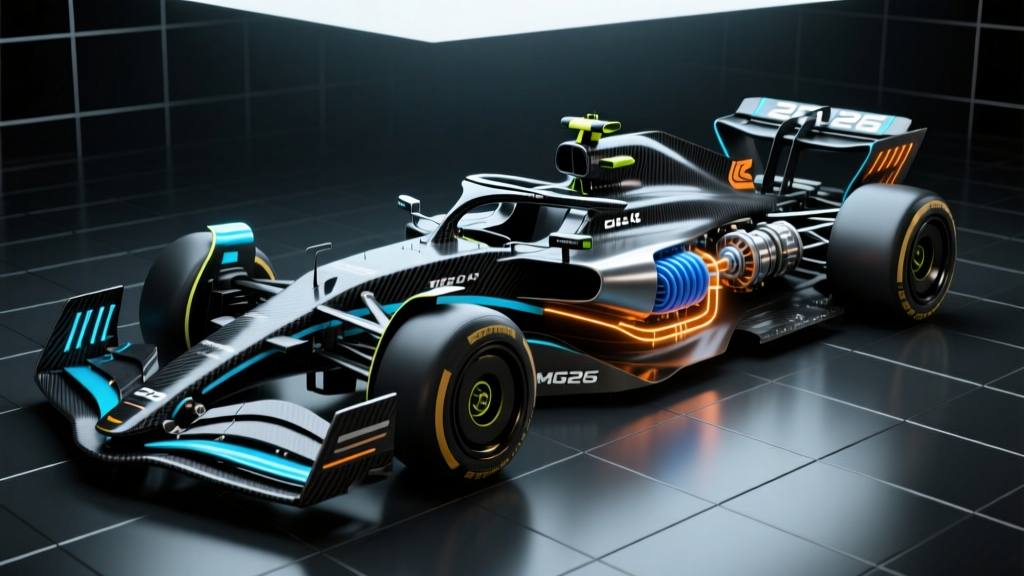
When evaluating how much F1 cars cost to build, it is critical to separate the physical Bill of Materials (BOM) from the team's total operational expenditure. The raw physical cost to manufacture a single Formula 1 chassis—excluding R&D, wind tunnel testing, and personnel—sits between $15 million and $18 million. However, under the FIA Financial Regulations, teams operate under a strict cost cap (baseline $135 million, adjusted annually for inflation and race count) that governs almost all car performance expenditures.
The physical car is merely the final output of a massive, cost-capped R&D pipeline. A front wing might cost $150,000 in raw carbon fiber and CNC-machined titanium hardware, but the 2,000 hours of Computational Fluid Dynamics (CFD) and wind tunnel rolling-road time required to design it costs exponentially more. For 2026, the introduction of active aerodynamics and a radically overhauled hybrid power unit has fundamentally shifted where teams allocate their manufacturing budgets.
2026 Power Unit Regulations: The €15 Million Ceiling
The most significant cost variable in the 2026 Formula 1 season is the new Power Unit (PU). The FIA has mandated a 50/50 power split between the Internal Combustion Engine (ICE) and electrical deployment. The MGU-H (Motor Generator Unit-Heat) has been entirely removed, while the MGU-K (Motor Generator Unit-Kinetic) now outputs a massive 350kW (nearly 470 horsepower), up from 120kW in previous generations.
For a works team building their own PU (like Mercedes, Ferrari, or the new Audi/Red Bull Ford partnerships), the R&D and manufacturing cost of the 2026 energy store (battery) and control electronics easily exceeds $40 million annually, but this is ring-fenced under a separate PU manufacturer cost cap, distinct from the chassis team cap.
Component-by-Component Physical Build Breakdown
Below is the estimated physical manufacturing cost for a single 2026-spec F1 car chassis. These figures represent raw materials, machining time, and assembly labor, excluding the R&D amortization.
| Component | Estimated Physical Cost | Key Materials & 2026 Specs | Manufacturing Lead Time |
|---|---|---|---|
| Chassis / Survival Cell | $850,000 - $1,100,000 | T1000-grade prepreg carbon fiber, Zylon anti-intrusion panels, titanium inserts. | 4 - 6 weeks (Autoclave curing) |
| 2026 Power Unit (ICE + E-Systems) | $10,000,000 - $14,000,000 | 350kW MGU-K, advanced lithium-ion Energy Store, bespoke CE (Control Electronics). | 6 - 9 months (R&D to assembly) |
| Gearbox & Rear Crash Structure | $450,000 - $600,000 | Grade 5 Titanium (Ti-6Al-4V) casing, carbon fiber outer shell, 8-speed seamless shift. | 3 - 4 weeks (5-axis CNC) |
| Active Aerodynamics (Front/Rear) | $1,800,000 - $2,500,000 | Moving carbon elements, hydraulic actuators for X-mode (low drag) and Z-mode (high downforce). | 2 - 3 weeks per iteration |
| Suspension & Uprights | $350,000 - $500,000 | Carbon fiber wishbones, 3D-printed titanium uprights, multimatic dampers. | 2 weeks |
| Steering Wheel & Electronics | $80,000 - $120,000 | Carbon fiber housing, custom OLED display, 25+ rotary switches, quick-release mechanism. | 1 - 2 weeks |
| Halo Device | $17,000 - $20,000 | Aerospace-grade Grade 5 Titanium, precision 5-axis CNC machined from a single billet. | 3 - 5 days |
Hidden Manufacturing Expenses: Autoclaves and Clean Rooms
The raw material cost of carbon fiber is only a fraction of the chassis budget. Manufacturing a 2026 F1 monocoque requires massive industrial infrastructure. Teams utilize 6-bar to 10-bar autoclaves that must be heated to precisely 120°C–180°C over multi-hour curing cycles. The energy consumption, maintenance of vacuum pumps, and the specialized tooling (Invar molds that resist thermal expansion) add millions to the factory overhead.
Furthermore, the 2026 Power Unit's Energy Store (the battery pack) and Control Electronics must be assembled in ISO-certified clean rooms to prevent microscopic dust contamination on the high-voltage circuit boards. As noted by RaceFans in their 2026 engine technical breakdown, the thermal management required to cool the 350kW MGU-K demands entirely new, ultra-efficient liquid cooling circuits that require specialized vacuum-brazing facilities for the titanium and aluminum heat exchangers.
Strategic Framework: Build vs. Buy in the Cost Cap Era
Under the current financial regulations, midfield teams face a critical decision matrix regarding which components to manufacture in-house versus purchase as "listed team components" (LTCs) or "transferable components" (TRCs). Here is the decision framework technical directors use in 2026:
- Always Build In-House (LTCs): The survival cell, front impact structure, and primary aerodynamic surfaces. The FIA mandates these must be designed and manufactured by the team to prevent "customer cars." The cost cap forces teams to optimize their own wind tunnel efficiency rather than buying parts.
- Strategic Buy (TRCs): Gearboxes, rear suspension internals, and hydraulic systems. Teams like Haas and Alfa Romeo (Kick Sauber) historically purchase these from Ferrari to save $5M–$8M in R&D and 5-axis CNC machining overhead, reallocating those funds toward aerodynamic development.
- The 2026 Active Aero Dilemma: Because the 2026 rear wing features complex moving elements to reduce drag on straights, the hydraulic actuators and control software are highly sensitive. Teams buying gearboxes and rear suspension from a works team must now integrate the supplier's active aero logic, which can limit their ability to run bespoke aerodynamic setups.
Frequently Asked Questions on F1 Manufacturing Costs
Do F1 teams pay for their tires and fuel?
Pirelli is the sole tire supplier, and while teams do not buy tires on a per-unit retail basis, they pay a substantial seasonal testing and supply contract fee. Fuel is supplied by partners (e.g., Shell, Petronas, Aramco) as part of multi-million-dollar technical partnerships. The physical cost of the 110kg of 100% sustainable E-fuel used per race is negligible compared to the R&D cost of formulating it.
How much does it cost to repair an F1 car after a crash?
A high-speed impact destroying the front corner (suspension, front wing, brake ducts, and upright) typically costs between $400,000 and $750,000 in replacement parts. Crucially, under FIA cost cap rules, the replacement parts count toward the team's annual expenditure limit, making crash damage a severe financial penalty that directly reduces the budget available for car upgrades later in the season.
Why is the F1 steering wheel so expensive?
A 2026 F1 steering wheel costs upwards of $100,000. It is not just a steering device; it is the primary ECU interface. It contains custom-molded carbon fiber grips tailored to the driver's exact hand measurements, a high-resolution OLED display, telemetry transmitters, and over 25 micro-switches and rotary dials that must operate flawlessly under 5G vibrational loads and extreme heat.
Written by
Elena RodriguezElena Rodriguez is a civil engineer and technical writer specializing in concrete technology, masonry systems, and ASTM/ACI compliance. She earned her B.S. in Civil Engineering from Texas A&M University and spent a decade at a materials testing laboratory, performing over 2,000 concrete compressive strength tests and masonry prism evaluations. Elena is an ACI-certified Field Testing Technician (Grade I) and a member of ASTM Committee C12 on Natural Building Stone. She currently consults on forensic engineering cases involving concrete failures and moisture intrusion. Based in San Antonio, TX, Elena is a proud member of the Society of Women Engineers (SWE) and coaches her daughter's FIRST Robotics team.
More from Elena Rodriguez
View all
Walls & Panels
Cost Analysis: Light Gauge Steel Framing Advantages and Disadvantages
Evaluate light gauge steel framing advantages and disadvantages through a strict cost analysis lens, comparing material, labor, and lifecycle expenses.
Aug 4, 2026

Walls & Panels
Gypsum Board Types: Exact Specifications, Thickness & Dimensions
Compare standard, Type X, and moisture-resistant gypsum board types. Get exact specifications, thicknesses, dimensions, and ASTM standards for your project.
Aug 4, 2026

Fire Resistance
Best Fire-Resistant Outdoor Decking Materials: 2026 Buyer Guide
Discover the best fire-resistant outdoor decking materials for 2026. Compare Class A PVC, aluminum, and hardwood options for WUI compliance and safety.
Aug 4, 2026