The True Cost to Build a Bowling Center: 2026 Regional Guide
Analyze the 2026 regional cost to build a bowling center, comparing per-lane equipment, shell construction, and hidden infrastructure expenses.

The Baseline: Capital Requirements for Modern Bowling Centers
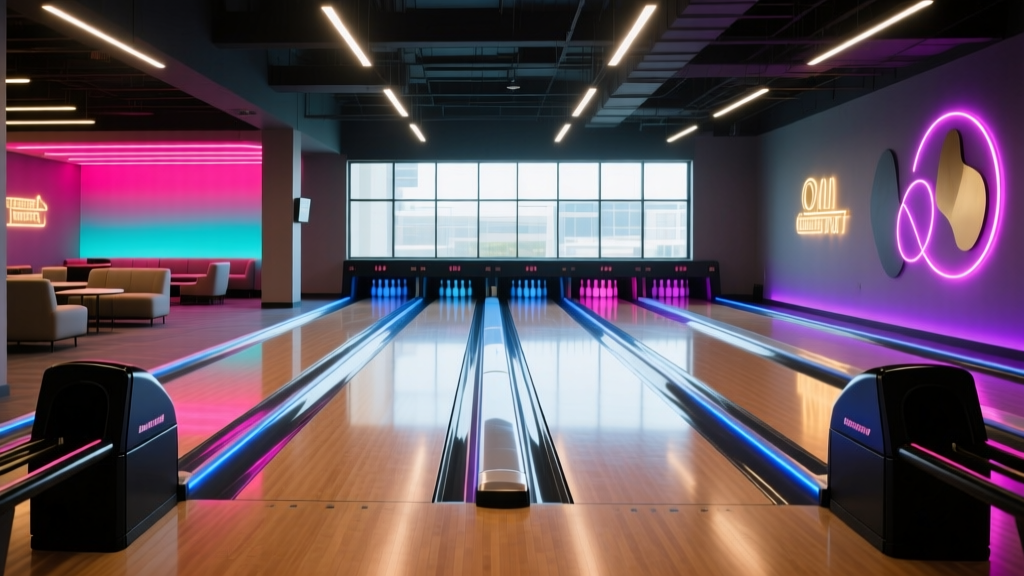
Estimating the cost to build a bowling center in 2026 requires moving past legacy assumptions. The era of the 40-lane, cigarette-smoking alley is over. Modern development focuses on 12-to-20-lane boutique centers and Family Entertainment Centers (FECs) ranging from 15,000 to 25,000 square feet. These venues integrate high-end food and beverage operations, arcade zones, and private event spaces alongside the lanes.
A standard bowling lane pair requires approximately 90 feet of linear depth (15 feet for the approach and seating, 60 feet for the lane surface, and 15 feet for the pinsetter pit and maintenance access). When factoring in lobby, restrooms, commercial kitchen, and lounge space, a 16-lane center typically requires a minimum footprint of 18,000 square feet. According to industry data tracked by the Bowling Proprietors' Association of America (BPAA), the shift toward experiential dining has pushed fit-out costs higher than the actual lane equipment in many urban markets.
2026 Regional Construction & Equipment Cost Matrix
Construction costs vary wildly based on regional labor rates, land acquisition, and local impact fees. The table below breaks down the estimated capital requirements for a standard 16-lane, 18,000-square-foot bowling center across four major U.S. regions in 2026.
| Region | Shell Construction ($/SF) | Land & Impact Fees | Equipment Cost (Per Lane) | Total Est. Project Cost (16 Lanes) |
|---|---|---|---|---|
| Northeast (e.g., NY, MA) | $220 - $280 | $800k - $1.5M | $65,000 - $85,000 | $6.2M - $8.5M |
| West Coast (e.g., CA, WA) | $240 - $310 | $1M - $2M | $65,000 - $85,000 | $6.8M - $9.2M |
| Southeast (e.g., FL, TX) | $160 - $210 | $400k - $800k | $60,000 - $75,000 | $4.5M - $6.0M |
| Midwest (e.g., OH, IL) | $150 - $190 | $300k - $600k | $60,000 - $75,000 | $4.1M - $5.5M |
Note: Equipment costs include synthetic lane surfaces, pinsetters, masking units, seating, and scoring/management systems, but exclude installation labor, which is generally handled by specialized factory-certified crews.
Specialized Infrastructure: Where Budgets Actually Break
General contractors unfamiliar with bowling center construction frequently underbid the mechanical, electrical, and plumbing (MEP) scopes. Bowling alleys are essentially heavy industrial facilities wrapped in a hospitality veneer.
Pinsetter Pit Structural Requirements
The pinsetter pit requires a depressed concrete slab, typically dropped 36 to 42 inches below the main floor elevation. This sub-slab must feature a load-bearing capacity exceeding 150 PSF to handle the dynamic vibration and impact of the pin-setting cycle. Furthermore, the transition between the main floor and the pit requires precise forming to accommodate the under-lane ball return tracks. If you are retrofitting an existing big-box retail space, cutting and dropping the slab for the pit will add $40,000 to $75,000 to your concrete budget alone.
Electrical and HVAC Loads
Free-fall pinsetters require 208V/240V 3-phase power. A 16-lane center will need a dedicated 800-amp to 1200-amp electrical service just for the lane equipment and kitchen. Conversely, modern string pinsetters can often operate on standard single-phase 120V/240V, drastically reducing the cost of pulling new utility drops and installing heavy-duty transformers.
Bowling centers require specialized makeup air units (MAUs) to compensate for the massive exhaust generated by commercial kitchen hoods in the FEC lounge area. Simultaneously, the lane environment must maintain a strict 68°F baseline with low humidity to prevent synthetic lane surfaces (like Brunswick Pro Lane) from topographical warping or oil pattern breakdown. Standard rooftop RTUs will fail to balance these competing demands.
Equipment Selection: Free-Fall vs. String Pinsetters
The most significant variable in your equipment budget is the pinsetter technology. While free-fall machines remain the gold standard for professional league play, string pinsetters have captured over 60% of new boutique and FEC installations in 2026.
- Free-Fall Pinsetters (e.g., AMF BES X): Cost $75,000+ per lane. Require deep pits (42+ inches), heavy 3-phase power, and specialized daily maintenance. They offer the authentic acoustic and visual experience demanded by competitive leagues.
- String Pinsetters: Cost $45,000 - $55,000 per lane. Require shallower pits (approx. 24 inches), consume 70% less energy, and eliminate the need for a dedicated pit mechanic. The trade-off is a slightly altered pin-action physics, which the USBC has recently adapted to for official sanctioned play.
For centers targeting the 'eatertainment' demographic (corporate events, birthday parties, casual bowlers), string pinsetters offer a superior ROI through reduced maintenance labor and lower initial capital outlay, according to recent Dodge Construction Network commercial leisure reports.
Regional Zoning and Entitlement Timelines
The soft costs of building a bowling center—specifically zoning, acoustic mitigation, and entitlements—vary drastically by region. In the Northeast and West Coast, bowling centers are often classified under complex 'indoor amusement' or 'tavern' zoning codes due to the integration of alcohol service and late-night operations.
Acoustic Mitigation: If your site is near residential zoning, municipalities in California and New York will mandate extensive acoustic baffling. This includes installing mass-loaded vinyl (MLV) in the ceiling plenums, floating the pinsetter pit floor on neoprene isolators to prevent low-frequency vibration transmission, and upgrading to STC-55 rated exterior wall assemblies. Budget an additional $80,000 to $120,000 for acoustic engineering and materials in strict jurisdictions.
Decision Framework: Boutique (8-12 Lanes) vs. FEC (24+ Lanes)
Choosing your lane count dictates your real estate strategy and demographic target.
| Feature | Boutique Center (8-12 Lanes) | Regional FEC (24+ Lanes) |
|---|---|---|
| Target Demographic | Adults 21+, corporate events, date nights | Families, youth leagues, amateur tournaments |
| Square Footage | 10,000 - 14,000 SF | 30,000 - 45,000 SF |
| F&B Focus | High-margin craft cocktails, chef-driven menu | High-volume casual dining, pizza, beer |
| League Revenue % | 10% - 20% | 40% - 60% |
| Preferred Pinsetter | String (lower maintenance, shallower pit) | Free-Fall (authentic league experience) |
Actionable Budget Optimization Strategies
To protect your margins during the 2026 development cycle, implement these specific cost-control measures:
- Source Refurbished Free-Fall Machines for League Lanes: If you must have free-fall for competitive leagues, purchase factory-refurbished machines from certified dealers. A refurbished Brunswick GSX can be acquired for $30,000 per lane, saving nearly 50% over new units, allowing you to allocate capital toward high-end scoring displays and masking units.
- Standardize the Approach Length: While USBC rules allow for approach lengths between 15 and 16 feet, sticking to the 15-foot minimum saves roughly 1,500 square feet of premium interior real estate on a 16-lane build, which can be repurposed for high-margin bar seating.
- Pre-Cast Pit Walls: Instead of pouring complex formed concrete for the pinsetter pit drop, utilize pre-cast concrete retaining wall blocks. This reduces framing and pouring labor by up to 30% and accelerates the critical path schedule.
- Negotiate Equipment Phasing: Many suppliers will allow you to build the infrastructure for 20 lanes but only install 16 lanes on day one. Ensure your electrical panels and HVAC zones are sized for the future expansion so you avoid tearing into finished ceilings when adding the final four lanes in year three.
Written by
Priya KapoorPriya Kapoor is a real estate market analyst and construction economics researcher with expertise in housing affordability, development feasibility, and infrastructure investment. She holds a Master of Regional Planning from Cornell University and previously worked as a senior analyst at CBRE's Investment Properties group, where she modeled returns for $4B in mixed-use development pipelines. Priya now runs an independent research practice advising developers, municipalities, and REITs on construction cost forecasting and market timing. She publishes the quarterly "BuildMat Market Pulse" report tracking material price indices across 12 commodity categories. Based in Austin, TX, Priya serves on the board of Habitat for Humanity Austin and is a marathon runner.
More from Priya Kapoor
View all
Construction Cost
Cost to Build a 1600 Sq Ft Home in 2026: Full Breakdown
Accurate 2026 cost to build a 1600 sq ft home—material, labor, and regional pricing breakdowns included. Plan your budget with real-time estimates.
Aug 11, 2026

Wood & Lumber
Name the Types of Wood for Pressure Treatment and Preservation
Learn how to name the types of wood best suited for pressure treatment. Compare species treatability, chemical retention levels, and 2026 preservation costs.
Aug 4, 2026

Stone & Masonry
Stone Veneer Suppliers Lindenhurst: 2026 Cost Analysis
Analyze 2026 stone veneer costs in Lindenhurst, NY. Compare local supplier pricing, delivery fees, and Suffolk County installation labor rates.
Aug 4, 2026