How Much Does It Cost to Build an App for Construction Estimating?
Discover how much it costs to build an app for construction estimating. Learn financing options, ROI metrics, and development phases for contractors.
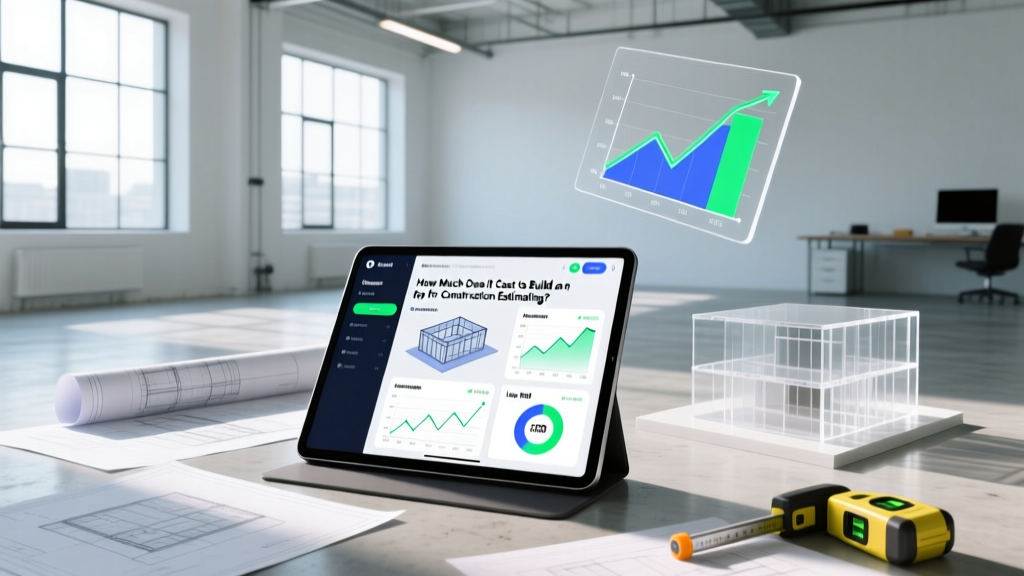
The Real Cost of Building a Custom Construction Estimating App
For general contractors and specialty trades, off-the-shelf estimating software often falls short. It lacks integration with proprietary vendor pricing, specialized union labor burdens, or specific regional code requirements. Building a custom estimating application solves these operational bottlenecks, but it requires a significant capital outlay. In 2026, the cost to build a bespoke construction estimating app ranges from $45,000 for a minimum viable product (MVP) to over $250,000 for an enterprise-grade platform with advanced AI takeoff capabilities and offline synchronization.
Understanding these costs is only the first step. For construction firm owners, the critical challenge lies in how to finance this digital asset, manage the tax implications of software development, and structure the project to ensure a measurable return on investment.
Development Cost Breakdown by Complexity
| App Tier | Core Features | Estimated Cost (2026) | Timeline |
|---|---|---|---|
| MVP (Internal Tool) | Basic material/labor databases, PDF markup, QuickBooks export | $45,000 - $85,000 | 3 - 5 Months |
| Mid-Market Custom | Offline mode, RSMeans API integration, multi-user role permissions | $90,000 - $160,000 | 6 - 9 Months |
| Enterprise Platform | AI-powered blueprint takeoffs, IoT equipment tracking, ERP sync | $180,000 - $300,000+ | 10 - 14 Months |
Hidden Development Costs That Blow Up Contractor Budgets
When scoping an estimating app, contractors frequently underestimate the backend architecture required to make the tool functional on active job sites. A polished user interface is useless if the app crashes when a superintendent loses cell service in a concrete basement.
- Offline-First Architecture (+20% to 30% of backend costs): Construction sites are notorious for dead zones. Implementing local-first databases like Couchbase Lite or WatermelonDB ensures estimators can pull historical data and save new bids offline, syncing automatically when connectivity returns. This complex conflict-resolution logic adds $15,000 to $30,000 to the development budget.
- Premium Data API Licensing: To provide real-time material costs, your app must integrate with databases like the RSMeans Data API or Gordian. Enterprise API access for commercial construction data typically costs between $8,000 and $18,000 annually, which must be factored into your ongoing operational expenses.
- Apple Developer Enterprise Program: If you are deploying this app exclusively to your internal W-2 employees and want to bypass the public App Store review process, you must enroll in the Apple Developer Enterprise Program ($299/year) and configure a mobile device management (MDM) server.
Financing Your Construction Tech: Capital vs. Operational Expenditure
Financing a custom software project requires navigating the intersection of construction accounting and tech development. How you classify the expense drastically alters your firm's tax liability and cash flow.
Under current IRS guidelines (IRC Section 174), costs incurred for software development can no longer be fully deducted in the year they are paid. Instead, domestic software development costs must be capitalized and amortized over a 5-year period (15 years if developed outside the US). When securing financing, ensure your CPA structures the loan to cover the upfront cash flow gap created by this amortization schedule.
Primary Financing Vehicles for Software Development
Construction firms typically rely on three main avenues to fund custom estimating apps, each with distinct advantages depending on the firm's balance sheet.
| Financing Method | Best For | Pros | Cons |
|---|---|---|---|
| SBA 7(a) Loan | Firms building enterprise platforms ($150k+) | Low down payments (10-20%); long repayment terms (up to 10 years for software/intangibles). | Heavy paperwork; requires strong personal credit and business cash flow history. |
| Business Line of Credit | Phased MVP development and API licensing | Pay interest only on what you draw; ideal for agile development sprints. | Variable interest rates; lower borrowing limits ($50k-$250k). |
| Equipment Financing (Bundled) | Firms buying hardware + software together | Easier approval than unsecured loans; the hardware acts as collateral. | Software must usually be bundled with physical servers, tablets, or drones to qualify. |
For firms lacking the collateral for traditional bank loans, the SBA 7(a) loan program remains the most viable route for financing intangible assets like custom software, provided the app is deemed essential to business expansion or efficiency.
Calculating ROI: When Does the App Pay for Itself?
To justify a $120,000 development loan to your partners or a bank, you must quantify the exact labor hours and bid-win margins the app will recover. Use this framework to calculate your break-even timeline.
The Estimating Efficiency Formula
Monthly Savings = (Hours saved per estimate × Blended hourly rate) × Estimates per month
Real-World Scenario: A mid-sized commercial roofing contractor produces 30 estimates monthly. Their senior estimators earn $85/hour (fully burdened). Currently, manual takeoffs and cross-referencing vendor PDFs take 6 hours per bid.
- With Custom App: Automated material parsing and pre-loaded vendor contracts reduce bid time to 2.5 hours (saving 3.5 hours).
- Monthly Savings: 3.5 hours × $85 × 30 bids = $8,925 / month ($107,100 / year).
- Margin Increase: Faster turnaround increases bid volume by 15%, conservatively yielding two extra won projects a year at $40,000 net profit each ($80,000 / year).
Total Annual Financial Gain: $187,100. A $120,000 app pays for itself in roughly 7.5 months.

Expert Verdict: Build Custom vs. Buy White-Label
Before securing financing for a ground-up build, evaluate whether a white-label solution can achieve 80% of your goals at 20% of the cost. Platforms like Procore Estimating or Buildertrend offer robust APIs that allow you to build custom 'middleware' integrations rather than a full frontend application.
If your firm's competitive advantage relies on a highly guarded, proprietary algorithm for calculating complex labor burdens or specialized material waste factors, a custom build is a defensible moat worth financing. If you simply need better document management and standard assembly databases, redirect your capital toward enterprise subscriptions and API integration specialists instead.
For deeper insights into structuring small business technology investments, review the US Chamber of Commerce guide on small business tech financing to ensure your loan terms align with the expected lifespan and depreciation schedule of your digital asset.
Written by
James ThorntonJames Thornton is a construction industry veteran with 25 years of hands-on experience in wood framing, lumber grading, and residential building codes. He started as a framing carpenter in rural Oregon, earned his ICC Residential Building Inspector certification, and eventually became a senior plan reviewer for the City of Portland Bureau of Development Services. James holds a B.S. in Wood Science & Technology from Oregon State University and is a certified lumber grader through the West Coast Lumber Inspection Bureau (WCLIB). He has inspected over 3,000 residential construction sites and authored the city's internal guide on advanced framing techniques (2x6 at 24" O.C.). James lives in Bend, OR, where he builds custom timber-frame cabins and competes in lumberjack sports.
More from James Thornton
View all
Insulation
Best Home Insulation Materials: Complete 2026 Guide
Compare top home insulation materials for 2026. Find R-values, installed costs per square foot, and best uses for fiberglass, spray foam, and mineral wool.
Aug 4, 2026

Sustainable Building
Certify Your Green Building Material for LEED and WELL
Step-by-step guide to certifying a green building material for LEED v5 and WELL v2. Master EPDs, HPDs, and VOC limits for 2026 project specifications.
Aug 4, 2026

Stone & Masonry
Veneer Stacked Stone Panels: Interior Design & Style Showcase
Discover how veneer stacked stone panels transform interiors. Explore modern design profiles, material pairings, and technical installation specs.
Aug 4, 2026