How Much Would a One CC Engine Cost to Build? Machining Cost Guide
Discover exactly how much it costs to build a 1cc engine from scratch. Explore material takeoffs, CNC vs casting, and money-saving strategies.

The Core Question: How Much Would a One CC Engine Cost to Build?
Designing and constructing a 1cc internal combustion engine—typically a miniature glow or spark-ignition 4-stroke model—is one of the most demanding precision engineering projects a home machinist or small fabrication shop can undertake. When applying professional construction cost estimating principles to micro-mechanical fabrication, the final price tag depends entirely on your make-vs-buy decisions, material selection, and machining methodology.
To understand these numbers, we must break down the project using a standard Bill of Materials (BOM), evaluate metallurgical requirements, and apply value-engineering strategies to reduce overhead without sacrificing the tight tolerances (often within 0.0002 inches) required for micro-combustion.
Material Takeoff: Alloys and Micro-Components
A 1cc engine (typically featuring a bore of 11.28mm and a stroke of 10.00mm) operates at extreme RPMs, often exceeding 15,000. Material selection cannot be compromised, but the form in which you buy the material dictates the cost.
| Component | Specified Alloy | Billet/Bar Cost (DIY) | Outsourced CNC Cost | Money-Saving Alternative |
|---|---|---|---|---|
| Crankcase & Head | 6061-T6 Aluminum | $12.00 (Billet block) | $450 - $600 | Lost-PLA Cast 356-T6 Aluminum ($25) |
| Crankshaft | 4140 Pre-Hardened Steel | $8.50 (Round bar) | $180 - $250 | O1 Tool Steel, DIY heat treat ($15) |
| Cylinder Liner | Silicon Brass / Meehanite | $14.00 (Rod stock) | $120 - $150 | Salvaged RC hydraulic bushings ($5) |
| Piston | 6061-T6 or Cast Iron | $4.00 | $90 - $110 | Modified 1/2' core plug + DIY rings ($8) |
| Valves & Springs | Stainless / Music Wire | $10.00 | $150+ | Surplus pneumatic micro-valves ($22) |
Money-Saving Strategy 1: Lost-PLA Casting vs. 5-Axis CNC
The crankcase and cylinder head of a 1cc engine feature complex internal geometry, including the cam gallery, pushrod tubes, and combustion chamber domes. According to Xometry's CNC machining cost guide, multi-axis setups for complex, low-volume aerospace or micro-mechanical parts carry massive setup and programming premiums.
5-Axis Billet CNC
- Material Waste: High (up to 70% of billet turned to chips)
- Setup Cost: $150 - $300 (CAM programming & fixturing)
- Machine Time: 4-6 hours at $85/hr shop rate
- Total Crankcase Cost: ~$650
- Best For: Production runs of 50+ units where per-part cost drops.
Lost-PLA Investment Casting
- Material Waste: Near zero (melted sprues are reused)
- Setup Cost: $5 (Desktop FDM 3D printer filament)
- Machine Time: 2 hours DIY CNC facing & boring
- Total Crankcase Cost: ~$35 (materials + plaster)
- Best For: Prototyping and single-off scratch builds.
By printing the crankcase pattern in PLA, encasing it in investment plaster, and burning out the plastic in a kiln before pouring 356-T6 aluminum, you bypass thousands of dollars in 5-axis machine time. The cast part will require CNC facing and precision boring for the crankshaft and cam bearings, but this can be done on a standard 3-axis desktop mill like a Taig or Sherline, drastically lowering the barrier to entry.
Money-Saving Strategy 2: Smart Sourcing for Micro-Hardware
One of the most common budget failures in micro-engine construction is attempting to machine custom bushings, seals, and fasteners. The commercial market already produces these at scale for the RC (radio control) and medical device industries.
- Micro-Bearings: Do not machine bronze bushings for the crankshaft. Purchase MR52ZZ (2x5x2.5mm) and MR63ZZ (3x6x2.5mm) shielded ball bearings. Sourced from specialized RC helicopter suppliers or bulk importers, these cost less than $1.50 each and handle the 20,000+ RPM loads of a 1cc engine far better than DIY bushings.
- O-Rings and Seals: Use standard Viton metric O-rings for the carburetor needle valve and crankcase seals. A 2mm ID x 1mm cross-section Viton ring costs pennies and provides the necessary heat and fuel resistance that standard Buna-N rubber cannot withstand in a glow-fuel environment.
- Fasteners: Avoid cutting custom M1.4 or M1.6 threads if possible. Design your assembly to use standard M2x0.4 socket head cap screws, which are widely available at hardware suppliers like McMaster-Carr, whereas M1.4 taps and dies are expensive, fragile, and difficult to source.
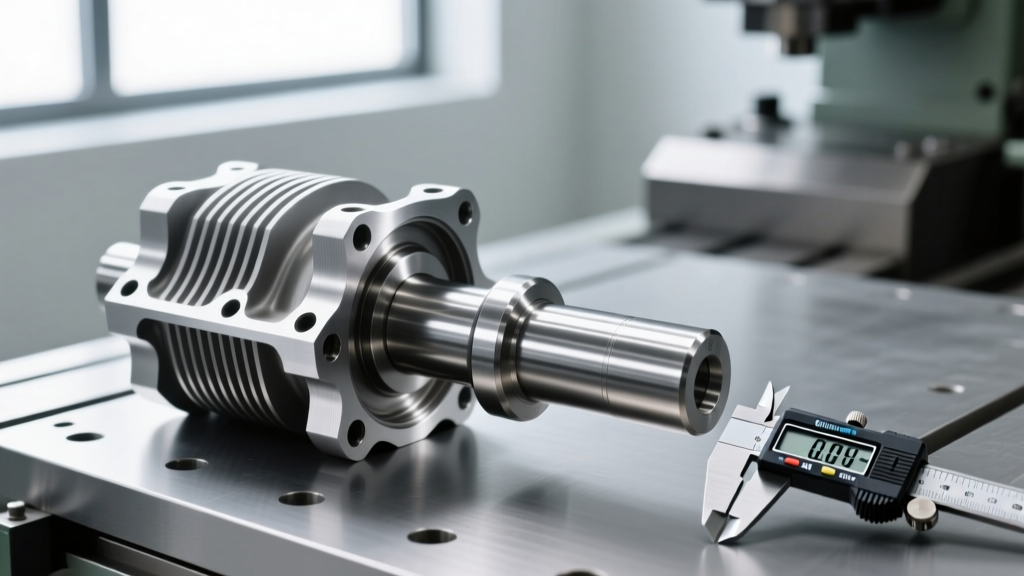
Labor, Tooling, and Machine Time Estimation
In construction estimating, labor is often the largest variable. The same applies to micro-machining. If you are building this engine in a home workshop, your 'labor rate' is effectively zero, but your tooling amortization must be considered.
The DIY Home-Shop Advantage
A commercial machine shop will charge a minimum lot fee (often $250+) just to set up the lathe and mill for a single micro-engine project. By utilizing a home-shop setup, you absorb this cost. However, you must invest in specific micro-tooling:
- Micro-Boring Bars: Carbide bars with a 3/16' or 4mm shank for boring the 11.28mm cylinder liner ($35).
- Precision Reamers: H7 tolerance reamers for the crankshaft and cam bearing bores ($45 each).
- Lapping Compound: 400-grit and 800-grit silicon carbide for lapping the piston-to-cylinder fit if using plain aluminum/brass ABC (Aluminum, Brass, Chrome) construction instead of ringed pistons ($15).
As noted by experts at Model Engineer Magazine, the transition from macro-machining to micro-machining requires a shift in metrology. You cannot rely on standard calipers; a high-quality micrometer set and a dial indicator with 0.0001' resolution are mandatory to prevent catastrophic seizure at high RPMs.
Hidden Cost Traps and How to Avoid Them
Many first-time builders machine their crankshafts from mild steel (1018) to save money and avoid machining hard materials. This is a fatal error. A 1cc engine crankshaft will bend or shear under the compression and inertial loads. You must use 4140 steel or O1 tool steel. If you lack a heat-treating oven, outsource just the quenching and tempering of the crankshaft to a local metallurgical lab. This typically costs $40-$60, which is a fraction of the cost of replacing a snapped crankshaft and a destroyed crankcase.
Final Verdict: Scratch-Build vs. Kit Conversion
When finalizing your budget, you must decide between a true scratch-build (designing from CAD) and modifying an existing kit. While the keyword asks how much it costs to build a 1cc engine, 'building' can mean machining from raw stock or assembling and modifying a cast kit.
| Build Methodology | Material Cost | Tooling / Outsourcing | Estimated Time | Total Estimated Cost |
|---|---|---|---|---|
| 100% Scratch-Build (Billet CNC) | $65.00 | $1,100.00 | 15 Hours (CAD/CAM) | $1,165.00 |
| Scratch-Build (Lost-PLA Cast + Home Mill) | $110.00 | $85.00 (Tooling wear/outsourced heat treat) | 60+ Hours (Manual) | $195.00 |
| Kit Assembly & Modification (e.g., Toyan base) | $280.00 (Kit) | $20.00 (Custom carb adapter) | 8 Hours (Assembly/Tuning) | $300.00 |
Ultimately, how much a 1cc engine costs to build is a direct reflection of your willingness to trade capital for labor. By leveraging desktop 3D printing for investment casting patterns, sourcing standardized micro-bearings from the RC industry, and utilizing pre-hardened 4140 steel to avoid complex metallurgy, you can construct a fully functional, high-revving 1cc engine for under $200 in hard costs. This approach not only saves money but yields a profound understanding of micro-mechanical tolerances that no commercial kit assembly can provide.
Written by
Elena RodriguezElena Rodriguez is a civil engineer and technical writer specializing in concrete technology, masonry systems, and ASTM/ACI compliance. She earned her B.S. in Civil Engineering from Texas A&M University and spent a decade at a materials testing laboratory, performing over 2,000 concrete compressive strength tests and masonry prism evaluations. Elena is an ACI-certified Field Testing Technician (Grade I) and a member of ASTM Committee C12 on Natural Building Stone. She currently consults on forensic engineering cases involving concrete failures and moisture intrusion. Based in San Antonio, TX, Elena is a proud member of the Society of Women Engineers (SWE) and coaches her daughter's FIRST Robotics team.
More from Elena Rodriguez
View all
Walls & Panels
Cost Analysis: Light Gauge Steel Framing Advantages and Disadvantages
Evaluate light gauge steel framing advantages and disadvantages through a strict cost analysis lens, comparing material, labor, and lifecycle expenses.
Aug 4, 2026

Walls & Panels
Gypsum Board Types: Exact Specifications, Thickness & Dimensions
Compare standard, Type X, and moisture-resistant gypsum board types. Get exact specifications, thicknesses, dimensions, and ASTM standards for your project.
Aug 4, 2026

Fire Resistance
Best Fire-Resistant Outdoor Decking Materials: 2026 Buyer Guide
Discover the best fire-resistant outdoor decking materials for 2026. Compare Class A PVC, aluminum, and hardwood options for WUI compliance and safety.
Aug 4, 2026