Average Cost to Build a Pool in Florida: 2026 Type & Size Comparison
Discover the average cost to build a pool in Florida in 2026. Compare gunite, fiberglass, and vinyl prices, plus regional labor rates and hidden fees.
The Baseline: Average Cost to Build a Pool in Florida by Material
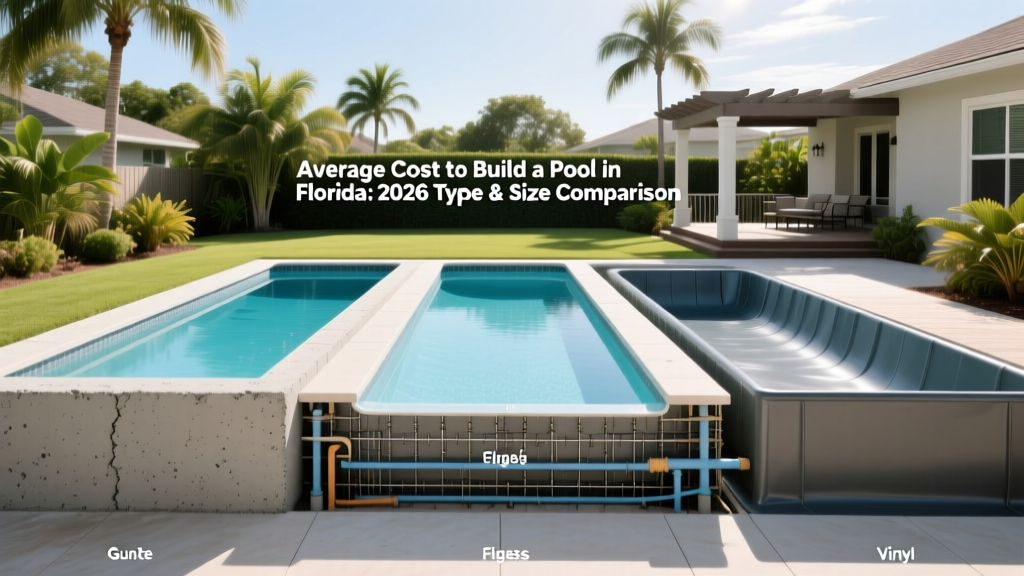
Florida's unique geology, high water table, and stringent hurricane building codes make pool construction a highly specialized endeavor. The average cost to build a pool in Florida in 2026 sits between $52,000 and $88,000 for a standard residential installation. However, this baseline fluctuates wildly based on material choice, soil conditions, and county-specific mandates. Unlike northern states where winterization dictates design, Florida pools must be engineered for intense UV exposure, torrential summer downpours, and coastal salt air.
To understand where your budget will actually go, we must break down the three primary pool shell materials and their associated 2026 pricing metrics.
| Material Type | 2026 Base Cost Range | Cost Per Sq. Ft. | Installation Timeline | Florida Suitability |
|---|---|---|---|---|
| Gunite (Concrete) | $65,000 - $115,000+ | $95 - $140 | 60 - 90 Days | Excellent (Highly customizable, heavy enough to resist hydrostatic floatation) |
| Fiberglass | $48,000 - $78,000 | $80 - $110 | 30 - 45 Days | Very Good (Fast install, but requires crane access and specific backfill) |
| Vinyl Liner | $38,000 - $55,000 | $65 - $90 | 45 - 60 Days | Fair (Low upfront cost, but UV degradation and liner replacement costs add up) |
Gunite vs. Fiberglass: The Ultimate Florida Showdown
While vinyl liners hold a small market share, the vast majority of Florida homeowners choose between gunite and fiberglass. Each presents distinct structural advantages and hidden cost variables dictated by local environmental factors.
The Gunite Advantage: Structural Mass and Customization
Gunite (a dry-mix spray concrete) is the gold standard for custom Florida estates. A properly engineered gunite shell utilizes a 3/8-inch steel rebar grid spaced 10 inches on center, encased in 8 to 10 inches of concrete. In coastal counties like Pinellas or Volusia, contractors must use epoxy-coated rebar to prevent chloride-induced corrosion from the salt air, which adds roughly $1,800 to $2,500 to the material budget. Gunite's sheer weight is its biggest asset in Florida; it naturally resists the hydrostatic pressure that can cause lighter shells to pop out of the ground during heavy rainy seasons.
The Fiberglass Route: Speed and Surface Durability
Fiberglass pools offer a non-porous gelcoat finish that resists algae growth, significantly reducing chemical and maintenance costs—a major plus in Florida's year-round swimming climate. However, the installation logistics are complex. Delivering a one-piece fiberglass shell requires a massive crane rental ($800 to $1,500 per day) and adequate overhead clearance. Furthermore, Florida's native sandy soil is unacceptable for fiberglass backfill. Contractors must import clean, crushed angular stone (usually 3/8-inch crushed limestone) to lock the shell in place and prevent shifting, adding $3,000 to $4,500 in material and labor.
Size, Depth, and Feature Multipliers
The base cost of a pool rarely reflects the final invoice. Florida homeowners heavily favor specific architectural features that alter the excavation and material footprint. Here is how common upgrades impact the 2026 budget:
- Integrated Spa (Spillover): Adds $9,000 to $14,000. Requires a separate thermal break, dedicated heating system (e.g., Pentair MasterTemp 400k BTU), and specialized plumbing to manage the water equalization line.
- Tanning Ledge (Baja Shelf): Adds $3,500 to $5,500. While it reduces overall water volume, it requires complex forming and additional coping materials. In Florida, this is often paired with umbrella sleeves and in-deck bubblers.
- Deep End (8+ Feet): Adds $2,000 to $3,500. Deeper excavation in Florida often means hitting the limestone caprock, requiring heavy machinery or even localized blasting/rock-breaking equipment.
- Automation Systems: Adds $2,500 to $4,000. Systems like the Pentair IntelliCenter allow remote management of variable speed pumps, lighting, and spa heating via smartphone, which is highly recommended for managing energy consumption during peak summer FPL (Florida Power & Light) rate hours.
Regional Labor and Permitting Variances Across the State
The average cost to build a pool in Florida is not a monolith; it shifts dramatically depending on your zip code due to local building codes and labor market saturation.
South Florida (Miami-Dade, Broward, Monroe)
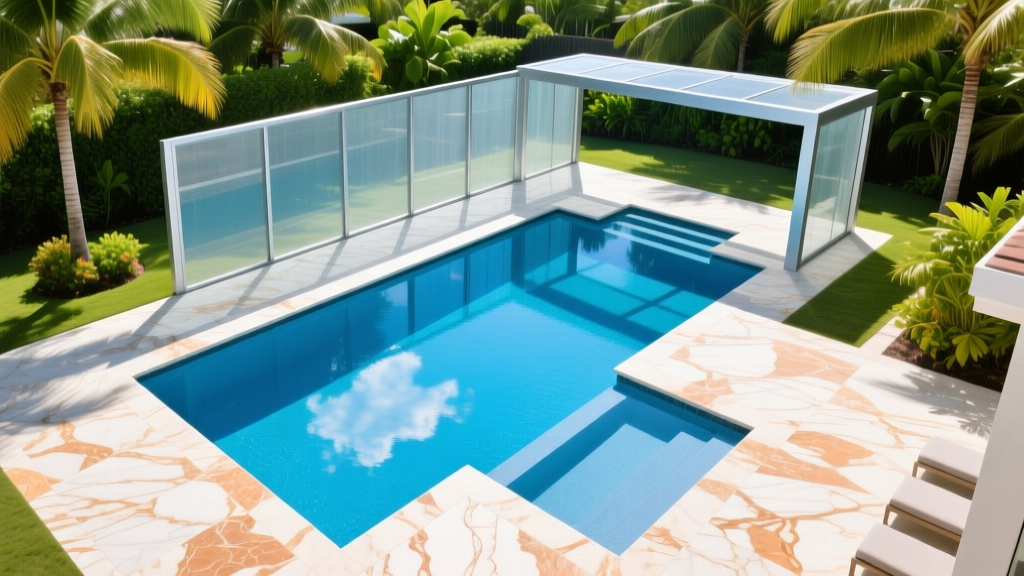
Building in South Florida means navigating the High Velocity Hurricane Zone (HVHZ). While the pool shell itself is underground and largely immune to wind, the mandatory screen enclosure is not. Enclosures here must be engineered to withstand 150+ mph wind loads, requiring thicker aluminum extrusions and specialized structural anchoring into the concrete deck. Permitting fees are also the highest in the state, often exceeding $1,500 just for plan reviews and environmental approvals.
Central Florida (Orlando, Tampa, Ocala)
Central Florida offers the most competitive labor market, which helps keep base construction costs closer to the state average. However, contractors must navigate strict Water Management District (WMD) regulations. Permits from the Southwest Florida Water Management District (SWFWMD) or St. Johns River Water Management District require detailed drainage plans to ensure pool runoff and deck drainage do not overwhelm municipal stormwater systems or degrade local watersheds.
North Florida & The Panhandle
While land is cheaper and permitting is generally faster, North Florida faces a different geological hurdle: dense clay and compacted sand. Excavation costs can be 10-15% higher here due to the difficulty of digging through hardpan soil. Additionally, winter temperatures occasionally dip low enough to require specialized freeze-protection plumbing configurations that South Florida builders typically ignore.
Mandatory Florida Add-Ons and Hidden Costs
When calculating the true average cost to build a pool in Florida, you must factor in the state-specific mandates that out-of-state buyers often overlook.
"In Florida, the pool shell is only half the project. The enclosure, the decking, and the mandated energy-efficient equipment make up the other half. Budgeting strictly for the hole in the ground is the most common mistake new residents make."
— Senior Project Manager, APSP Certified Builder
1. Screen Enclosures (The 'Florida Room' Tax)
Due to mosquitoes, no-see-ums, and falling oak leaves, a screen enclosure is practically mandatory. A standard aluminum screen enclosure costs between $10,000 and $18,000 depending on the footprint and roof style (mansard vs. gable). According to the Florida Department of Health, proper screening also aids in reducing the debris load on filtration systems, extending pump life.
2. Saltwater Chlorination Systems
Traditional liquid chlorine degrades rapidly in the Florida sun. Over 80% of new Florida pools are built with saltwater systems. A premium unit like the Hayward AquaRite or Pentair IntelliChlor IC40 costs between $2,200 and $2,800 installed. Note that salt systems require the use of polymer-based or stainless-steel light niches and specific pool coping sealers to prevent salt erosion on limestone or travertine decks.
3. Variable Speed Pumps (FBC Mandate)
The Florida Building Code (FBC) Energy Conservation section strictly mandates the use of variable speed pumps for all new residential pool construction. Single-speed pumps are illegal for new installs. A high-efficiency model like the Pentair IntelliFlo VSF costs around $2,800 installed but will reduce pumping energy costs by up to 70% compared to older models.
Decision Framework: Which Pool Type Fits Your Property?
Use this practical framework to determine which construction method aligns with your specific lot constraints and financial goals. The Pool & Hot Tub Alliance (PHTA) recommends evaluating site access before falling in love with a specific pool design.
- Assess Lot Access: If the side yard access to your backyard is narrower than 8 feet, a crane cannot lift a fiberglass shell into place. You must choose gunite (which is brought in via mixer trucks and sprayed) or a vinyl liner kit.
- Evaluate the Water Table: If your property is in a low-lying coastal zone or a former swamp area, gunite is the safest bet. Its immense weight prevents hydrostatic floatation. If you insist on fiberglass, ensure your contract explicitly includes crushed stone backfill and a hydrostatic relief valve in the main drain.
- Determine Decking Material: Florida's intense sun makes standard concrete decking unbearable on bare feet. Upgrade your budget to include Travertine ($18-$24 per sq. ft.), which naturally stays 15-20 degrees cooler than brushed concrete, or spray-on Kool Deck overlays ($12-$16 per sq. ft.).
- Verify Contractor Licensing: Florida law requires pool contractors to hold a specific state certification. Always verify their license via the Florida Department of Business and Professional Regulation (DBPR) portal before signing a contract, and ensure they carry both general liability and worker's compensation insurance.
Ultimately, the average cost to build a pool in Florida is an investment in year-round outdoor living. By prioritizing structural integrity over cosmetic upgrades, selecting materials suited to your specific county's soil and wind codes, and budgeting accurately for mandatory enclosures and variable-speed equipment, you can ensure your pool remains a valuable asset rather than a financial liability.
Written by
Marcus ChenMarcus Chen is a licensed structural engineer (PE) and building materials analyst with over 12 years of experience across residential, commercial, and industrial construction. He holds a Master of Science in Civil Engineering from UC Berkeley and spent six years at Thornton Tomasetti before transitioning to independent consulting and technical writing. Marcus specializes in material selection for seismic-prone regions, concrete reinforcement strategies, and lifecycle cost analysis. His work has been cited by the American Concrete Institute (ACI) and the Structural Engineers Association of California (SEAOC). When he is not on a job site or at his desk, you will find him hiking the Sierra Nevada or restoring a 1920s craftsman bungalow in Oakland, CA.
More from Marcus Chen
View all
Construction Cost
How Much Did the Eiffel Tower Cost to Build?
How much did the Eiffel Tower cost to build in 1889? We adjust for inflation and compare its budget to modern skyscraper construction.
Aug 4, 2026

Fire Resistance
What Is a Fire Resistant Material? Testing & Certification Guide
Discover what is a fire resistant material through ASTM and UL testing. Learn how fire ratings, certifications, and assemblies work in construction.
Aug 4, 2026

Construction Cost
How Much Did the Burj Khalifa Cost to Build?
How much did the Burj Khalifa cost to build? We break down the $1.5B project and extract 5 money-saving strategies for your next build.
Jul 30, 2026