How Much Would It Cost to Build a Mansion? 2026 Guide
Discover exactly how much it costs to build a mansion in 2026. Compare luxury tiers, material upgrades, and hidden estate construction expenses.
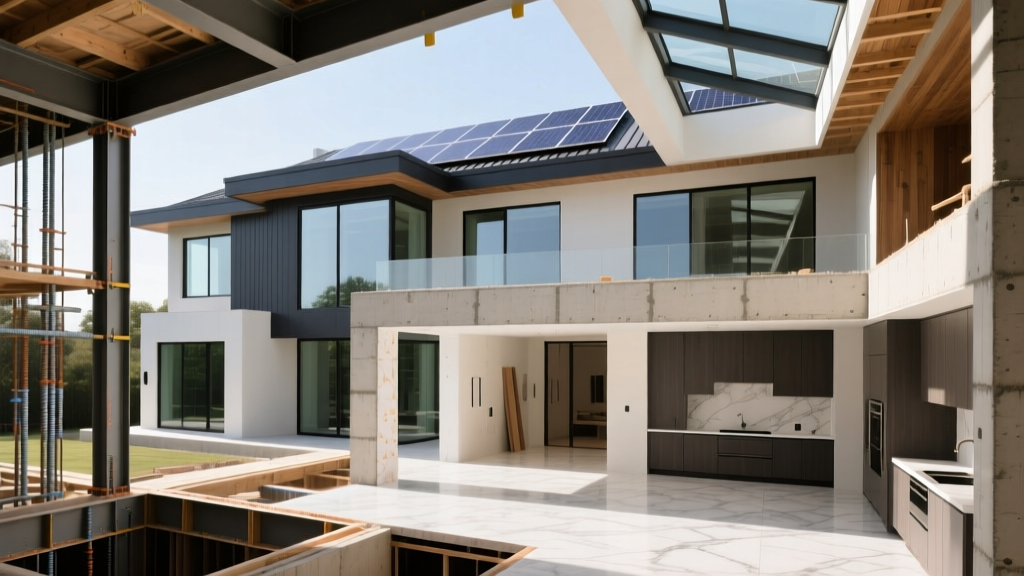
The Baseline: How Much Would It Cost to Build a Mansion?
Building a mansion in 2026 requires navigating a complex matrix of high-end material sourcing, specialized labor, and extensive site engineering. Unlike standard custom homes, estates exceeding 5,000 square feet introduce exponential cost variables. Based on current luxury construction data and National Association of Home Builders (NAHB) industry metrics, the cost to build a mansion ranges from $2.5 million for an entry-level luxury build to over $30 million for an ultra-luxury mega-estate.
The national average for high-end custom construction sits between $450 and $1,200 per square foot for hard costs alone. However, true mansion building requires factoring in soft costs, specialized site work, and premium automation systems that standard cost-per-square-foot calculators fail to capture.
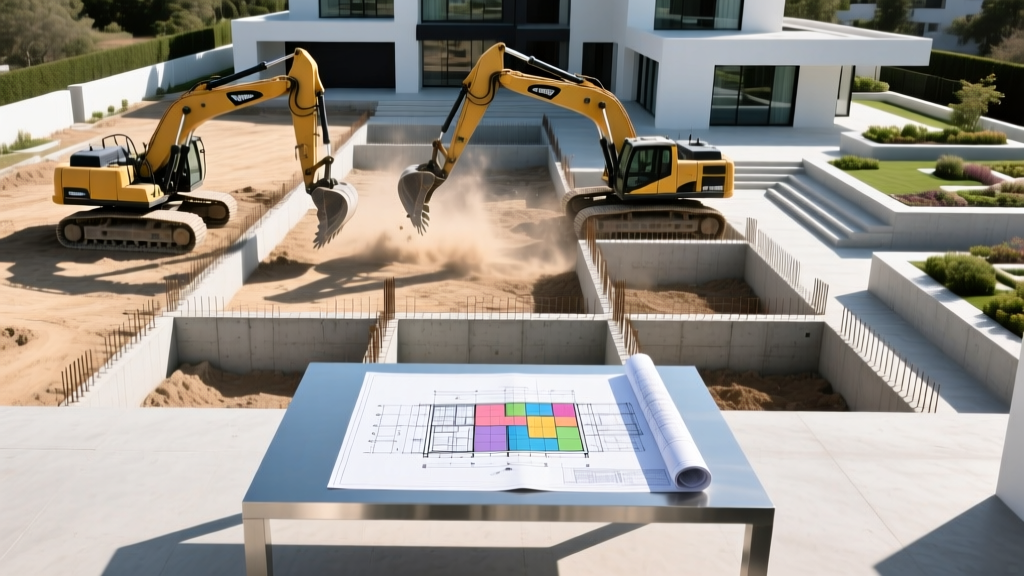
The Mansion Cost Matrix: Tiers of Luxury
To accurately estimate your project, you must first identify which tier of luxury your vision aligns with. The following matrix breaks down the 2026 cost expectations across three distinct mansion categories.
| Estate Tier | Size Range | Hard Cost / Sq Ft | Total Estimated Hard Cost | Defining Characteristics |
|---|---|---|---|---|
| Entry-Level Luxury | 5,000 - 8,000 sq ft | $450 - $650 | $2.25M - $5.2M | High-end appliances (Sub-Zero/Wolf), engineered hardwood, standard smart lighting, 3-car garage. |
| Custom Estate | 8,000 - 15,000 sq ft | $750 - $1,200 | $6M - $18M | Imported stone, custom millwork, geothermal HVAC, Lutron HomeWorks, wine cellars, detached guest house. |
| Ultra-Luxury Mega-Mansion | 15,000 - 30,000+ sq ft | $1,500 - $3,500+ | $22.5M - $100M+ | Frameless structural glass, book-matched marble, Crestron enterprise automation, indoor pools, bowling alleys, commercial-grade kitchens. |
Hard Costs vs. Soft Costs: Where the Budget Actually Goes
A common failure mode for first-time estate builders is budgeting exclusively for hard costs (materials and labor). According to Forbes Advisor's construction cost analysis, soft costs can consume 20% to 35% of a luxury project's total budget. For a $10 million mansion, expect to allocate $2 million to $3.5 million purely to design, engineering, and legal fees.
Soft Cost Breakdown for a $10M Custom Estate
- Architectural Fees (10% - 15%): $1,000,000 - $1,500,000. Top-tier residential architects charge a percentage of construction costs, not a flat fee.
- Interior Design (5% - 10%): $500,000 - $1,000,000. Includes spatial planning, custom furniture procurement, and finish scheduling.
- Structural & MEP Engineering (3% - 5%): $300,000 - $500,000. Essential for spanning large great rooms and integrating commercial-grade mechanical systems.
- Owner's Representative (3% - 5%): $300,000 - $500,000. A highly recommended third-party project manager who audits GC invoices and manages the schedule.
- Permits, Impact Fees & Legal: $150,000 - $300,000. Varies wildly by municipality; coastal or historic districts command premium fees.
The 'Ultra' Premium: Material and System Upgrades
The leap from a $600/sq ft custom home to a $1,500/sq ft mansion is rarely found in the framing or foundation. It is driven by specialized finishes and enterprise-grade building systems. Below is a comparison of standard luxury versus ultra-luxury specifications.
1. Glazing and Window Systems
- Standard Luxury: Marvin Ultimate or Andersen Architectural-Series aluminum-clad wood windows. Cost: $80 - $120 per sq ft of glass.
- Ultra-Luxury: Sky-Frame or Vitrocsa motorized frameless structural glass. These systems eliminate visible mullions and integrate into the floor track. Cost: $250 - $450 per sq ft, plus $20,000+ per motorized pocketing mechanism.
2. Climate Control and HVAC
- Standard Luxury: Multi-zone forced air with high-SEER heat pumps (e.g., Carrier Infinity). Cost: $15 - $25 per sq ft.
- Ultra-Luxury: WaterFurnace geothermal loop systems paired with radiant hydronic floor heating and dedicated outdoor air systems (DOAS) for hospital-grade humidity and filtration control. Cost: $45 - $75 per sq ft. A 15,000 sq ft estate will spend upwards of $900,000 on climate control alone.
3. Smart Home Automation
- Standard Luxury: Control4 or Lutron RadioRA 3. Excellent for lighting, shades, and basic AV distribution. Cost: $75,000 - $150,000.
- Ultra-Luxury: Crestron Home OS or Lutron HomeWorks QS with enterprise-grade networking (Ubiquiti or Cisco Meraki), dedicated server racks, and motorized art-lighting. Cost: $300,000 - $800,000+. Requires a dedicated climate-controlled IT room and a full-time AV integrator on retainer.
Site Work: The Hidden Estate Budget Killer
Mansions are rarely built on flat, prepped urban lots. They are built on expansive, challenging terrains. Site work for a luxury estate routinely consumes 15% to 25% of the hard construction budget. If you are building on a sloped, wooded, or coastal lot, prepare for the following expenses:
Warning: Common Site Work Cost Overruns
- Geotechnical Remediation: If soil borings reveal expansive clay or bedrock, blasting and over-excavation can add $150,000 to $400,000 before the foundation is even poured.
- Retaining Walls: Engineered, architecturally faced segmental retaining walls cost $120 to $180 per square face foot. A tiered driveway on a slope can easily require $250,000 in retaining structures.
- Utility Trenching: Running municipal water, sewer, and fiber-optic lines down a 1,000-foot private driveway costs $150 to $250 per linear foot. Factor in $150,000+ just to get utilities to the build site.
- Stormwater Management: High-end estates require subterranean detention vaults or engineered bioswales to meet municipal runoff codes, adding $75,000 to $150,000.
Regional Cost Multipliers for 2026
Location dictates labor availability, material shipping logistics, and code stringency. Apply these multipliers to your baseline hard costs to estimate regional variance:
- Aspen / Vail, CO (Multiplier: 1.8x - 2.2x): Extreme labor shortages, strict alpine building codes, and winter construction delays drive costs to the highest in the nation.
- Los Angeles / Silicon Valley, CA (Multiplier: 1.6x - 1.9x): Title 24 energy codes require expensive solar and battery integrations (e.g., Tesla Powerwall arrays), while coastal commission permits add years of soft costs.
- Miami / Palm Beach, FL (Multiplier: 1.3x - 1.5x): High-velocity hurricane zone (HVHZ) requirements mandate impact-resistant structural glass and reinforced concrete block (ICF) construction, elevating baseline costs.
- Austin / Dallas, TX (Multiplier: 0.9x - 1.1x): Favorable labor markets, lack of basements (slab-on-grade), and fewer zoning hurdles keep luxury costs closer to the national baseline.
Actionable Framework: Assembling Your Estate Team
Do not hire a general contractor before securing your design team. The correct sequence for a mansion build protects your budget and ensures constructability.
- Hire the Architect and Owner's Rep First: The Owner's Representative will help you interview and select the architect, ensuring their design aesthetic aligns with your hard budget cap.
- Conduct Feasibility Studies: Before purchasing land, spend $10,000 - $20,000 on a geotechnical survey, a boundary/topographical survey, and a zoning feasibility study. This prevents buying unbuildable lots.
- Bring the GC on for Pre-Construction: Hire the General Contractor during the schematic design phase (not after blueprints are finished). Pay them a pre-construction fee to provide real-time cost estimating as the architect draws, preventing the need to redesign the house when bids come in 40% over budget.
- Secure a Construction-to-Permanent Loan: For projects over $5M, private banking institutions require a 30% to 40% cash injection upfront, with interest-only draws during the 24-to-36-month build cycle.
Building a mansion is less about construction and more about enterprise-level project management. By anchoring your budget in the 2026 luxury cost matrix, anticipating extreme site-work variables, and investing heavily in soft-cost expertise, you can transition from abstract estimates to a fully realized, financially predictable estate.
Written by
Priya KapoorPriya Kapoor is a real estate market analyst and construction economics researcher with expertise in housing affordability, development feasibility, and infrastructure investment. She holds a Master of Regional Planning from Cornell University and previously worked as a senior analyst at CBRE's Investment Properties group, where she modeled returns for $4B in mixed-use development pipelines. Priya now runs an independent research practice advising developers, municipalities, and REITs on construction cost forecasting and market timing. She publishes the quarterly "BuildMat Market Pulse" report tracking material price indices across 12 commodity categories. Based in Austin, TX, Priya serves on the board of Habitat for Humanity Austin and is a marathon runner.
More from Priya Kapoor
View all
Construction Cost
Cost to Build a 1600 Sq Ft Home in 2026: Full Breakdown
Accurate 2026 cost to build a 1600 sq ft home—material, labor, and regional pricing breakdowns included. Plan your budget with real-time estimates.
Aug 11, 2026

Wood & Lumber
Name the Types of Wood for Pressure Treatment and Preservation
Learn how to name the types of wood best suited for pressure treatment. Compare species treatability, chemical retention levels, and 2026 preservation costs.
Aug 4, 2026

Stone & Masonry
Stone Veneer Suppliers Lindenhurst: 2026 Cost Analysis
Analyze 2026 stone veneer costs in Lindenhurst, NY. Compare local supplier pricing, delivery fees, and Suffolk County installation labor rates.
Aug 4, 2026