How Much Does It Cost to Build a Luxury Home in 2026?
Discover the true cost to build a luxury home in 2026. Detailed breakdowns of high-end materials, smart systems, soft costs, and regional pricing.
The True Baseline: Luxury Home Cost Per Square Foot in 2026
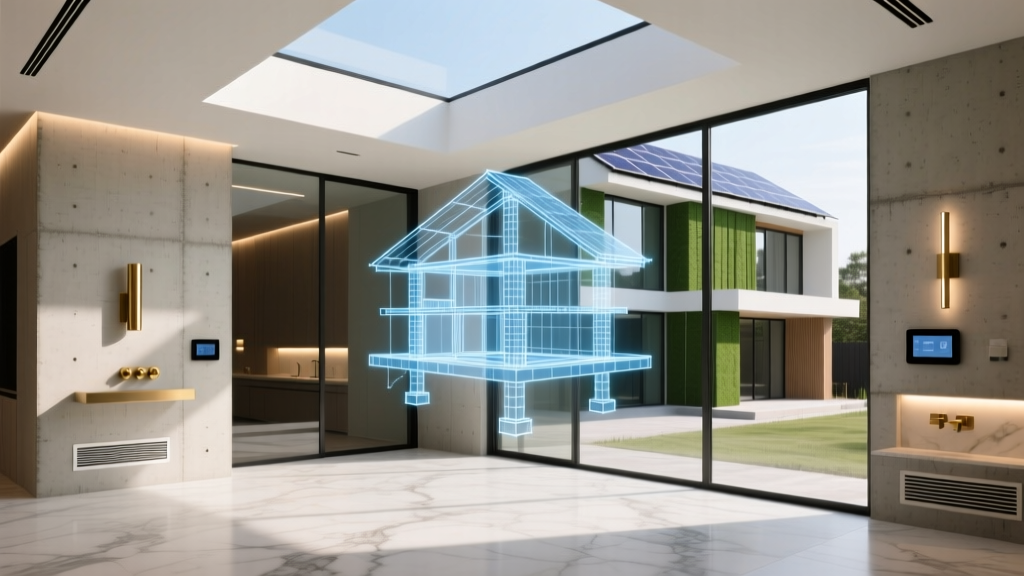
Building a luxury home transcends basic shelter; it is an exercise in bespoke engineering, high-performance building science, and architectural exclusivity. When evaluating how much does it cost to build a luxury home, standard national averages for production housing are irrelevant. In 2026, the baseline for true custom luxury construction starts at $450 per square foot, while ultra-luxury estates with complex architectural geometries and imported finishes routinely exceed $1,200 per square foot.
2026 Luxury Cost Tiers (Per Square Foot)
- Premium Custom ($450 - $650/sq ft): High-end finishes, standard smart home integration, premium appliances, and advanced framing techniques.
- Luxury ($650 - $950/sq ft): Bespoke millwork, commercial-grade HVAC, structural glass, geothermal heating, and fully integrated automation (e.g., Lutron HomeWorks, Savant).
- Ultra-Luxury ($1,000 - $1,500+/sq ft): Rare imported materials (book-matched exotic stone), extreme site engineering, acoustic isolation, and uncompromising architectural tolerances.
For a 5,000-square-foot luxury residence, expect hard construction costs to range between $2.25 million and $4.75 million, excluding land acquisition and soft costs. According to data from the National Association of Home Builders (NAHB), the premium for custom architectural detailing and high-performance building envelopes accounts for a 40% to 60% markup over standard speculative builds.
Hard Costs vs. Soft Costs in High-End Builds
A common miscalculation among first-time luxury builders is underestimating soft costs. In premium construction, architectural and engineering fees are significantly higher due to the complexity of the design, structural requirements, and MEP (Mechanical, Electrical, Plumbing) coordination.
| Cost Category | % of Total Budget | Estimated Cost (5,000 sq ft @ $800/sq ft) | Luxury Specifics |
|---|---|---|---|
| Site Prep & Foundation | 12% - 18% | $480,000 - $720,000 | Deep pier foundations, retaining walls, steep lot grading |
| Framing & Envelope | 18% - 22% | $720,000 - $880,000 | ICF walls, structural steel, ZIP-R continuous insulation |
| MEP Systems | 15% - 20% | $600,000 - $800,000 | Geothermal, ERV/HRV, whole-home water filtration |
| Interior Finishes | 25% - 35% | $1,000,000 - $1,400,000 | Custom millwork, exotic stone, wide-plank hardwood |
| Soft Costs (Design/Permits) | 12% - 15% | $480,000 - $600,000 | Architect (8-12%), Structural/MEP Engineers, Expediter |
Where the Budget Actually Goes: Material and System Upgrades
The divergence between a $300/sq ft custom home and an $800/sq ft luxury home lies in the performance of the building envelope, the integration of technology, and the provenance of interior finishes.
Architectural Envelope & Glazing
Luxury homes demand near-zero air infiltration and superior acoustic isolation. Standard vinyl or basic aluminum windows are replaced by thermally broken, triple-pane, argon-filled glazing. Brands like Unilux, Alpen High Performance Products, or Solar Innovations are standard. Expect to pay $120 to $180 per square foot of window area. For a home with 1,500 square feet of glass, the glazing package alone will cost between $180,000 and $270,000.
Wall assemblies often utilize Insulated Concrete Forms (ICF) or advanced 2x6 framing with closed-cell spray foam and Huber ZIP-R sheathing to eliminate thermal bridging. This envelope upgrade adds $15 to $25 per square foot of exterior wall area but reduces HVAC load requirements by up to 40%.
MEP & Smart Home Infrastructure
Failure Mode: Specifying standard PEX plumbing without a dedicated recirculating loop in a 6,000-square-foot home results in 45-second hot water wait times and wastes thousands of gallons of water annually. Luxury builds require Rinnai or Navien commercial-grade tankless systems paired with Grundfos recirculation pumps and manifold plumbing layouts.
Smart home integration in the luxury tier moves beyond off-the-shelf Wi-Fi devices. A hardwired Lutron HomeWorks lighting system, paired with a Savant or Control4 backbone for AV, climate, and shade control, requires low-voltage pre-wiring during the framing stage. Budget $40,000 to $120,000 for a fully integrated, rack-mounted smart home system, including motorized Lutron Sivoia QS shades and enterprise-grade networking (e.g., Araknis networks with Ubiquiti or Ruckus access points).
Bespoke Interior Finishes
The interior finish budget is where costs can scale infinitely. Key luxury specifications include:
- Flooring: 3/4-inch solid European white oak, 7-to-10-inch wide planks, site-finished with hardwax oil like Rubio Monocoat. Installed cost: $22 to $32 per square foot.
- Stone: Book-matched Calacatta Gold or Statuarietto marble slabs for primary bathrooms and kitchen islands. Fabrication and installation for premium slab stone range from $150 to $300 per square foot.
- Millwork: Floor-to-ceiling custom cabinetry with Blum Aventos lift systems, integrated LED lighting, and rift-sawn walnut or painted MDF finishes. Kitchen cabinetry for a luxury estate frequently exceeds $150,000.
- Appliances: Sub-Zero 700 Series integrated refrigeration, Wolf dual-fuel ranges with charbroilers, and Miele dishwashers. A full luxury appliance suite averages $65,000 to $95,000.
Hidden Cost Traps in Luxury Construction
Warning: The Site Prep Multiplier
Building on a steep, heavily wooded, or geologically complex lot can double your site preparation costs. Blasting bedrock, engineering multi-tiered retaining walls (which can cost $150 to $300 per linear foot), and installing advanced septic or stormwater management systems can easily add $250,000 to $500,000 to the project before the foundation is even poured. Always commission a geotechnical survey before purchasing luxury land.
Another frequent trap is the cost of expedited permitting and specialized inspections. In high-demand luxury markets, municipal review processes can stall projects for months. Hiring a professional permit expediter ($5,000 to $15,000) and engaging third-party plan reviewers to ensure code compliance before submission is a necessary soft cost to maintain the construction schedule.
Regional Variance: The Geographic Multiplier
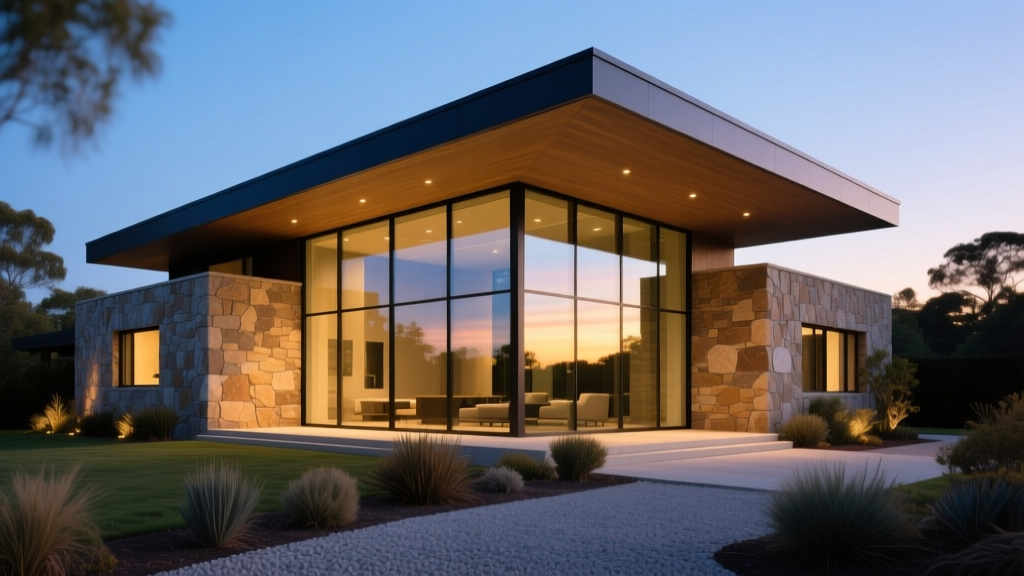
Labor rates, union requirements, and local material availability drastically alter the final cost to build a luxury home. The U.S. Census Bureau Survey of Construction highlights significant regional disparities in custom building costs, which are amplified in the luxury sector due to the scarcity of specialized artisan labor.
| Luxury Market Region | 2026 Cost Multiplier | Estimated Cost per Sq Ft (Luxury Tier) | Primary Cost Drivers |
|---|---|---|---|
| Aspen / Jackson Hole | 1.8x - 2.2x | $1,200 - $1,800+ | Extreme weather logistics, remote site access, high-end artisan labor scarcity |
| San Francisco / Silicon Valley | 1.6x - 1.9x | $1,000 - $1,500 | Strict seismic engineering, union labor, stringent environmental permitting |
| Miami / Palm Beach | 1.3x - 1.5x | $800 - $1,100 | Hurricane impact glazing, elevated foundations, salt-air corrosion mitigation |
| Austin / Scottsdale | 1.0x - 1.2x | $600 - $850 | Favorable labor markets, slab-on-grade foundations, fewer weather delays |
Strategic Framework: Value Engineering Without Compromise
Value engineering in luxury construction does not mean substituting premium materials with cheap alternatives; it means optimizing performance and allocating budget to high-impact areas. Consider the following decision framework:
- Invest in the Envelope, Optimize the HVAC: Spending an extra $40,000 on continuous exterior insulation and triple-pane windows will reduce the required HVAC tonnage. This allows you to downsize the geothermal or VRF (Variable Refrigerant Flow) system, recouping the envelope investment while achieving a quieter, more efficient home.
- Concealed vs. Displayed Technology: Instead of motorizing every single window treatment in the home, restrict motorized Lutron shades to high-traffic areas and rooms with extreme solar heat gain (south and west facades). Use manual, hardwired track systems for secondary bedrooms to save $20,000+ on low-voltage infrastructure.
- Stone Allocation: Use book-matched, premium-grade marble in the primary bathroom and kitchen island where it serves as a focal point. Transition to high-end porcelain slabs (e.g., Neolith or Dekton) in secondary bathrooms, laundry rooms, and butler pantries. Modern porcelain offers exceptional durability and visual continuity at 40% of the cost of natural stone.
Understanding how much does it cost to build a luxury home requires moving beyond simple square-footage multipliers. It demands a rigorous accounting of site-specific engineering, high-performance building science, and the integration of bespoke systems. By front-loading the budget into the architectural envelope and MEP infrastructure, and strategically allocating finish materials, builders can create estates that are not only visually stunning but fundamentally superior in performance and longevity.
Written by
David NakamuraDavid Nakamura is a licensed architect (AIA) and construction technology writer focused on sustainable building methods, mass timber engineering, and high-performance building envelopes. He holds a Master of Architecture from the University of Washington and is a certified Passive House Consultant (CPHC). David spent eight years at the Seattle firm Mithun, where he led the design of three LEED Platinum projects, before founding his own practice specializing in net-zero residential design. He serves on the editorial advisory board of GreenBuilder Magazine and has authored peer-reviewed papers on cross-laminated timber (CLT) connections for the Journal of Structural Engineering. In his spare time, David teaches woodworking at Pratt Fine Arts Center and kayaks the Puget Sound.
More from David Nakamura
View all
Construction Cost
Labor Cost to Build a Deck Per Sq Ft: 2026 Installation Guide
Discover the exact labor cost to build a deck per sq ft in 2026. This installation guide breaks down contractor rates, complexity factors, and hidden fees.
Aug 4, 2026

Construction Cost
How Much Does It Cost to Build a 3 Bedroom House? Financing Guide
Learn exactly how much it costs to build a 3 bedroom house and explore 2026 financing options, construction loan types, and budget frameworks for your build.
Aug 4, 2026

Construction Cost
Cost to Build a Tennis Court: 2026 Guide
How much does it cost to build a tennis court in 2026? Breakdowns for asphalt, concrete, and synthetic surfaces plus fencing and lighting.
Jul 30, 2026