Cost to Build House on Land: Size and Scope Calculator Guide
Learn how to calculate the true cost to build house on land. Use our size and scope framework to budget for site prep, utilities, and vertical construction.
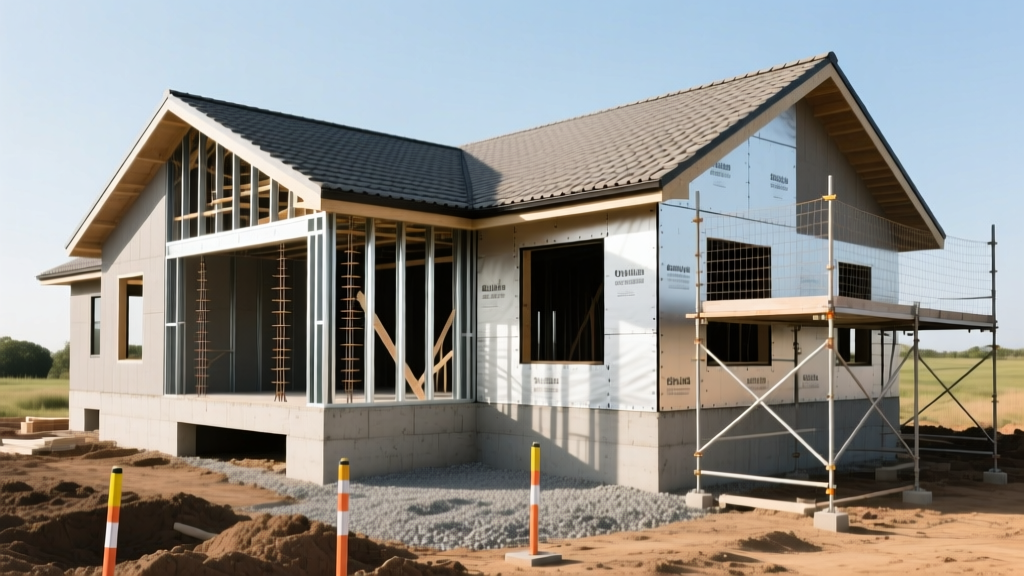
The Financial Reality of Raw Land Construction
Purchasing a vacant lot is only the first financial hurdle in residential development. The true cost to build house on land extends far beyond the vertical construction of the structure itself. Raw land requires a complex matrix of site preparation, utility routing, and soil mitigation before a single framing nail is driven. According to the U.S. Census Bureau's Survey of Construction, lot preparation and site work can account for 10% to 25% of total project costs, depending on topography and municipal infrastructure availability.
This guide provides a size and scope calculation framework to help you accurately estimate your total capital requirements, moving beyond generic per-square-foot averages to address the specific variables of your parcel.
Phase 1: Vertical Construction Baseline by Size and Scope
Before calculating land-specific variables, you must establish the baseline cost of the vertical structure. The National Association of Home Builders (NAHB) tracks these metrics, but local labor rates and material selections cause massive deviations. Use the matrix below to establish your base vertical budget.
| Home Size (Conditioned Sq Ft) | Scope / Finish Level | Estimated Cost per Sq Ft | Total Baseline Range |
|---|---|---|---|
| 1,200 - 1,600 | Production / Builder-Grade | $165 - $195 | $198,000 - $312,000 |
| 2,000 - 2,800 | Semi-Custom / Mid-Tier | $190 - $245 | $380,000 - $686,000 |
| 3,000 - 4,500+ | Full Custom / High-End | $260 - $420+ | $780,000 - $1,890,000+ |
Note: These figures include standard foundation (slab or crawlspace on stable soil), framing, MEP (mechanical, electrical, plumbing) rough-ins, and interior finishes. They do not include land acquisition, site prep, or luxury outdoor structures.
Phase 2: Land Preparation Scope Variables
Raw land is rarely build-ready. The physical characteristics of your lot dictate the site work budget. Evaluate your parcel against these specific scope modifiers.
⚠️ Sloped Lots (>15% Grade)
Building on a slope requires cut-and-fill grading, retaining walls, and stepped footings. Expect to add 12% to 18% to your foundation budget. A 100-foot engineered block retaining wall can easily add $8,000 to $15,000 to the site work scope.
💡 Wooded Lots (Heavy Timber)
Selective clearing and stump grinding are mandatory for the building envelope and driveway. Budget $2,500 to $4,500 per acre for heavy timber clearing. If you plan to mill the lumber for interior accents, factor in an additional $1,500 for a portable sawmill operator.
Utility Hookup & Site Work Matrix
If your land lacks municipal connections, you become your own utility provider. The Environmental Protection Agency (EPA) outlines strict guidelines for decentralized wastewater systems, which heavily influence rural build costs.
| Utility / Site Task | System Type / Specification | Estimated Cost Range |
|---|---|---|
| Soil & Perc Test | Geotechnical boring and percolation | $400 - $1,200 |
| Wastewater (Good Soil) | Conventional Gravity Septic | $4,500 - $8,500 |
| Wastewater (Poor Soil) | Aerobic Treatment Unit (ATU) / Mound | $12,000 - $22,000 |
| Water Supply | Drilled Well (100 - 300 ft depth) | $6,000 - $16,000 |
| Electrical Drop | Pole to Meter (Underground trenching) | $25 - $45 per linear foot |
| Driveway | Crushed aggregate base (1,000 sq ft) | $2,500 - $4,500 |
Phase 3: The Size & Scope Calculation Framework
To determine your total project cost, follow this sequential calculation framework. Do not skip the variable land costs, as they are the primary source of budget overruns in custom builds.
- Calculate Gross Conditioned Area: Multiply your planned heated/cooled square footage by your selected finish-level multiplier from Phase 1. (e.g., 2,500 sq ft × $210 = $525,000).
- Add Fixed Site Costs: Add the non-negotiable rural infrastructure costs. If you need a well ($10,000), a conventional septic ($6,500), and a 200-foot underground electric drop at $35/ft ($7,000), your fixed site cost is $23,500.
- Apply Topography Modifiers: If your lot requires extensive clearing (2 acres × $3,500 = $7,000) and driveway grading ($4,000), add $11,000.
- Factor in Permit & Impact Fees: Rural counties often charge road impact fees, school capacity fees, and tap fees. Allocate a minimum of $4,500 to $12,000 for local jurisdiction entitlements.
- Apply the Contingency Buffer: Multiply the sum of steps 1-4 by 1.15 (a 15% contingency) to account for subsurface surprises and material volatility.
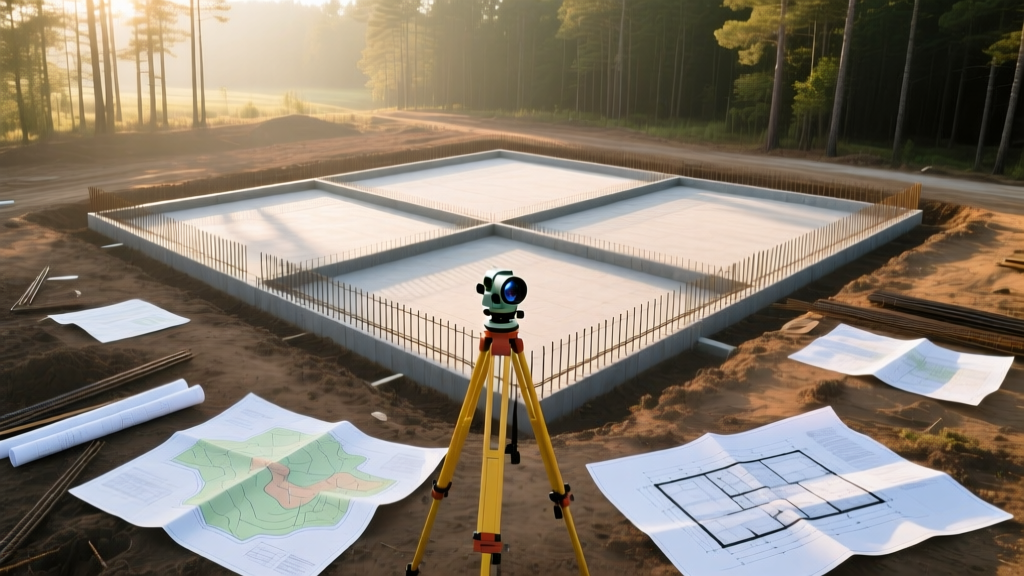
Subsurface Edge Cases: When Soil Dictates the Budget
The most catastrophic budget killers in land development are hidden beneath the topsoil. Standard strip footings assume a soil bearing capacity of at least 1,500 pounds per square foot (psf). When geotechnical reports reveal expansive clays, peat, or high water tables, standard foundations fail.
"Expansive soils cause more financial damage to property owners annually than floods, hurricanes, and earthquakes combined. Proper geotechnical mitigation is not optional; it is structural insurance." — Geotechnical Engineering Handbook, Vol 1
Mitigation Cost Matrix for Problem Soils
- Expansive Clay (High Plasticity Index): Requires drilled concrete piers or helical piers (e.g., Chance or Hubbell brands) driven to stable bedrock or load-bearing strata. Cost: $25 to $45 per linear foot. A 2,500 sq ft home requiring 30 piers drilled 20 feet deep will add $15,000 to $27,000 to the foundation scope.
- Organic/Peat Soils: Requires complete over-excavation and replacement with engineered fill compacted to ASTM D1557 standards. Cost: $8 to $14 per cubic yard for import and compaction testing.
- High Water Table / Ledge Rock: If blasting is required to excavate a basement or crawlspace in solid granite or limestone, expect to pay $15 to $35 per cubic yard for rock removal, plus dewatering systems that must run continuously during construction.
Frequently Asked Questions
Is it cheaper to buy raw land and build, or buy an existing lot in a subdivision?
Raw land often has a lower initial purchase price, but the site preparation costs (well, septic, electric drop, driveway, clearing) can easily add $40,000 to $80,000 to your budget. Subdivision lots are typically "pad-ready" with utilities at the property line, making vertical construction costs more predictable and often cheaper overall, despite the higher lot premium.
How do I find out if my land will require an expensive aerobic septic system?
You must hire a licensed soil scientist or geotechnical engineer to perform a perc (percolation) test and soil morphology evaluation before purchasing the land. If the soil has a high clay content or a seasonal high water table within 12 inches of the surface, the county will mandate an engineered system like an Aerobic Treatment Unit (ATU) or a sand mound, which costs two to three times more than a conventional gravity system.
What is the most overlooked cost when calculating the cost to build house on land?
Deed restrictions, HOA architectural review fees, and county road encroachment permits. Many rural parcels have hidden deed restrictions requiring specific driveway culvert sizes, minimum house square footages, or expensive masonry facades. Always pay for a title search and read the CC&Rs (Covenants, Conditions, and Restrictions) before finalizing your scope calculator.
Written by
Priya KapoorPriya Kapoor is a real estate market analyst and construction economics researcher with expertise in housing affordability, development feasibility, and infrastructure investment. She holds a Master of Regional Planning from Cornell University and previously worked as a senior analyst at CBRE's Investment Properties group, where she modeled returns for $4B in mixed-use development pipelines. Priya now runs an independent research practice advising developers, municipalities, and REITs on construction cost forecasting and market timing. She publishes the quarterly "BuildMat Market Pulse" report tracking material price indices across 12 commodity categories. Based in Austin, TX, Priya serves on the board of Habitat for Humanity Austin and is a marathon runner.
More from Priya Kapoor
View all
Construction Cost
Cost to Build a 1600 Sq Ft Home in 2026: Full Breakdown
Accurate 2026 cost to build a 1600 sq ft home—material, labor, and regional pricing breakdowns included. Plan your budget with real-time estimates.
Aug 11, 2026

Wood & Lumber
Name the Types of Wood for Pressure Treatment and Preservation
Learn how to name the types of wood best suited for pressure treatment. Compare species treatability, chemical retention levels, and 2026 preservation costs.
Aug 4, 2026

Stone & Masonry
Stone Veneer Suppliers Lindenhurst: 2026 Cost Analysis
Analyze 2026 stone veneer costs in Lindenhurst, NY. Compare local supplier pricing, delivery fees, and Suffolk County installation labor rates.
Aug 4, 2026