How Much Does It Cost to Build Raised Garden Beds? Complete Guide
Discover how much it costs to build raised garden beds. Compare pricing for cedar, composite, and steel materials, plus soil and hardware expenses.

The True Cost to Build Raised Garden Beds: A Baseline Breakdown
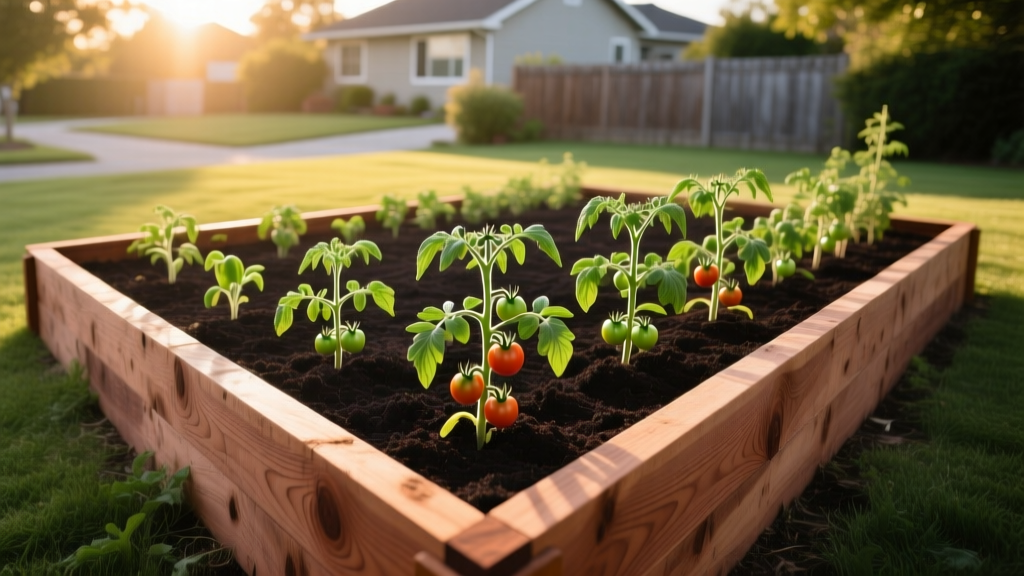
When calculating how much it does it cost to build raised garden beds, the final price tag is dictated by three primary variables: structural material, dimensional geometry, and soil volume. For a standard 4-foot by 8-foot bed with an 11-inch depth (two boards high), homeowners typically spend between $160 and $450. However, this range widens significantly when you factor in premium composites, standing-height designs, or specialized soil blends.
Unlike ground-level planting, raised beds require structural integrity to withstand the outward hydrostatic pressure of wet soil. According to the University of Minnesota Extension, proper material selection and bracing are critical to prevent bowing and premature rot, directly impacting your long-term cost per growing season.
Material Cost Matrix: Wood, Steel, and Composite
The walls of your raised bed represent the largest material expense. Below is a comparative analysis of the most common structural materials used in modern garden construction, reflecting current market pricing.
| Material Type | Approx. Cost (4x8 Bed) | Lifespan | Structural Notes & Edge Cases |
|---|---|---|---|
| STK Western Red Cedar | $110 - $160 | 10 - 15 years | Naturally rot-resistant. Requires stainless steel or coated screws to prevent tannin staining and fastener corrosion. |
| Corrugated Galvanized Steel | $140 - $220 | 20 - 30 years | Requires a wooden top rail for safety and rigidity. Metal conducts heat, which can dry out soil edges faster in summer. |
| Composite (e.g., Trex) | $280 - $400 | 25+ years | Heavy and flexible. Requires internal cross-bracing and aluminum corner brackets to prevent outward bowing under soil weight. |
| Doug Fir / Untreated Pine | $60 - $90 | 3 - 5 years | Budget-friendly but highly susceptible to rot. Avoid pressure-treated wood (CCA or ACQ) for edible crops due to chemical leaching concerns noted by Penn State Extension. |
| Concrete Masonry Units (CMU) | $180 - $250 | 50+ years | Extremely heavy. Requires a leveled gravel base. Can alter soil pH over time as lime leaches from the concrete. |
The Geometry of Pricing: Why 4x8 Beats 4x4 on Value
A common mistake in garden planning is building multiple small beds rather than fewer large ones. The cost per square foot of growing space drops significantly as you increase the length of the bed, up to the point where structural bracing is required.
A 4x4 bed yields 16 sq. ft. of growing space but requires 16 linear feet of lumber.
A 4x8 bed yields 32 sq. ft. of growing space and requires 24 linear feet of lumber.
By doubling the length, you increase your growing area by 100% while only increasing your primary lumber cost by 50%. The hardware (corners, brackets) and labor remain virtually identical.
The 6-Foot Bracing Threshold
While longer beds save money on a per-square-foot basis, any raised bed wall exceeding 6 feet in length constructed from wood or composite requires mid-span bracing. Wet soil weighs approximately 100 pounds per cubic foot. An 8-foot long wall of 11-inch high soil exerts hundreds of pounds of lateral pressure. You must install a threaded rod with fender washers connecting the two long sides at the 4-foot mark, or use internal wooden stakes driven into the ground and screwed to the wall. Add $15 to $25 to your hardware budget for this critical reinforcement.
The Soil Equation: Bulk vs. Bagged Pricing
The second major cost center is the fill material. Never use native ground soil or heavy topsoil in a raised bed; it compacts and destroys drainage. The gold standard is a variation of 'Mel\'s Mix' or a premium raised bed blend consisting of compost, peat moss (or coco coir), and vermiculite/perlite.
Calculating Volume for a 4x8 Bed (11 Inches Deep)
- Math: 4 ft × 8 ft × 0.91 ft (11 inches) = 29.12 cubic feet.
- Cubic Yards: 29.12 ÷ 27 = 1.08 cubic yards.
Cost Comparison: Bagged vs. Bulk Delivery
Bagged Route: Premium bagged raised bed mix (usually 1.5 cu. ft. bags) costs $8 to $14 per bag. You will need roughly 20 bags. Total: $160 to $280. This is highly convenient but represents a massive markup on the raw materials.
Bulk Route: Ordering a custom 'garden mix' (50% compost, 50% screened loam/sand) from a local landscape supply yard costs $35 to $55 per cubic yard. You will need 1.5 yards to account for settling. Total: $52 to $82. However, you must factor in the delivery fee, which typically ranges from $75 to $125 depending on your zip code. If you have a truck or trailer to pick it up yourself, the bulk route saves you over $150.
Hardware and Site Preparation Hidden Costs
Budgeting solely for lumber and soil will leave you stranded at the hardware store. Proper assembly requires specialized exterior-grade fasteners and site prep materials.
- Fasteners ($25 - $40): Do not use standard zinc-plated deck screws; they will snap under the shear stress of the soil and rust within three years. Use structural screws like GRK Fasteners RSS or Simpson Strong-Tie SDWS (minimum 3.5-inch length for joining 2x6 boards).
- Corner Brackets ($20 - $45): While you can butt-joint corners using screws alone, installing heavy-duty galvanized or powder-coated steel corner brackets (like those from OZCO or Frame It All) dramatically increases the lifespan of the bed by preventing corner joint failure.
- Weed Barrier & Pest Control ($20 - $35): Line the bottom of the bed with heavy-duty landscape fabric to suppress weeds. If burrowing pests like gophers or voles are prevalent in your region, staple 1/2-inch galvanized hardware cloth to the bottom frame before adding soil.
- Leveling Materials ($15 - $30): The bed must be perfectly level, or water will pool at one end and soil will erode at the other. You may need crushed gravel or masonry sand to grade the footprint before setting the frame.
Line-Item Budget: Building a Standard 4x8 Western Red Cedar Bed
Below is a realistic receipt breakdown for a high-quality, durable 4x8 foot cedar bed, assuming you are purchasing materials from a major home improvement retailer and picking up bulk soil locally.
| Item Description | Quantity | Unit Cost | Line Total |
|---|---|---|---|
| 2x6x8 STK Western Red Cedar | 4 boards | $22.00 | $88.00 |
| 2x4x10 Cedar (Cut for 4 corner posts) | 1 board | $14.00 | $14.00 |
| GRK RSS 3-1/8" Structural Screws | 1 box (50ct) | $28.00 | $28.00 |
| Galvanized Steel Corner Brackets | 4 corners | $7.50 | $30.00 |
| 1/2" Hardware Cloth (Pest Barrier) | 4x8 roll | $22.00 | $22.00 |
| Bulk Garden Soil Mix (1.5 Cubic Yards) | 1.5 yards | $45.00 | $67.50 |
| Soil Delivery Fee (or Truck Rental) | 1 trip | $85.00 | $85.00 |
| Total Estimated Project Cost | $334.50 | ||
Long-Term ROI and Lifespan Analysis
When evaluating how much it costs to build raised garden beds, you must amortize the initial investment over the structure's usable lifespan. A $90 untreated pine bed that rots and collapses in year four costs you $22.50 per year. A $350 composite bed that lasts 25 years costs you $14.00 per year.
Expert Insight: If you are building on a strict budget but want longevity, opt for Doug Fir and treat the exterior-facing wood with a non-toxic, raw linseed oil or a specialized wood preserver like Valhalla Wood Preservative. This can extend the life of budget lumber by 3 to 5 years without introducing harmful petrochemicals into your edible soil.
Frequently Asked Questions
Is it cheaper to buy pre-fabricated raised bed kits?
Generally, no. Pre-fabricated kits (often made from thin, 1-inch thick cedar or vinyl) usually cost between $150 and $250 for a 4x4 or 4x8 footprint. While they save time on cutting and assembly, the lumber provided is typically lower grade and thinner than standard dimensional 2x6 lumber you can source locally, resulting in a higher cost-per-year-of-use due to faster degradation and warping.
How much does it cost to build a standing-height (32-inch) raised bed?
Standing-height beds require significantly more materials. A 32-inch high 4x8 bed requires roughly 12 boards instead of 4, plus heavy-duty 4x4 corner posts, horizontal cross-bracing to prevent blowouts, and three times the volume of soil. Expect to pay between $600 and $900 for a cedar standing-height bed, largely driven by the $200+ cost of the required bulk soil fill.
Can I use cinder blocks instead of wood?
Yes, and it is highly cost-effective. Standard 8x8x16 concrete blocks cost about $2.50 to $3.50 each. A 4x8 bed requires roughly 18 blocks (two high). The material cost is under $65. However, you must factor in the physical labor of moving 600+ pounds of concrete, and you will need to fill the hollow cores of the blocks with soil or cap them to prevent pests from nesting inside the voids.
Written by
James ThorntonJames Thornton is a construction industry veteran with 25 years of hands-on experience in wood framing, lumber grading, and residential building codes. He started as a framing carpenter in rural Oregon, earned his ICC Residential Building Inspector certification, and eventually became a senior plan reviewer for the City of Portland Bureau of Development Services. James holds a B.S. in Wood Science & Technology from Oregon State University and is a certified lumber grader through the West Coast Lumber Inspection Bureau (WCLIB). He has inspected over 3,000 residential construction sites and authored the city's internal guide on advanced framing techniques (2x6 at 24" O.C.). James lives in Bend, OR, where he builds custom timber-frame cabins and competes in lumberjack sports.
More from James Thornton
View all
Insulation
Best Home Insulation Materials: Complete 2026 Guide
Compare top home insulation materials for 2026. Find R-values, installed costs per square foot, and best uses for fiberglass, spray foam, and mineral wool.
Aug 4, 2026

Sustainable Building
Certify Your Green Building Material for LEED and WELL
Step-by-step guide to certifying a green building material for LEED v5 and WELL v2. Master EPDs, HPDs, and VOC limits for 2026 project specifications.
Aug 4, 2026

Stone & Masonry
Veneer Stacked Stone Panels: Interior Design & Style Showcase
Discover how veneer stacked stone panels transform interiors. Explore modern design profiles, material pairings, and technical installation specs.
Aug 4, 2026